

A crop sensor camera uses a smaller image sensor than full frame, creating a narrower field of view.
Understanding what is a crop sensor camera helps you choose the right body, lens, and shooting style. A smaller sensor can offer extra reach, lower cost, and lighter gear, but it also changes how lenses look and perform. This guide explains crop sensors in simple terms, with practical examples, key benefits, limits, and buying advice.
What Is a Crop Sensor Camera?
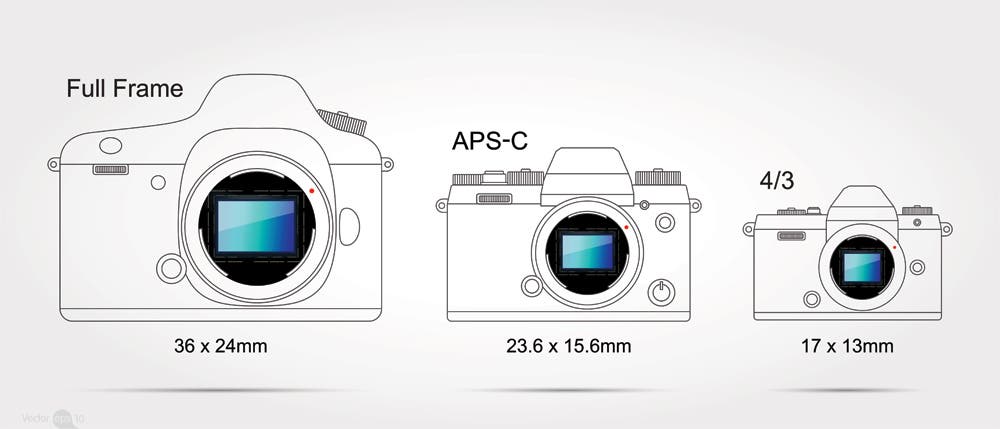
A crop sensor camera is a digital camera with an image sensor smaller than a 35mm full-frame sensor. The sensor captures light and turns it into a photo, but its smaller size records a smaller part of the image projected by the lens.
This creates a “crop” effect. The lens does not truly zoom in, but the photo shows a tighter view. For example, a 50mm lens on an APS-C camera looks similar to a 75mm or 80mm lens on a full-frame camera, depending on the camera’s crop factor.
The most common crop sensor formats include:
- APS-C sensors, used by many Canon, Nikon, Sony, Fujifilm, and Pentax cameras
- Micro Four Thirds sensors, used by brands such as OM System and Panasonic
- Smaller sensors in many bridge cameras, compact cameras, and smartphones
The term crop sensor camera usually refers to APS-C or Micro Four Thirds interchangeable-lens cameras. However, any sensor smaller than full frame can technically be called a crop sensor.
Source: adorama.com
How Does a Crop Sensor Work?
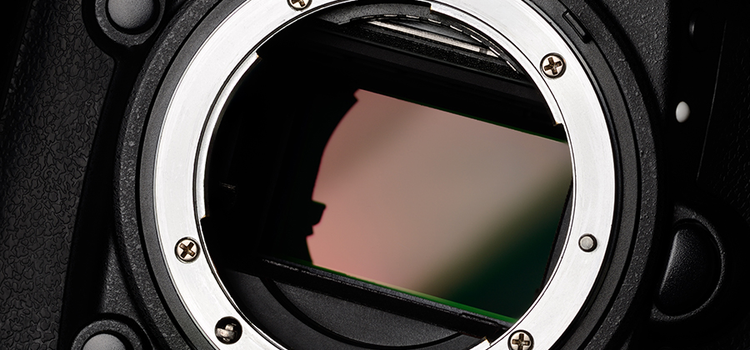
A camera lens projects a round image onto the sensor. A full-frame sensor uses a larger portion of that image circle. A crop sensor uses a smaller center area, much like cutting the edges from a larger photo.
The result is a narrower angle of view. The actual focal length stays the same, but the framing changes.
For example:
- A 24mm lens on a 1.5x APS-C camera gives a view similar to 36mm on full frame
- A 50mm lens on a 1.6x APS-C camera gives a view similar to 80mm
- A 200mm lens on a 1.5x APS-C camera gives a view similar to 300mm
- A 25mm lens on a Micro Four Thirds camera gives a view similar to 50mm
Use this simple formula to estimate the full-frame equivalent:
- Find the lens focal length.
- Find the camera’s crop factor.
- Multiply the focal length by the crop factor.
A 35mm lens on a 1.5x camera becomes 52.5mm in full-frame equivalent terms. This helps you compare lenses across different camera formats.

Source: digitalphotomentor.com
Common Crop Sensor Sizes and Crop Factors
Not every crop sensor camera has the same sensor size. This matters because the crop factor, field of view, image quality, and depth of field can vary.
APS-C sensors
APS-C is the most popular crop format for many mirrorless and DSLR cameras. Its crop factor is usually 1.5x, although Canon APS-C cameras often use a 1.6x factor.
An APS-C sensor measures roughly 22.2mm by 14.8mm, though exact dimensions vary by brand. It offers a strong balance of image quality, camera size, lens choice, and price.
Micro Four Thirds sensors
Micro Four Thirds cameras use a smaller sensor with a 2x crop factor. A 25mm lens gives a field of view similar to a 50mm lens on full frame.
These cameras are often compact and light. Their small size makes them popular for travel, street photography, video, and outdoor work.
Other smaller sensors
Bridge cameras and compact cameras may use 1-inch, 2/3-inch, or even smaller sensors. These cameras can have strong zoom ranges in small bodies, but they often produce more image noise in dim light.
Sensor size alone does not determine image quality. Lens quality, sensor design, image processing, lighting, and shooting technique all matter.
Source: youtube.com
Crop Sensor vs. Full-Frame Camera
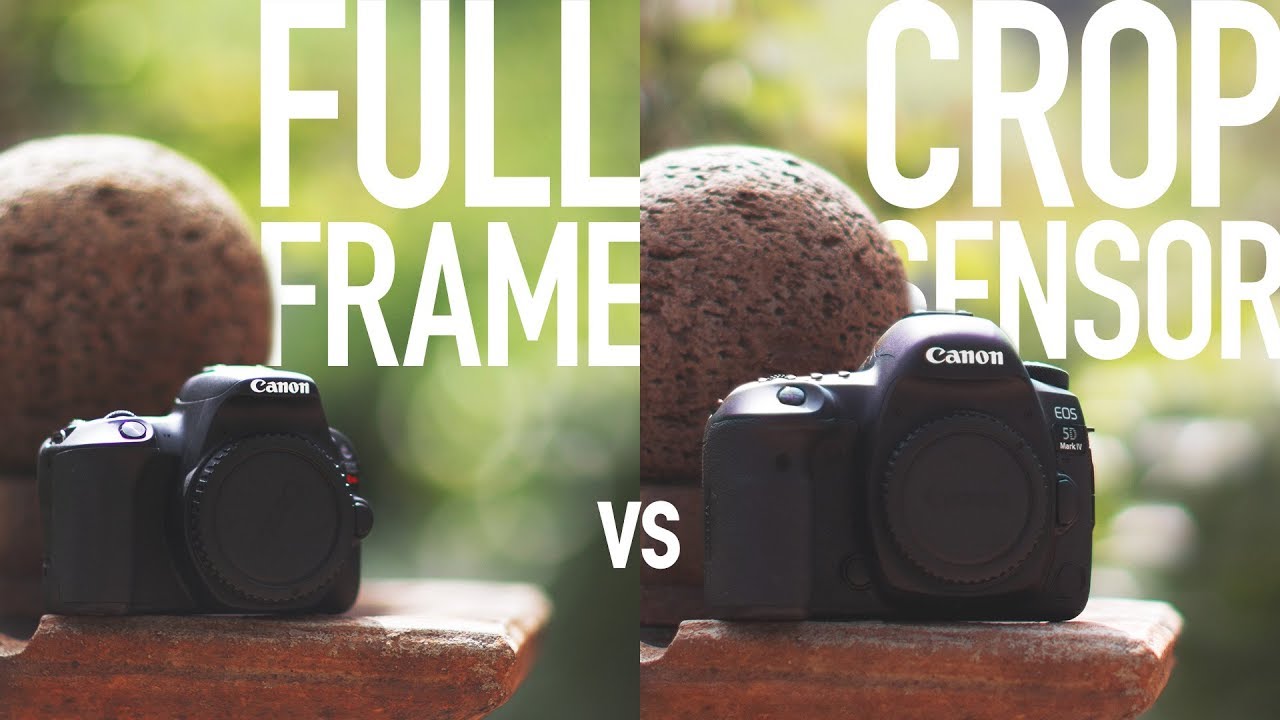
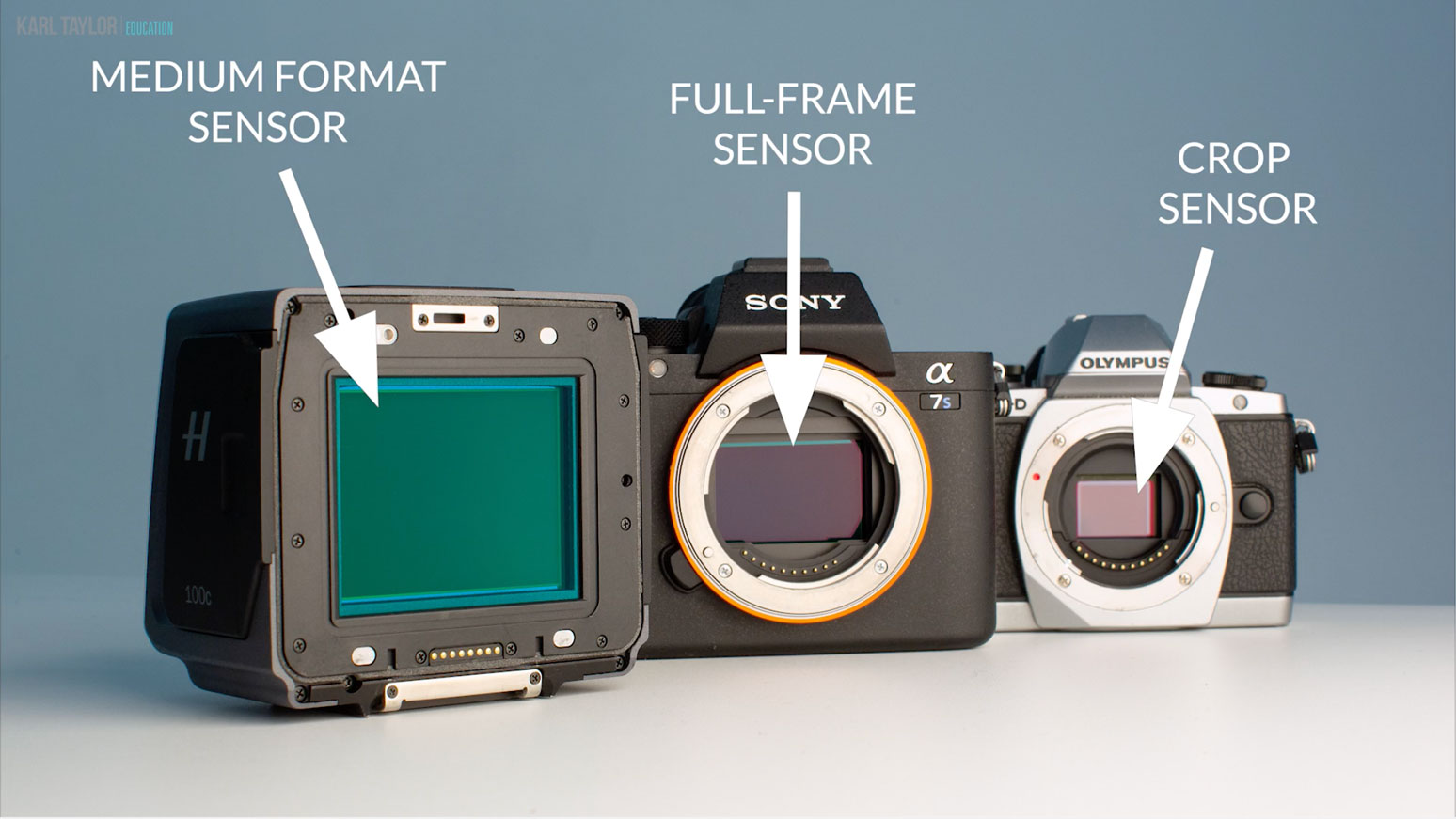
The main difference between a crop sensor camera and a full-frame camera is sensor size. A full-frame sensor matches the size of a 35mm film frame, while a crop sensor is smaller.
Here is how the formats often compare:
| Feature | Crop sensor | Full frame |
|---|---|---|
| Sensor size | Smaller than 35mm | About 36mm by 24mm |
| Camera cost | Often lower | Often higher |
| Body size | Usually smaller | Usually larger |
| Lens reach | More apparent reach | Wider native view |
| Low-light performance | Good to moderate | Often stronger |
| Background blur | Possible, but less at equal framing | Easier at equal framing |
| Lens size | Often smaller | Often larger |
A full-frame camera is not automatically better for every photographer. A crop sensor camera may be the smarter choice for a beginner, traveler, wildlife photographer, student, or content creator.
In real shooting, the difference may be less dramatic than online debates suggest. Good light, a sharp lens, proper focus, and careful exposure can matter more than sensor format.

Source: photo.blog
Benefits of a Crop Sensor Camera
A crop sensor camera offers several useful advantages. These benefits explain why crop formats remain popular among beginners and professionals.
Lower cost
Crop sensor bodies usually cost less than comparable full-frame models. Their lenses also tend to be smaller and more affordable.
This makes it easier to build a complete kit with a wide lens, standard zoom, telephoto lens, spare battery, and memory cards.
Smaller and lighter gear
The smaller sensor allows manufacturers to make smaller camera bodies and lenses. This matters when you carry equipment all day.
A lightweight kit is useful for:
- Travel photography
- Hiking and camping
- Street photography
- Family events
- School or sports coverage
- Vlogging and daily video
Many photographers take more photos with a camera that is easy to carry than with a larger camera left at home.
Extra reach for wildlife and sports
The crop effect can help when your subject is far away. A 300mm lens on a 1.5x APS-C camera gives a field of view similar to 450mm on full frame.
This does not increase the lens’s true optical magnification. It simply uses the center part of the projected image, which can make distant subjects fill more of the frame.
More depth of field
At the same framing and aperture, a crop sensor camera often gives more depth of field than a full-frame camera. This can help when you want more of a subject to stay sharp.
It is useful for:
- Group portraits
- Macro photography
- Product photos
- Landscapes
- Wildlife images where focus must be precise
Strong video value
Many crop sensor cameras offer excellent 4K video, fast autofocus, microphone inputs, and image stabilization. Their smaller bodies can also work well on gimbals and compact rigs.
For many creators, a crop sensor camera provides enough quality without the cost and weight of professional full-frame equipment.
Source: visualeducation.com
Limitations of a Crop Sensor Camera
A crop sensor camera is highly capable, but it has trade-offs. Knowing these limits helps you set realistic expectations.
More image noise in low light
Smaller sensors collect less total light when compared with full-frame sensors using similar technology and the same framing. In dark scenes, this can lead to more noise or less detail at high ISO settings.
Modern APS-C cameras can still produce clean images at moderate ISO levels. Good exposure and a bright lens can reduce the problem.
Harder to create extreme background blur
A crop sensor can create soft backgrounds, but it may require a wider aperture, a longer lens, or more distance between the subject and the background.
For example, a 50mm f/1.8 lens on APS-C can produce attractive portrait blur. However, a full-frame camera may create stronger blur at the same composition and aperture.
Wide-angle lenses may not look as wide
A 16mm lens on a 1.5x APS-C camera gives a view similar to 24mm on full frame. That is still wide, but it is not as broad as 16mm on a full-frame camera.
Landscape photographers, architecture photographers, and real estate photographers should check the full-frame equivalent before buying a lens.
Lens compatibility can be confusing
Some lenses are designed only for crop sensors. Others cover full-frame sensors and work on both formats.
A crop-only lens may cause dark corners if used on a full-frame camera. Always check the lens mount and sensor coverage before changing systems.
Source: adobe.com
What Does Crop Factor Mean for Lenses?
Crop factor describes how much smaller a sensor is compared with a full-frame sensor. It helps you understand a lens’s field of view.
Crop factor does not change the physical focal length. A 50mm lens remains a 50mm lens. The camera simply records a smaller part of the image produced by that lens.
This distinction prevents a common mistake. Saying that a 50mm lens “becomes” an 80mm lens is a shortcut for describing its field of view, not a change in the lens itself.
Crop factor also affects depth of field comparisons. To match the same view and background blur as full frame, photographers often compare both focal length and aperture. For example, an APS-C camera with a 33mm f/1.4 lens gives a view close to a 50mm lens on full frame, but its full-frame depth-of-field equivalent is closer to f/2.1.
That does not mean the crop lens loses light. The f/1.4 aperture still controls exposure as f/1.4. The comparison only describes background blur and depth of field.

Source: livesnapcreate.com
Best Uses for a Crop Sensor Camera
A crop sensor camera can work well in many types of photography. The best choice depends on your subjects, lighting, budget, and comfort.
Wildlife and bird photography
The apparent reach of APS-C and Micro Four Thirds systems can help frame small or distant animals. A smaller camera may also be easier to carry on long walks.
Keep in mind that autofocus, frame rate, buffer size, and lens quality are just as important as the sensor format.
Sports photography
Crop cameras can be useful for field sports, motorsports, and school events. The tighter view helps fill the frame, especially when you cannot stand near the action.
Look for fast autofocus, a high burst rate, and a lens with a wide maximum aperture.
Travel photography
Travelers often value a small kit. A crop sensor camera with a standard zoom can cover street scenes, portraits, food, buildings, and landscapes without adding much weight.
A common mistake is carrying too many lenses. One wide zoom and one fast prime may be enough for an entire trip.
Portrait photography
Crop cameras can create beautiful portraits. A 50mm or 56mm lens often gives a natural portrait view, while an 85mm lens provides more compression for outdoor portraits.
Move your subject away from the background to increase blur. This simple step often matters more than changing camera systems.
Video and content creation
Crop sensor cameras can be excellent for YouTube, interviews, live streams, and social media video. Check for clean HDMI output, microphone support, heat control, autofocus, and recording limits.
A camera with good audio and lighting will usually produce better content than a more expensive body with poor sound.
How to Choose a Crop Sensor Camera
Choosing the right crop sensor camera is easier when you focus on your real needs rather than the largest specification list.
Consider these points:
- Choose APS-C for a broad mix of photography, strong image quality, and good lens options.
- Choose Micro Four Thirds for a small, light kit and a wide range of compact lenses.
- Check the autofocus system if you photograph children, animals, or sports.
- Check the lens range before buying the camera body.
- Look for a comfortable grip, clear controls, and a viewfinder you enjoy using.
- Review battery life if you travel or shoot long events.
- Check microphone, headphone, and stabilization features for video.
- Buy a bright prime lens if you often work indoors.
- Set aside money for spare batteries, memory cards, and a reliable bag.
The camera body is only one part of the system. A basic crop sensor camera with a sharp lens can outperform an expensive camera with a poor or unsuitable lens.
Practical Shooting Tips for Crop Sensor Cameras
You can get excellent results from a crop sensor camera by using a few simple habits.
- Learn your crop factor. Write down the full-frame equivalent of your favorite lenses.
- Use a fast lens indoors. An f/1.8 or f/1.4 prime can help in low light.
- Watch shutter speed. Use a faster shutter for moving people and animals.
- Move the subject from the background. This creates more separation and blur.
- Expose carefully. Brightening a very dark photo can reveal noise.
- Use image stabilization when available. It helps with camera shake, but it does not freeze moving subjects.
- Shoot in good light when possible. Soft window light can transform a simple portrait.
- Test lenses before a major trip. Learn their focus speed, sharpness, and handling in advance.
One practical lesson stands out: photographers often blame the sensor when the real issue is poor light or the wrong lens. Before replacing your camera, try better light, steadier technique, or a lens that suits your subject.
Common Mistakes to Avoid
Many new photographers misunderstand what is a crop sensor camera because of simplified online comparisons. Avoid these common errors:
- Do not assume crop means poor quality. Modern crop cameras can produce professional images.
- Do not multiply aperture when setting exposure. An f/2.8 lens remains f/2.8 for exposure.
- Do not forget the crop factor when choosing a wide lens.
- Do not compare megapixels alone. Pixel size, processing, lens quality, and technique also matter.
- Do not buy a body without checking the lens system.
- Do not expect crop factor to improve true lens resolution or optical reach.
- Do not ignore comfort. A camera that feels good is more likely to be used.
The best camera is the one that fits your subjects and encourages you to practice. Technical advantages matter, but regular use builds skill.
Frequently Asked Questions About What Is a Crop Sensor Camera
Is a crop sensor camera good for beginners?
Yes. A crop sensor camera is often an excellent beginner choice because it costs less, weighs less, and offers enough quality for learning and sharing photos. It also teaches useful skills such as lens choice, exposure, focus, and composition.
Is a crop sensor camera worse than a full-frame camera?
No. Full-frame cameras often perform better in very low light and make strong background blur easier, but crop cameras can be better for cost, size, travel, and distant subjects. The right format depends on how and where you shoot.
Can I use a full-frame lens on a crop sensor camera?
Usually, yes, if the lens uses the correct mount. The lens will show a narrower field of view, and it may be larger than a crop-only lens designed for the camera.
Does a crop sensor camera zoom in?
No. A crop sensor camera does not increase the lens’s true magnification. It records a smaller section of the lens image, which creates a tighter field of view that looks like extra reach.
What is the best crop sensor size?
There is no single best size. APS-C offers a strong balance of quality and portability, while Micro Four Thirds is often smaller and lighter; your subjects, budget, and lens needs should guide the choice.
Can crop sensor cameras take professional photos?
Yes. Professional photographers use crop sensor cameras for wildlife, sports, travel, portraits, journalism, and video. Strong lighting, good lenses, accurate focus, and thoughtful composition have a major effect on the final image.
Conclusion
A crop sensor camera uses a smaller-than-full-frame sensor, which changes the field of view of every lens. Its main strengths include lower cost, smaller gear, useful reach, and strong performance for travel, wildlife, sports, portraits, and video.
Its main trade-offs include less low-light flexibility, less extreme background blur, and a narrower view with wide-angle lenses. Once you understand crop factor and choose lenses for your subjects, these limits become easy to manage.
Start by choosing the camera system that fits your budget and daily use. Then practice with one lens, study your results, and build your kit as your skills grow. Explore more photography guides, and share your favorite crop sensor camera or lens in the comments.
