
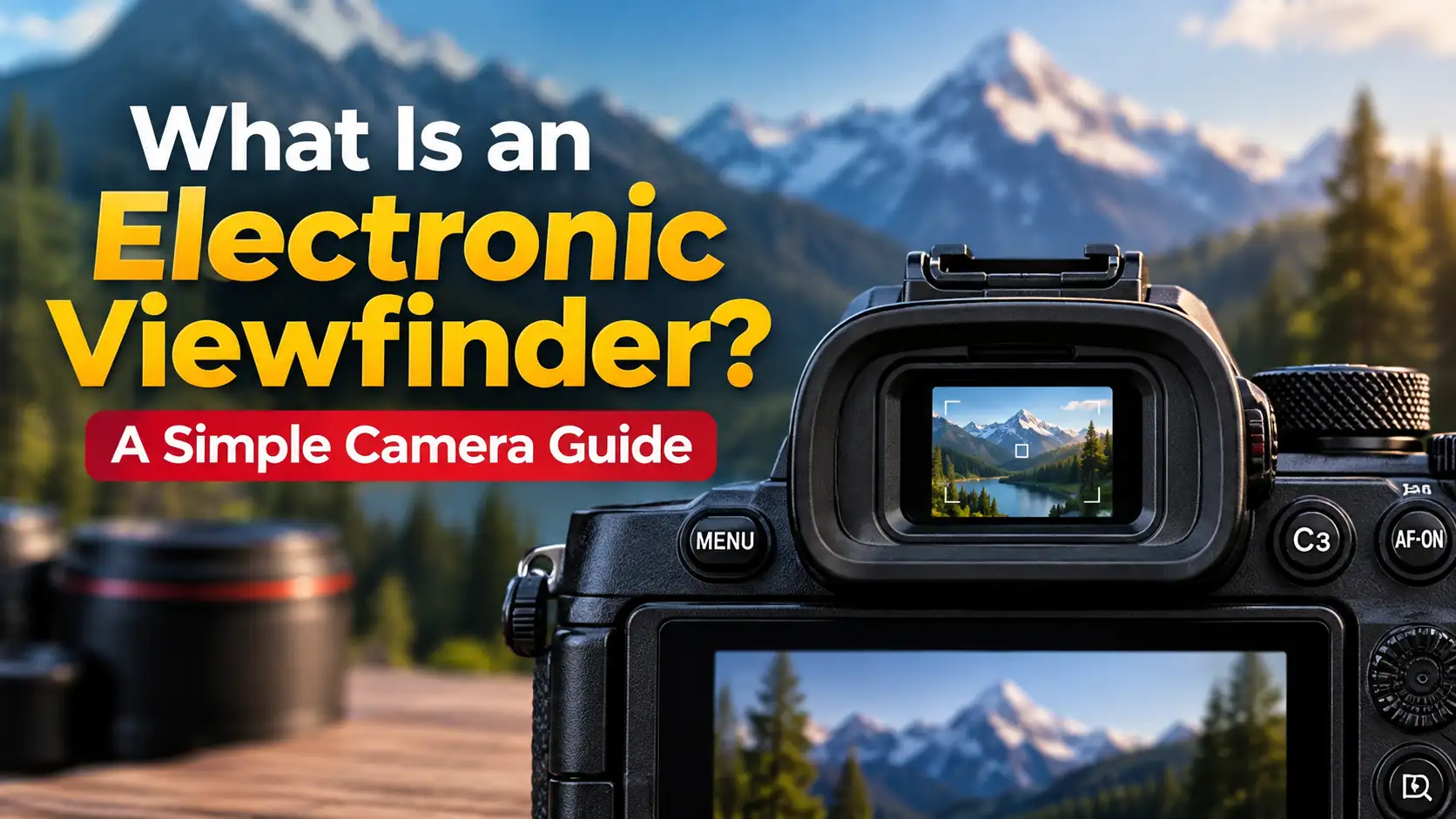
An electronic viewfinder is a tiny digital screen inside your camera. You look through a small eyepiece to see this screen clearly. It shows you exactly what your camera sensor sees in real time.
When I first used one, it changed how I take photos. You can see your exact exposure and colors before you press the button. This small tool removes much guesswork from daily photo work.
Let us look closer at the main parts of this tool.
The Basics of an Electronic Viewfinder
An electronic viewfinder is often called an EVF. It sits at the top of most modern mirrorless cameras. You place your eye against a soft rubber cup to look inside.
Inside the cup, there is a small glass lens. This glass makes the tiny screen look big to your eye. When I look inside, the bright image fills my whole view.
Most new cameras have a small eye sensor near the cup. This tiny sensor detects your face and turns the screen on fast. It works very well and feels quite natural in my experience.
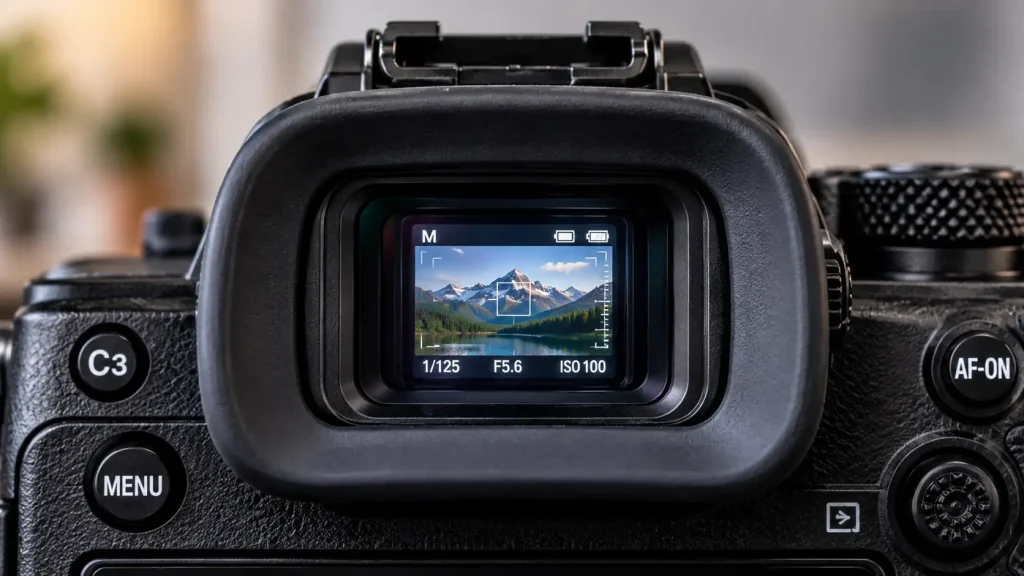
Here is a quick look at the main parts of an EVF.
| Part Name | Main Job | My Experience |
| Rubber Cup | Blocks bright sun | Helps me see clear details. |
| Glass Lens | Makes screen big | Keeps the image very sharp. |
| Eye Sensor | Wakes the screen | Saves my battery power. |
Knowing these parts helps you use your camera better every day.
Now we can explore how the tech actually works inside.
How an EVF Actually Works
Light travels through your main camera lens first. It then hits the digital sensor inside the camera body. The sensor reads this light and turns it into digital data.
The camera brain processes this data in a fraction of a second. It sends a live video feed directly to the tiny EVF screen. I am always amazed by how fast this happens.
You see the final photo before you even take the shot. If you change a setting, the live view changes right away. This fast feedback is why I love modern digital cameras.
The type of screen inside matters a lot for your work.
Screen Types Used in Modern Cameras
Camera makers use different types of tiny screens today. The two most common types are OLED and LCD panels. Each type has its own strengths for shooters.
LCD screens are bright and work well for basic daily shooting. They cost less to make, which keeps overall camera prices down. I have used many great cameras with LCD screens.
OLED screens offer deeper blacks and richer colors. They show contrast much better than normal LCD screens do. I highly prefer OLED when I shoot in dark rooms.
Here is how the two screen types compare.
| Screen Type | Best Feature | Contrast Level |
| LCD Panel | Very bright light | Good |
| OLED Panel | Deep black tones | Very high |
| Hybrid Panel | Mix of both types | Variable |
Check your camera manual to see which screen type you own.
Next, let us discuss why this tech is so helpful.
Real-World Benefits I See When Shooting
The biggest benefit is seeing your exact exposure in real time. If your photo will be too dark, the EVF looks dark. I simply turn my dial until the light looks right.
You can also see your white balance colors before you shoot. If my room light looks too yellow, I fix it instantly. This saves me hours of extra computer work later.
Another great feature is the live tool overlay. I can see a flat level line to keep my horizons straight. I can also view a live graph of my light levels.
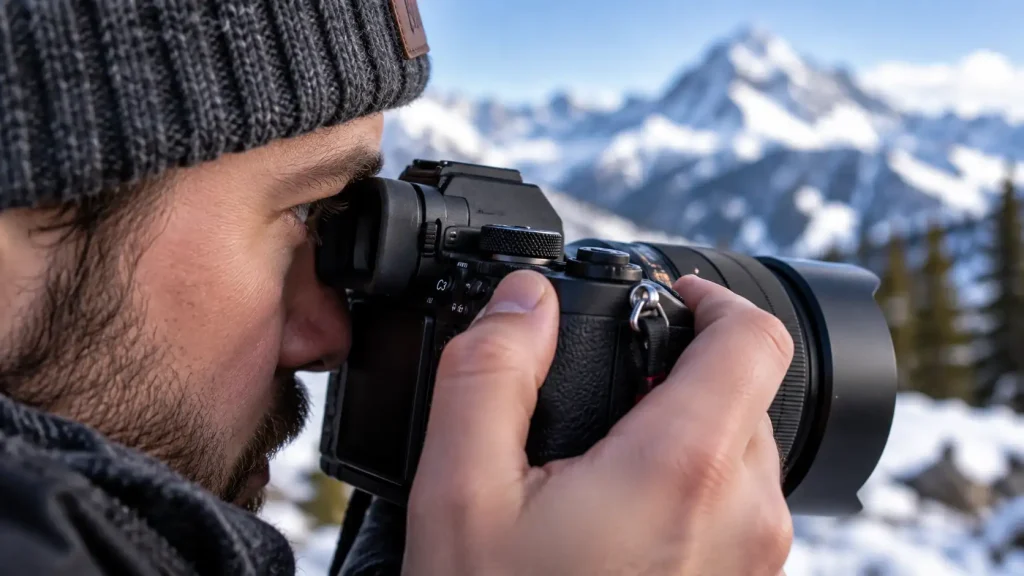
Here is a list of tools I use in my EVF.
| Helpful Tool | What It Does | Why I Use It |
| Grid Lines | Shows a neat grid | Keeps buildings very straight. |
| Histogram | Shows light graph | Stops bright blown skies. |
| Level Tool | Shows a flat line | Fixes tilted horizons fast. |
These digital tools make tricky shoots much easier to handle.
Manual focus is another area where this screen shines.
Manual Focus Made Easy with Peaking
Old vintage lenses are fun, but manual focus can be hard. An EVF makes manual focus very easy with a tool called peaking. Peaking highlights the sharp edges in bright red or yellow colors.
When I turn the focus ring, colored lines appear on my subject. I know exactly what parts are sharp without guessing. I never have to squint my eyes to check focus anymore.
You can also zoom in on the screen while focusing. I press a button to magnify my subject’s eye closely. This guarantees a sharp portrait every single time.
Let us compare this to older camera tools.
Electronic vs Optical Viewfinders
Old film cameras use an optical viewfinder, or OVF. An OVF uses a real glass mirror to show you the world. You see exactly what your naked eye sees.
An OVF uses zero battery power to show a clear image. It also has zero lag because it is just plain glass. Many sports shooters still love this natural optical feel.
However, an OVF cannot show you a live exposure preview. It also goes completely dark when you shoot a video. This is why I moved to electronic screens for my daily work.
Here are the main differences I notice daily.
| Feature | Electronic (EVF) | Optical (OVF) |
| Power Use | Needs battery juice | Needs no power |
| Image Look | Digital screen view | Real glass view |
| Video Mode | Works perfectly fine | Goes pitch dark |
Both styles work well, but digital offers much more help.
When shopping, you must check a few important numbers.
The Important Specs You Should Check
Not all electronic viewfinders are the exact same. The dot count is the most important number you will see. A higher dot count means a sharper and clearer image.
A low dot count screen can look blocky or soft. It makes manual focus much harder to do well. I always look for at least two million dots when buying.
A screen with five million dots looks just like real life. I can see tiny hairs and fine leaf details perfectly. It is highly worth paying more for a sharp screen.
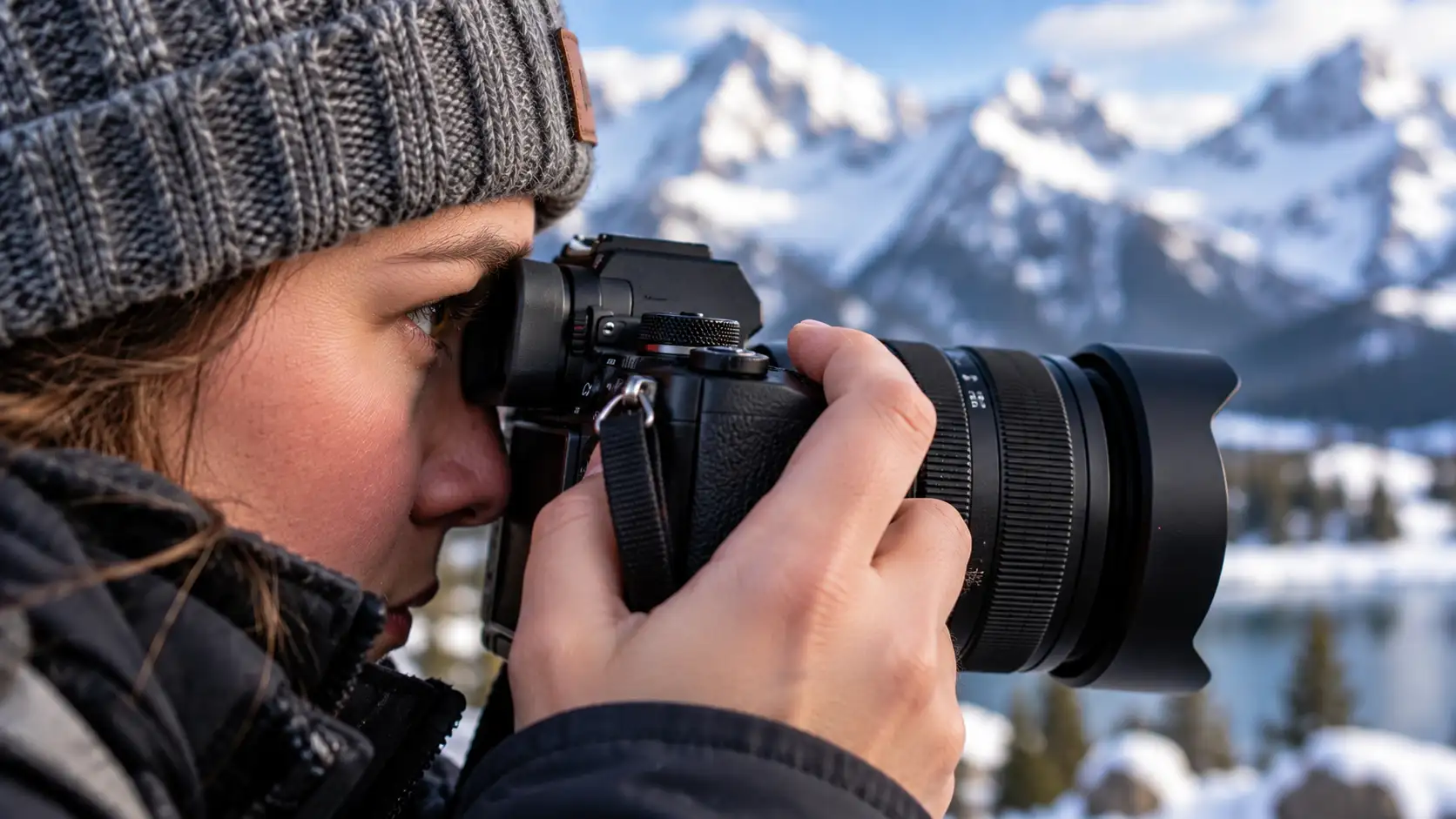
Here is a guide to common screen sizes.
| Dot Count | Screen Quality | Best Use Case |
| 2.36 Million | Good | Basic daily photos. |
| 3.69 Million | Very sharp | Portraits and nature. |
| 5.76 Million | Stunning | Pro manual focus. |
Always try to test the screen in a real store first.
Smooth motion is also very important for sports shooters.
Fast Refresh Rates Keep Action Smooth
The refresh rate is how often the screen updates per second. A low rate makes moving cars look jumpy and slow. This choppy lag can easily ruin a fast action shot.
Most modern cameras offer a fast sixty frames per second rate. Some new models push this to one hundred and twenty. This higher rate feels incredibly smooth and very real.
When I track flying birds, a fast screen is vital. The subject stays perfectly clear as I move my heavy lens. Always turn on the high boost mode if you have it.
We must also talk about the bad parts of this tech.
The Drawbacks I Still Notice Sometimes
No camera tech is completely perfect in every single way. The biggest drawback of an EVF is the battery drain. Powering a bright digital screen takes a lot of juice.
My mirrorless camera dies much faster than my old film camera. I must pack three extra batteries for a long wedding shoot. This adds extra weight and cost to my camera bag.
Another small issue is shooting in the bright sun. Sometimes light sneaks past the rubber cup and hits the screen. This harsh glare can make the image hard to see.
Fast panning can also cause some tricky problems.
Lag Times During Fast Panning
Older screens sometimes freeze for a split second after a shot. This is called viewfinder blackout. It makes tracking a running dog very hard to do.
Even great screens have a tiny delay behind real life. Your brain might not notice it, but it is truly there. I have missed a few fast moments due to this lag.
New stacked sensors fix this blackout problem entirely today. They cost a lot of money, but they work perfectly. Sports pros really need that blackout-free speed for their jobs.
Warm camera bodies are another thing to watch for.
Screen Heat During Long Shoots
Bright digital screens create heat when they run for hours. If I shoot a long video, the EVF gets quite warm. I can feel this heat against my face.
This heat is totally normal and will not break the camera. However, it can feel annoying on a hot summer day. I pull my face back slightly to let the heat escape.
Turning the screen brightness down helps reduce this heat. I also turn the camera off when I am just walking around. These tiny steps keep the camera running cool and safe.
Here are ways to improve your daily experience.
Tips for Getting the Most From Your EVF
You can change settings to make your screen work better. I always adjust the tiny dial next to the eye cup first. This dial focuses the screen glass for my exact eyesight.
I also dive into my camera menu to tweak the screen colors. I want my camera screen to match my computer monitor at home. A matching screen ensures my photo colors stay very accurate.
Lastly, I keep the eye sensor very clean every week. Dust on this sensor can make the screen turn off randomly. A quick wipe with a clean cloth fixes the problem fast.
Here are my top tips for daily use:
-
Set your refresh rate to high for fast sports.
-
Turn down screen brightness at night to save battery.
-
Clean the rubber cup with a soft brush weekly.
-
Adjust the side focus dial without your glasses on.
-
Turn on focus peaking for old manual lenses.
Let us answer some common questions now.
FAQs For What Is an Electronic Viewfinder
Can I use an electronic viewfinder while wearing glasses?
Yes, you can easily use it with your glasses on. I wear glasses and simply push the rubber cup against my frame. Most cameras give you enough room to see the whole screen.
Does using the EVF drain the battery faster than the back screen?
Yes, it often drains power faster than the large back screen. The tiny screen works hard to push bright pixels to your eye. I turn my camera off between shots to save my battery.
Why does my viewfinder look grainy in dark rooms?
The camera must boost its power to see in the dark. This power boost creates digital noise, which looks like moving sand. When you take the actual photo, the final image usually looks much cleaner.
Can the bright sun damage my electronic screen?
Yes, direct sun can burn the tiny screen inside. The glass lens acts like a magnifying glass on a hot day. I always point my lens down when I walk outside to protect it.
Is an EVF better for shooting bright snow scenes?
I find it much better for bright snow shots. The rubber cup blocks the glaring sun from my eyes. I can clearly check my exposure to stop the snow from turning dull gray.
Here are my final thoughts on this digital gear.
Conclusion
An electronic viewfinder is an amazing tool that takes the guesswork out of daily photo work. I truly love seeing my exact colors, focus, and exposure before I even take the shot. If you want to shoot better photos, mastering this tiny screen is a huge step forward.

1 thought on “What Is an Electronic Viewfinder? A Simple Camera Guide”