

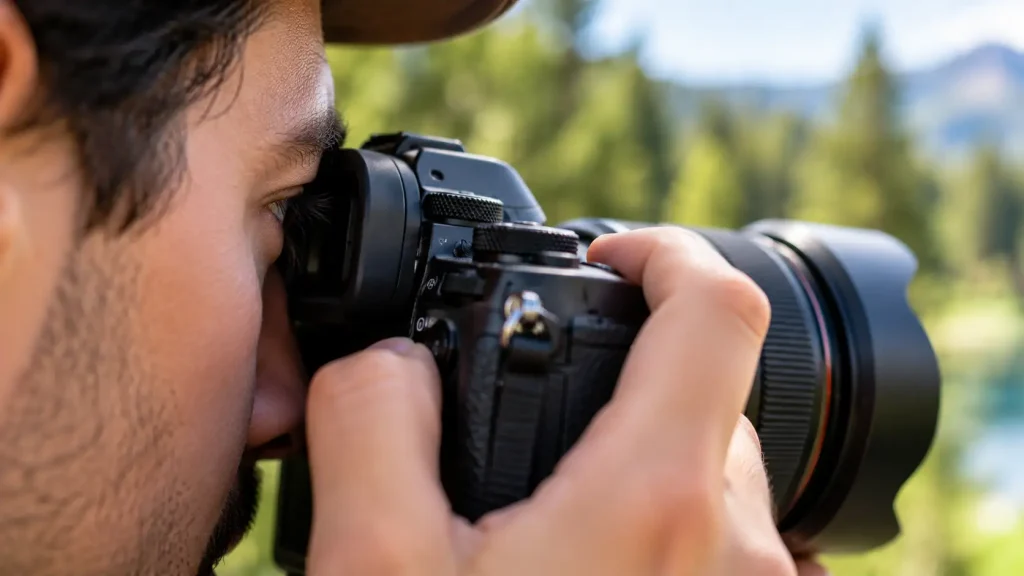
When I hold my gear, I look through the top hole. This small window is the viewfinder. It helps me frame my shots and check my focus fast.
I like it much more than the big back screen. Bright sun never hurts my eyes here. I just press my face to the glass to feel close to my subject.
Let us start with a clear answer to our main topic.
What Is a Viewfinder?
The viewfinder is a small glass window. It sits on the back of your camera. You look through it to build your perfect shot.
Here is a quick look at the two main styles. They both help you frame your shot fast.
| Type | How It Works | Best For |
| Optical | Uses real glass mirrors | Saving your battery power |
| Digital | Uses a tiny bright screen | Seeing true light live |
I use both types for my daily work. Each one has a fun feel and gives distinct perks. I pick the best one for my specific task.
Next, I will show you how this part actually works inside your gear.
How Does a Viewfinder Work?
A glass finder uses a real mirror. Light enters the main lens first. The mirror bounces this light straight up to your eye.
A digital version works in a brand new way. Light hits the main camera chip first. This chip sends a live video feed to a tiny screen.
I love how this tiny screen shows true light. If my shot is dark, the screen looks dark. This saves me from making bad mistakes on a big shoot.
Let us look closer at the pure glass option.
The Classic Glass Option
Old film cameras use this real glass setup. You see the true light in real time. There is no lag at all when you pan.
Here are the top traits of a glass setup. They make shooting fast sports a real breeze.
| Trait | What It Means | My View |
| Lag Free | Zero speed delay | Great for fast sports |
| Battery Life | Uses no real power | Lasts for long days |
| Brightness | True room light | Hard to see in dark spots |
I spent years shooting fast cars with this setup. The pure view makes it easy to track fast moving things. My eyes stay relaxed all day long.
Now let us look at the new digital screens.
The Modern Digital Screen
New cameras use tiny screens inside the top hole. This is an electronic viewfinder. It acts just like a mini TV for your own eye.
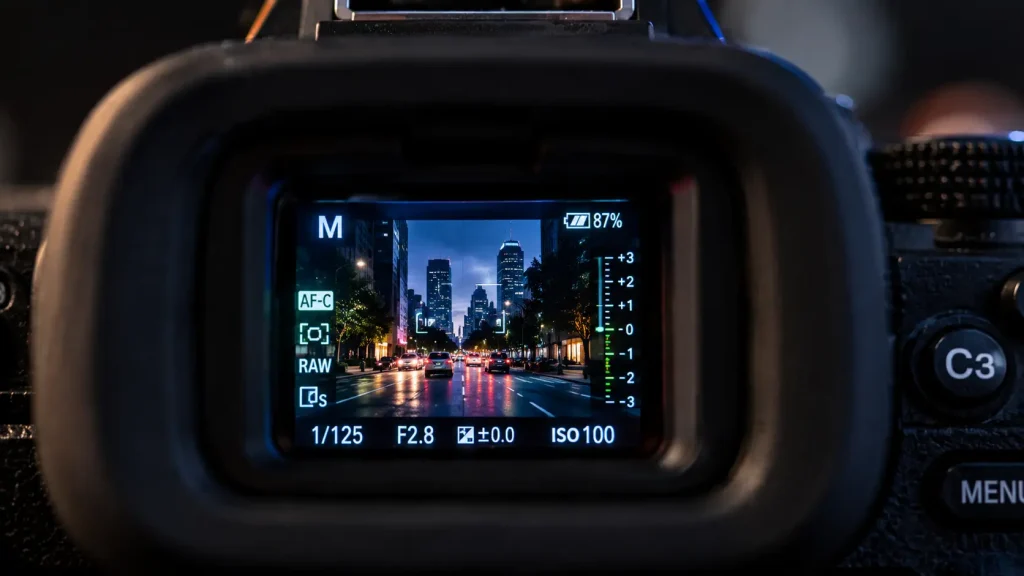
When I use one, I see my colors live. If I change a setting, the screen shifts right away. It takes all the guess work out of my job.
I also love to review my shots inside the hole. I just look inside to check my fine focus. The bright sun never washes out my quick review.
It helps to know how these two compare on site.
Key Differences I Notice
The biggest change I feel is in dark rooms. A glass finder stays dark if the room is dark. A digital screen boosts the light so I can see well.
Here is how the two compare in daily use. Each one has a clear strong point for my work.
| Feature | Optical | Digital |
| Low Light | Stays super dark | Boosts the light |
| Live Preview | Does not show edits | Shows edits right away |
| Power Drain | Very low drain | Very high drain |
The digital screen does drain my battery fast. I always pack extra packs when I shoot with one. A glass mirror lets me shoot all week on one charge.
There are a few specs you should check before buying.
Important Features to Check
When I test a new camera, I check the screen dots. A sharp screen makes it easy to tell if things are clear. A bad screen just hurts my eyes.
These numbers tell you how good the screen is. Better numbers mean a much clearer view for you.
| Spec | What It Does | Good Number |
| Dots | Shows fine detail | Three million or more |
| Refresh Speed | Smooths out motion | Fast frame rates |
| Size Scale | Makes image look big | High scale value |
I also look at the size scale number. A big number means the image looks huge to your eye. A big image helps me spot tiny details on a face.
Sometimes I choose not to use the top hole.
When to Use the Back Screen
I do not use my eyepiece for every single shot. When I shoot low to the ground, I use the back screen. Bending down low just hurts my neck.
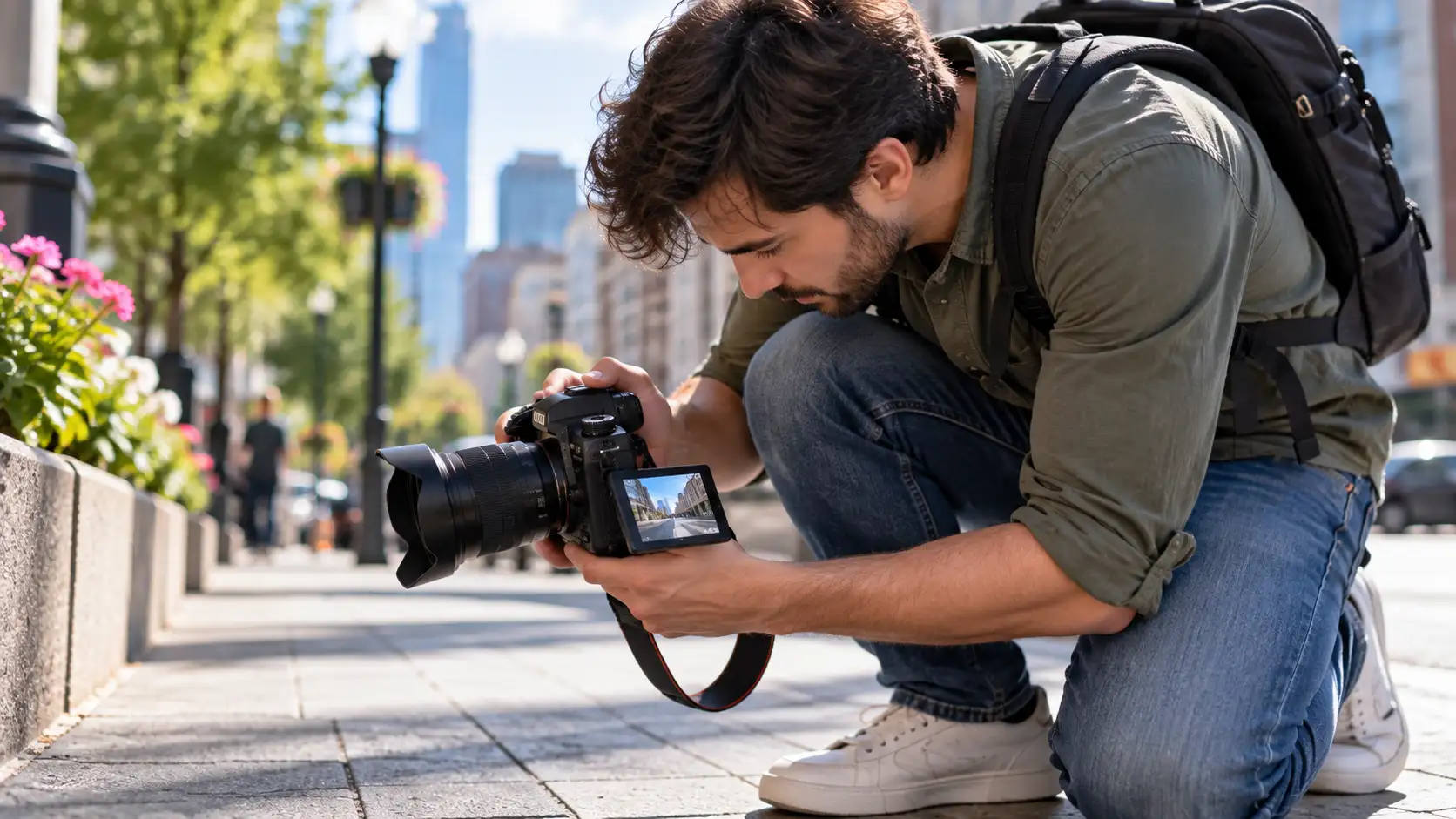
The back screen is great for video work on a stand. I can stand back and watch the scene with ease. The large screen lets my friends see the shot too.
But I always go back to the top hole for fast action. Holding the camera to my face keeps my hands still. A still camera gives me crisp and sharp photos.
Let me share a few simple tricks for sharp focus.
My Top Tips for Sharp Focus
First, you must set the small dial next to the cup. This dial tunes the glass to match your own eyes. If you skip this step, all will look blurry.
Here are the steps I take to dial it in. Follow these steps to get a crystal clear view.
-
Look through the window at a bright clear scene.
-
Half press the top button to wake up the screen.
-
Spin the tiny wheel next to the soft cup.
-
Stop when the digital numbers look super sharp.
Once the text is sharp, I know the lens focus is true. This takes five seconds and saves my big shoots. Do this once and just leave it alone.
Let us talk about using these tools for film work.
Using Them for Video Work
Many film makers add a large cup over the screen. This blocks all outside light from hitting the glass. A dark screen helps me judge my shadows well.
Here is why I use them for film tasks. They help me shoot great clips in the bright sun.
| Benefit | Why It Matters | Real World Use |
| Blocks Sun | Stops bad glare | Hot noon weddings |
| Adds Balance | Acts as a third point | Walking with gear |
| Shows Edges | Highlights sharp lines | Manual focus pulls |
In bright sun, the back screen becomes useless for film. The glare washes out all the deep true colors. Using the top hole saves my shoots on sunny days.
It helps to know how glasses change your time.
Shooting With Eye Glasses
I wear glasses, so using the eyepiece can be hard. My frames push my face away from the glass. This makes it tough to see the far corners.
I look for a long eye relief spec when buying gear. A long relief lets me see the whole frame with my glasses on. It makes my work much less hard each day.
Sometimes I just take my glasses off. I use the small dial to fix my own sight. This lets me press my eye right on the soft cup.
You should also learn how to clean this part well.
How I Clean My Eyepiece
Dust loves to hide inside the soft rubber cup. When dirt gets on the glass, it drives me crazy. It looks like a spot on my actual photo.
I use a soft air blower to push the dust out. I never use my shirt to wipe the clear glass. Rough cloth can scratch the clear coat on the lens.
If the glass gets oily, I use a fresh clean swab. A gentle wipe takes the face oil right off. A clean view keeps my eyes from getting tired.
Let us look at the soft part that touches your face.
The Rubber Eyecup
The soft rubber ring round the glass is a big deal. It blocks stray light from sneaking into your eye. This stray light can ruin your view of the screen.
I always buy large, soft cups for my work gear. A big cup acts like a shield from the bright sun. It also feels much nicer on my skin all day.
Some cups block the sensor that turns the screen on. I always test a new cup to make sure my gear still works. A good cup makes my work day much more fun.
Next, I will answer some common questions on this topic.
Frequently Asked Questions
What is the main point of a viewfinder?
It gives you a clear and glare free look at your scene. It blocks out the sun so you can see your frame. It also helps you hold the gear steady on your head.
Can I shoot a camera without one?
Yes, you can just use the big screen on the back. Many small cameras do not even have an eyepiece today. I find it harder to shoot in bright sun, but it still works.
Why does my digital screen look so choppy?
Your camera might be set to a low speed to save power. I always go into the menu and pick the high speed mode. This makes the live video feed look totally smooth.
What does a hybrid viewfinder do?
It mixes a real glass window with digital text on top. I love using this on my classic street style cameras. It gives me the best traits of both styles at once.
How do I fix a blurry eyepiece?
You need to spin the small wheel next to the cup. Keep spinning it until the text inside the window looks sharp. This tunes the glass to match your own eyes.
Does the digital screen drain my battery fast?
Yes, it uses a lot of power to run that tiny screen. It often uses more power than the big back screen. I always pack spare power packs for long shoots.
Here are my final thoughts on this vital camera part.
Conclusion
The viewfinder is my most trusted tool for framing great photos. It blocks out the glare and helps me feel close to the scene. If you use glass or a digital screen, it will quickly improve your shots.

1 thought on “What Is a Viewfinder? A Simple Guide for Sharp Photos”