
Stepping into the world of photography can feel overwhelming when you are staring at endless spec sheets, wondering why two cameras that look identical have a $1,000 price difference. Understanding what is a camera made of is the most effective way to demystify these price tags and find the right gear for your needs. Whether you are buying your first mirrorless camera, upgrading your DSLR, or shopping for a rugged action cam, knowing the materials and parts inside your device helps you make a confident, informed decision.
In this guide, I will break down the external materials and internal components that make up a modern digital camera. By the end, you will know exactly what you are paying for, how to spot durable gear, and which features actually matter for your photography journey.
Quick Answer
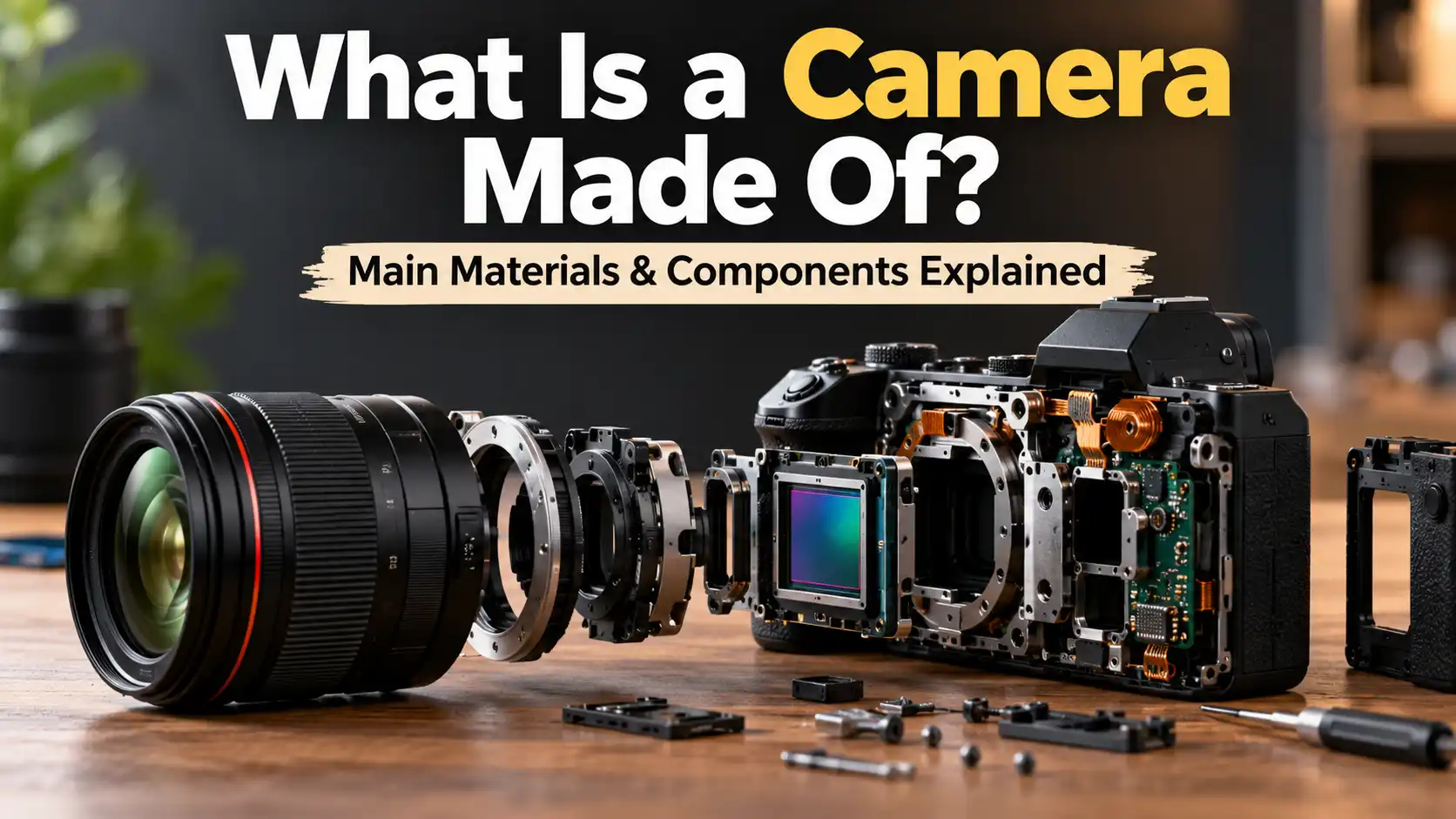
A modern digital camera is made of an external shell—typically constructed from magnesium alloy, aluminum, or plastic/polycarbonate—and weather-sealing rubber grips. Inside, the core internal components include the image sensor, processor, mechanical or electronic shutter, lens mount, glass elements, viewfinder, battery, and the memory card system.
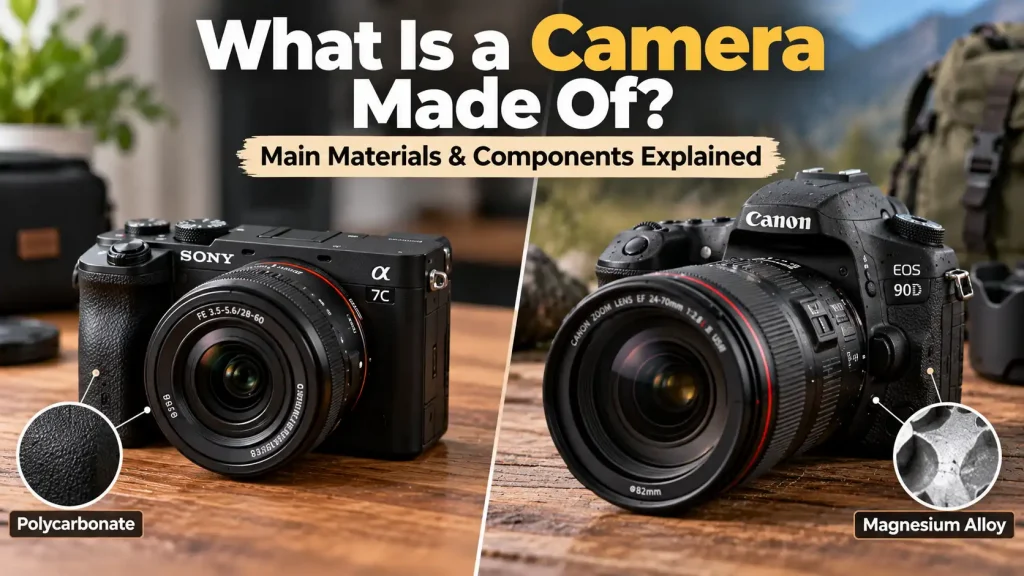
The Outer Shell: External Materials Explained
The body of a camera dictates its weight, durability, and resistance to the elements. Manufacturers carefully select materials based on the target audience, balancing affordability with ruggedness.
Magnesium Alloy
Professional and high-end enthusiast cameras almost exclusively use magnesium alloy for their internal frames and outer shells. This material is incredibly strong but significantly lighter than steel. If you are shooting in harsh environments or accidentally bump your camera against a rock, a magnesium body is highly resistant to denting and internal shock. It also excels at dissipating the heat generated by the camera’s processor during heavy 4K or 8K video recording.
Polycarbonate and Plastic
Entry-level cameras and travel-friendly models often rely on plastic/polycarbonate builds. Do not let the word “plastic” scare you away; high-grade polycarbonate is incredibly tough and keeps the camera lightweight. This material is perfect for everyday hobbyists, vloggers, and travelers who want to avoid neck strain. However, polycarbonate bodies generally lack the heavy-duty weather sealing found in professional alloy models.
Aluminum
Some manufacturers use aluminum for specific top plates, dials, and structural bracing. Aluminum offers a premium, tactile feel and excellent durability. You will often see it used in retro-styled mirrorless cameras where aesthetics and a classic, cold-metal feel are part of the buying appeal.
Rubber and Weather Sealing
If you look at the grips and seams of a camera, you will find textured rubber. This isn’t just for comfort; rubberized grips prevent the camera from slipping out of your hands when sweating or shooting in the rain. High-end cameras also feature rubber gaskets and O-rings tightly packed around buttons and dials to keep moisture and dust out of the sensitive electronics.
The Heart of the Machine: Internal Components
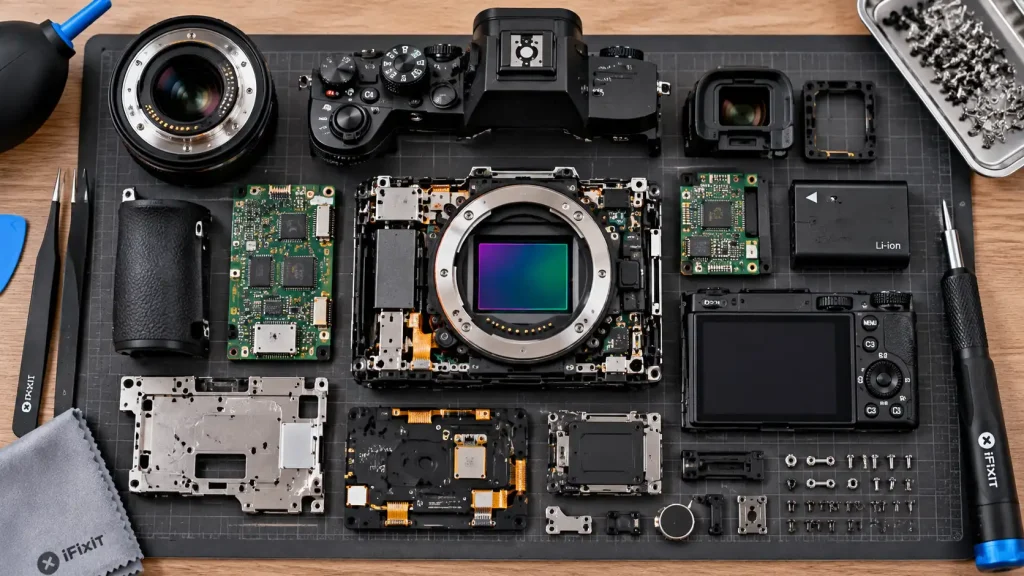
What happens inside the camera is where the real magic—and the majority of your money—goes. The internal electronics and mechanical parts work together in fractions of a second to capture light and turn it into a digital file.
Image Sensor and Processor
The image sensor is the single most expensive and important part of a digital camera. Replacing the old rolls of film, this silicon chip captures light and converts it into electrical signals. According to Sony’s advanced image sensor technology research, the physical size of the sensor—whether APS-C, Full-Frame, or Micro Four Thirds—plays a much bigger role in low-light performance and background blur than the megapixel count. Sitting right next to the sensor is the image processor, the “brain” of the camera that dictates how fast you can shoot, how well the autofocus tracks moving subjects, and how colors are rendered.
The Shutter and Lens Mount
Right in front of the sensor sits the shutter. In DSLRs and many mirrorless cameras, this is a delicate mechanical curtain that snaps open and closed to expose the sensor to light. In modern cameras, electronic shutters are becoming standard, allowing for completely silent shooting with no moving parts. Just ahead of the shutter is the lens mount, a highly engineered metal ring that allows you to attach different lenses. It contains electronic contact pins that let the camera talk to the lens to control autofocus and aperture.
Viewfinder, Memory, and Battery
The way you interact with the camera depends heavily on the viewfinder. Optical viewfinders (OVFs) in DSLRs use a system of mirrors and glass prisms to show you exactly what the lens sees. Mirrorless cameras use Electronic Viewfinders (EVFs), which are tiny, high-resolution OLED screens. Finally, everything is powered by a high-capacity lithium-ion battery, while your precious photos are written to the memory card system—usually an SD or CFexpress slot.
Expert Tips:
When buying a used camera, always check the “shutter count.” Mechanical shutters have a lifespan (usually rated for 100,000 to 300,000 actuations). Buying a camera with a high shutter count is like buying a car with 200,000 miles on the engine; it may need an expensive replacement soon.
Camera Material Comparison: Which is Right for You?
To help you decide what level of build quality you need, here is a quick comparison of the most common camera construction materials.
| Feature | Polycarbonate (Plastic) | Magnesium Alloy | Aluminum Accents |
| Weight | Very light | Moderate to heavy | Moderate |
| Durability | Good for everyday use | Extreme, impact-resistant | High |
| Weather Sealing | Usually minimal | Advanced (dust/splash-proof) | Varies by model |
| Target User | Beginners, travelers, vloggers | Professionals, wildlife/sports shooters | Enthusiasts, street photographers |
| Price Impact | Keeps camera affordable | Increases camera cost significantly | Premium pricing |
When to Get Professional Help or a Second Opinion
In my experience testing gear for TechToGoal, I see many photographers try to save money by fixing their own gear. While wiping down the outer shell is perfectly fine, the internal components are incredibly fragile.
You should never attempt to repair a camera’s internal mechanisms yourself. Opening a camera body exposes the highly sensitive image sensor and high-voltage flash capacitors. Furthermore, if you notice dark, fuzzy spots on your photos that don’t disappear after a basic air-blower cleaning, your image sensor likely has stubborn dust or oil spots. Do not use household cleaning fluids or cotton swabs to clean a sensor. Instead, take it to an authorized camera service center. A professional sensor cleaning is inexpensive and guarantees you won’t permanently scratch the glass filter covering the sensor, which would ruin the camera.
Common Mistakes Camera Buyers Should Avoid
-
Paying for weather sealing you don’t need: If you only shoot indoors or on sunny days, spending an extra $500 for a heavily sealed magnesium body is unnecessary. A polycarbonate body will serve you perfectly.
-
Ignoring the lens mount ecosystem: Before buying a camera, check the availability and price of lenses for that specific lens mount. You are buying into a system, not just a single camera body.
-
Using cheap memory cards: A high-end camera will completely freeze if you use a slow, low-quality memory card. Always match your memory card system with the speed requirements of your camera’s video features.
-
Assuming metal means better image quality: The external shell has zero impact on image quality. A plastic camera and an alloy camera with the exact same image sensor and processor will take identical photos.
FAQs
What is the outer shell of a camera made of?
Most entry-level cameras are made of high-quality polycarbonate (plastic) to keep them lightweight and affordable. Professional cameras use magnesium alloy, which provides superior strength, weather sealing, and heat dissipation.
What is the most expensive part of a camera?
The image sensor is typically the most expensive single component in a digital camera. The size and technological complexity of the sensor are the primary reasons full-frame cameras cost significantly more than crop-sensor cameras.
Why do some cameras feel heavier than others?
Heavier cameras usually feature a magnesium alloy chassis, multiple glass elements in the built-in viewfinder, and larger batteries. More robust weather sealing and physical metal dials also add to the overall weight.
Can I clean the inside of my camera myself?
You can safely use a manual silicone air blower to gently remove loose dust from the sensor or lens mount. However, you should never touch the internal components with your fingers, standard cloths, or chemical cleaners, as they can easily damage the delicate sensor coating.
What is a camera lens made of?
A camera lens is primarily composed of an outer metal or high-grade plastic barrel, containing multiple curved optical glass elements. It also houses intricate internal motors for autofocus and a mechanical diaphragm made of thin metal blades that control the aperture.
Making the Right Choice for Your Photography Journey
Understanding what your camera is made of helps you look past the marketing jargon and focus on what truly matters for your shooting style. If you are a casual shooter or travel blogger, a lightweight polycarbonate body will save your neck and your wallet. If you plan to shoot sports in the pouring rain, investing in a magnesium alloy body with professional weather sealing is non-negotiable.
Remember that while the exterior dictates durability, the internal components—the sensor, processor, and autofocus system—are what dictate your image quality and performance speed. Take a close look at your budget, match the build quality to the environments you plan to shoot in, and focus your remaining budget on acquiring excellent glass for your lens mount.

1 thought on “What Is a Camera Made Of? Main Materials & Components Explained”