
I recall when I first looked through a real lens. I saw the world straight through clear glass. I did not look at a glowing digital screen.
That glass window on the back is an optical viewfinder. It lets you frame your shot using pure light. You see exactly what the lens sees in real time.
Let us look closely at what this tool actually does.
What Is an Optical Viewfinder?
An optical viewfinder is a small glass window on your gear. It uses real glass and flat mirrors to show the view. You do not look at a fake video feed.
When I shoot fast sports, I love this direct view. There is zero lag time because pure light travels fast. You never miss a quick moment waiting for a screen.
It feels like looking through a clean home window. This setup is the heart of a standard digital camera. Many older film cameras use a similar glass setup too.
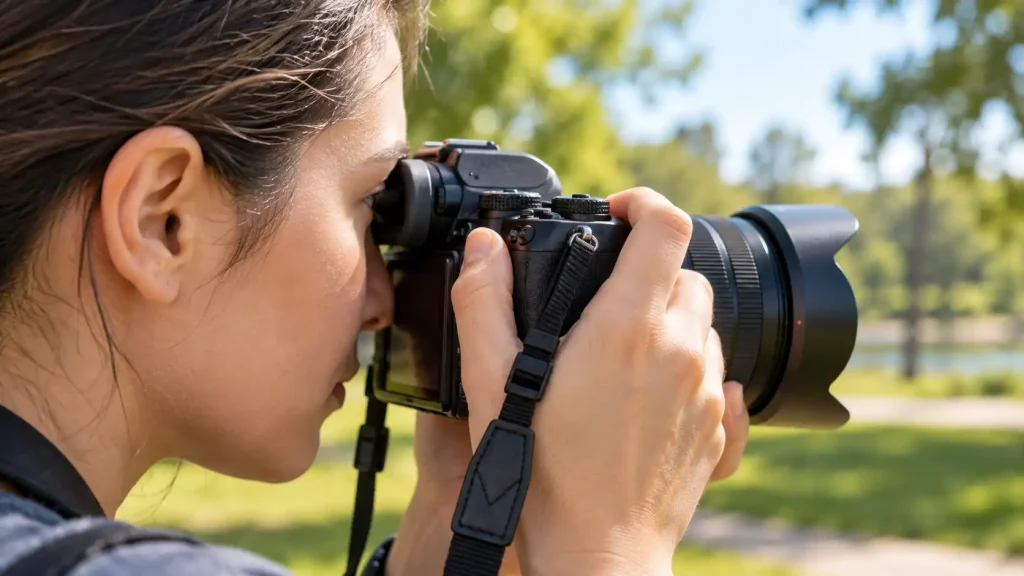
Before we move on, I want to share a quick chart. This chart shows how a glass view compares to a screen.
| Feature | Glass Window | Digital Screen |
| Image Type | Real light | Video feed |
| Lag Time | Zero lag | Slight lag |
| Power Need | Uses no battery | Drains battery |
As you can see, glass paths save your power life. They also give you an instant view of your subject.
Next, I will explain the simple magic inside the camera body.
How Does an Optical Viewfinder Work?
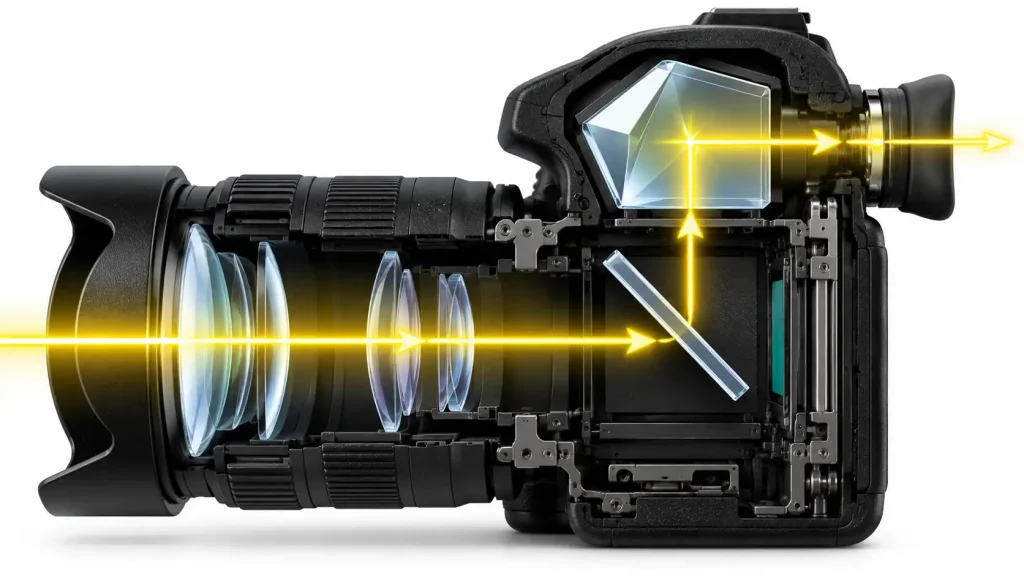
The steps start when light comes through your main front lens. The light hits an angled mirror inside the camera body. This mirror bounces the light straight up into a glass block.
When I first cleaned my gear, I saw this main mirror. It sits right in front of the flat image sensor. The glass block at the top flips the image right.
Without that top block, the world would look upside down. The light then leaves through the back window to your eye. When you take a photo, the mirror flips out of the way.
Here is a breakdown of the parts that make this happen. This simple list shows the path of light in the camera.
| Key Part | What It Does |
| Main Lens | Gathers the light |
| Main Mirror | Bounces light up |
| Top Prism | Flips the image |
These simple parts work together in perfect physical form. They create the bright view you see when framing a shot.
Not all glass windows are built the exact same way.
Main Types of Optical Viewfinders
Most pro gear uses one of two main inside builds. The first type uses a solid glass block called a pentaprism. I always look for this type when buying a pro camera.
The solid glass block gives a very bright and clear view. The second type is a flat mirror design for starter cameras. This style uses separate flat mirrors instead of solid glass.
It is much lighter and costs less money to make. I find this type in most cheap level digital cameras. They are slightly darker but still provide a great fast view.
Let us compare the two main styles you will find. This chart shows the main traits of brightness and weight.
| Style | Brightness Level | Overall Weight |
| Solid Glass | Very bright | Heavy glass |
| Flat Mirrors | Slightly darker | Light plastic |
I always suggest trying both types in your own hands. The solid glass block just feels much brighter to my eye.
There are great reasons why shooters still love this older gear.
Big Benefits of Optical Viewfinders
The biggest perk is the total lack of screen lag. When a bird takes flight, you see it happen right away. I rely on this pure speed when tracking fast moving things.
Another huge perk is the great all day power life. You do not run a small video screen inside the top window. I can often shoot all weekend on a single charge.
You also get a very clear view in bright sunlight. A glowing screen can wash out on a bright summer day. A glass window always stays perfectly clear and very bright.
Here are my favorite reasons to use one today:
-
Zero delay when watching fast action unfold
-
Much longer power life on long travel shoots
-
Clear viewing even in harsh, bright summer sun
-
True natural colors that do not look fake
-
Less eye strain during long wedding shoot days
Battery life is a huge deal for long working days. Here is a quick look at how power life roughly compares.
| View Type | Shots Per Charge | Power Draw |
| Glass Window | Over 1000 | Very low |
| Digital Screen | Around 300 | Very high |
This massive gap keeps me shooting longer with less stress. I rarely need to swap power packs during a short gig.
Even great gear has a few real limits you should know.
Real Limits of Optical Viewfinders
The main flaw is that you do not see dial changes. If your dials are set too dark, the glass still looks bright. I have ruined shots because I forgot to check my dials.
You also do not see live color edits or special looks. The glass only shows you the real, raw world outside. Digital screens show you the final photo before you click.
Another limit happens when shooting in very dark indoor rooms. The glass view gets very dark and hard to clearly see. A glowing screen can brighten up a dark room for you.
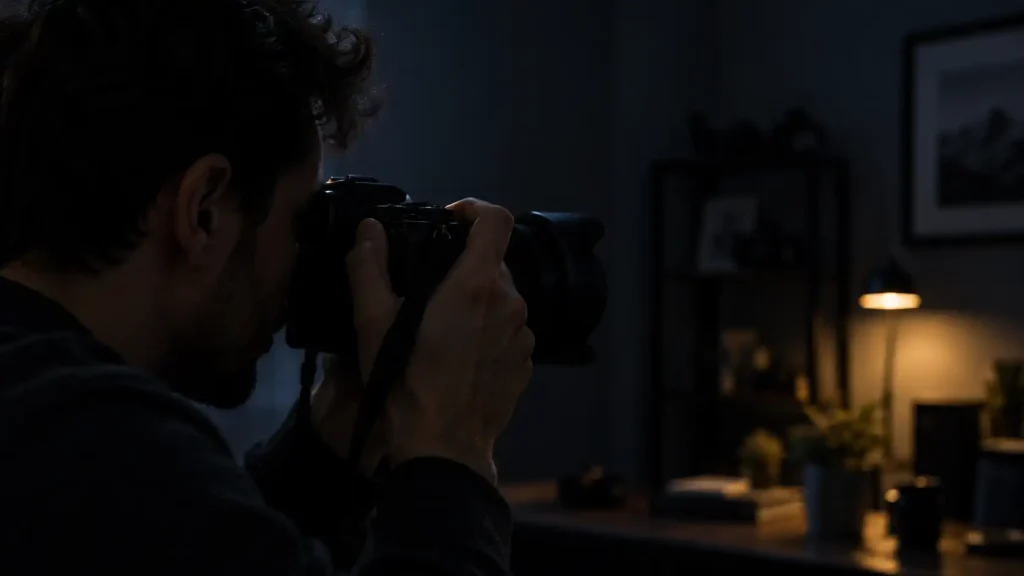
Shooting in the dark shows the biggest limit of glass. Here is how both views handle tricky low light spaces.
| Light Space | Glass View | Digital View |
| Bright Sun | Very clear | Can wash out |
| Dark Room | Hard to see | Brightens up |
I always switch to a rear screen in dark rooms. The glass just cannot gather enough raw light to help me focus.
You might wonder why many new cameras lack this feature today.
Why Some Cameras Skip Optical Views
Many new cameras do not use glass view windows at all. They remove the inside mirror to make the gear much smaller. This choice changes the whole physical feel of the gear.
When I held my first small smart gear, it felt tiny. Without the large glass block, the top is flat and light. They put a tiny glowing screen inside the top window instead.
This tiny screen is called an electronic view screen. It reads live video feed straight from the main flat sensor. You lose the fast glass, but you gain smart digital tools.
Keeping this glass clean is very vital for clear, sharp shots.
How to Clean Your Viewfinder
Dust loves to rest inside the small rubber eye cup. I use a simple air blower to puff the dust away safely. Never push hard on the glass with your bare fingers.
Sometimes a soft fine cloth is needed for bad smudges. I gently wipe the outside glass in a small round motion. A clean window makes framing your fresh shots so much easier.
If dirt gets inside the camera on the mirror, be careful. I never touch the fragile inside mirror with any cloth at all. I only use gentle air to blow that inside dust away.
Let us talk about when this specific gear really shines best.
Best Uses for an Optical Viewfinder
Sports shooters love this glass build for a very good reason. The zero lag lets them track fast cars and running players. I always use a glass view for fast moving action shots.
Nature shooters also rely heavily on this clear glass view. Tracking a flying bird is much easier with no screen delay. The bright glass view helps you keep the bird in frame.
Studio shooters enjoy the clear, true natural colors of the glass. You can bond with your subject without a glowing screen. It just feels like a more natural way to work together.
You should also know how this affects your attached lenses.
How Lenses Change the Optical View
When you look through the glass, the view changes with your lens. A wide lens shows a huge, wide scene in the window. A zoom lens makes the scene look very big right away.
I love seeing the world get tight when I attach a zoom. The glass view gets darker if you use a cheap, slow lens. Pro lenses let more light in, making the window much brighter.
You will also see the blur effect change through the glass. Some cameras have a button to check this blurry back effect. I use this button to check my focus before taking the shot.
You might still have a few common questions about this classic tool.
Frequently Asked Questions
Does an optical viewfinder use any battery power?
No, the physical glass and mirrors do not use battery power. The light simply bounces through the camera straight to your eye. This is exactly why these cameras last so long on one charge.
Can I see my photo exposure in an optical view?
No, you only see the real natural light in the room. You must look at the digital light meter line inside the window. I always check my light meter to ensure a bright enough shot.
Do all true cameras have optical viewfinders?
No, this glass setup is standard only for older DSLR cameras. The name itself stands for digital single lens reflex tech design. That reflex action refers to the physical mirror bouncing the light.
Is an optical view better for your tired eyes?
Many shooters find it causes much less overall eye strain. You are looking at natural light instead of a bright glowing screen. I find my eyes feel much better after long wedding shoots.
Why does the view go dark when taking a photo?
The mirror must flip up to expose the main flat sensor. When it flips up, it blocks light to the top viewing window. This quick physical action causes a very brief blackout when you shoot.
Can I use this viewfinder to shoot digital video?
No, the mirror must lock up to record live digital video. When the mirror locks up, the glass window goes completely dark. You must use the rear digital screen to shoot your video.
Let me wrap up my final thoughts on this classic photo tool.
Conclusion
An optical viewfinder gives you a pure, real time look at your world. I love the instant speed and the massive battery life it gives you. It remains a powerful tool for framing fast moments and crisp photos.
