
A medium format camera uses a larger film frame or sensor than 35mm to capture richer detail and depth.
Understanding what is a medium format camera can help you choose the right tool for portraits, landscapes, fashion, and commercial work. These cameras are known for large imaging areas, strong image quality, smooth background blur, and a careful shooting style. This guide explains how medium format works, where it excels, what it costs, and whether it fits your photography goals.
What Is a Medium Format Camera?
A medium format camera is a camera that uses film or a digital sensor larger than the 35mm format but smaller than large format. In simple terms, it gives the lens a larger canvas on which to record light.
Traditional medium format film often uses 120 or 220 roll film. Common frame sizes include:
• 6 × 4.5 centimeters
• 6 × 6 centimeters
• 6 × 7 centimeters
• 6 × 9 centimeters
Digital medium format cameras use sensors that vary in size. Many modern models use a 44 × 33 millimeter sensor. Larger systems may use a sensor close to 54 × 40 millimeters.
A full-frame camera uses a sensor close to 36 × 24 millimeters. This means a medium format sensor can collect more image information, although the exact advantage depends on the sensor, lens, lighting, and image processing.

Source: casualphotophile.com
How Medium Format Differs From Full Frame
The main difference is sensor or film size. A larger capture area can produce more detail, smoother tones, and a different depth-of-field look.
Think of a full-frame sensor as a standard sheet of paper. A medium format sensor is a larger sheet. Both can create a good drawing, but the larger sheet gives the artist more room for fine detail.
Here are the key differences:
• Sensor size: Medium format is larger than full frame.
• Detail: Medium format cameras can record very fine textures when paired with sharp lenses.
• Depth of field: At the same framing and aperture, medium format can create a shallower-looking background.
• Dynamic range: Some medium format systems capture excellent highlight and shadow detail.
• Camera size: Medium format bodies and lenses are often larger, though mirrorless models have reduced the gap.
• Speed: Many full-frame cameras offer faster autofocus, faster bursts, and better subject tracking.
• Cost: Medium format systems often cost more, especially when you include lenses and accessories.
A medium format camera does not automatically create a better photograph. Light, composition, timing, and focus still matter. The larger format gives you more image potential, but you must use it well.
Medium Format Crop Factors
Crop factor can make lens comparisons confusing. A 50mm lens on a 44 × 33 millimeter sensor does not produce the same view as a 50mm lens on full frame.
As a rough guide, a 50mm lens on a 44 × 33 millimeter sensor may look similar to about a 40mm lens on a full-frame camera. The exact figure depends on the sensor dimensions and the comparison method.
This matters when choosing lenses for portraits or landscapes. A medium format lens may offer a familiar field of view while still producing the format’s distinct rendering.
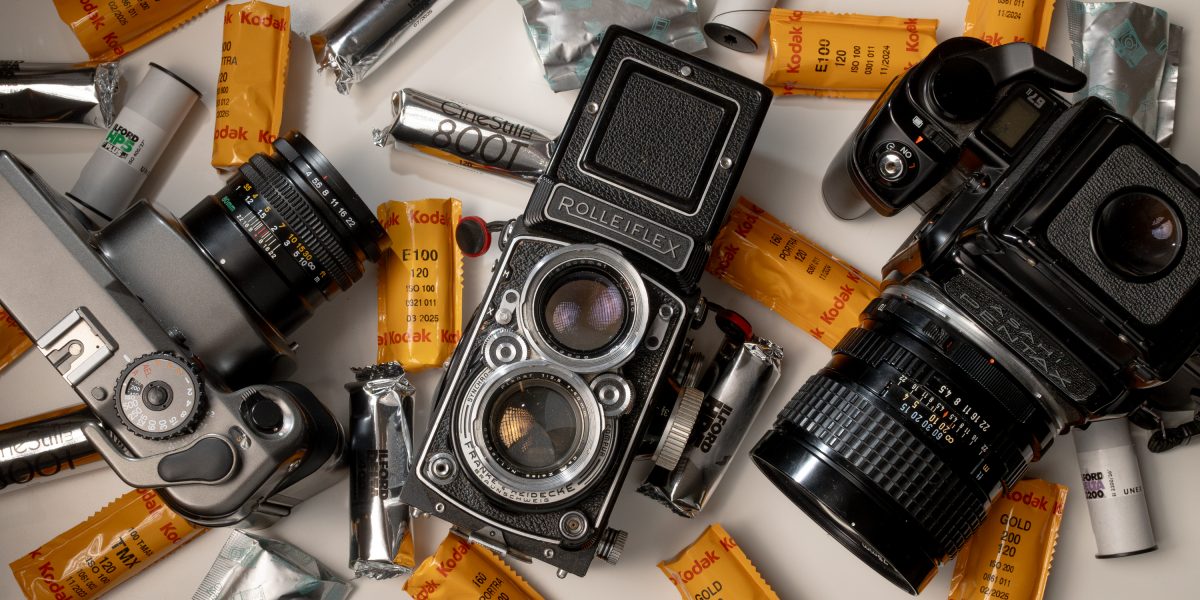
Source: thedarkroom.com
Types of Medium Format Cameras
Medium format cameras come in several forms. Each type suits a different style of photography.
Medium Format Film Cameras
Film cameras use 120 or 220 roll film. They can produce rich tones and a distinctive look that many photographers enjoy.
Popular designs include:
• Twin-lens reflex cameras, which use one lens to view and another to expose the film.
• Single-lens reflex cameras, which allow you to view through the same lens that takes the picture.
• Rangefinder cameras, which use a separate focusing system and often have a quiet, compact design.
• Folding cameras, which collapse into a smaller body for travel.
Film medium format requires patience. You must load film, meter light, focus carefully, and wait for development or scanning. That slower pace can improve your attention to composition.
Digital Medium Format Cameras
Digital medium format cameras use large sensors instead of film. Most current models are mirrorless, while some use a digital back attached to a modular camera body.
Digital systems may offer:
• High-resolution files
• Wide dynamic range
• Detailed skin tones
• Strong color depth
• Large prints with fine texture
• Excellent performance in controlled studio light
Some digital medium format cameras now include image stabilization, phase-detection autofocus, video features, and wireless controls. However, their autofocus and burst speeds may still trail top full-frame cameras.
Medium Format Digital Backs
A digital back replaces the film back on certain professional cameras. This design is common in studio, commercial, and technical photography.
Digital backs can produce excellent files, but they often cost more and require a slower workflow. They are most useful when image quality, lighting control, and studio precision matter more than speed.

Source: energijosklase.lt
Why Do Photographers Use Medium Format Cameras?
Photographers choose medium format cameras for several practical reasons. The format can provide a special balance of resolution, tonal quality, and depth.
High Image Detail
A larger sensor can hold more pixels or larger photosites. This can help preserve small details in fabric, hair, skin, architecture, and landscape textures.
High resolution is useful when you need to crop an image or print it at a large size. Commercial photographers may photograph products that require close inspection. Fine art photographers may want large prints with smooth detail.
Still, resolution is only one part of image quality. A sharp lens, stable camera, accurate focus, and good light are just as important.
Smooth Tonal Transitions
Medium format systems are often praised for smooth transitions between light and dark areas. Skin tones may look gentle, while skies and shadows can retain subtle information.
This benefit is especially useful in portrait photography. A face can contain small changes in tone that become harsh when a camera clips highlights or loses shadow detail.
Shallow Depth of Field
A medium format camera can create a shallow depth of field while keeping a natural field of view. This helps separate a subject from the background.
For example, a portrait lens on a medium format body may show a person clearly while turning distant lights into soft shapes. The effect is not magic. It depends on aperture, focal length, subject distance, and background distance.
Large Print Quality
Medium format cameras are well suited to large prints. The extra detail can remain visible when an image is displayed on a wall, used in a magazine, or placed on a billboard.
For social media, the difference may be less obvious. A small compressed image cannot show all the detail captured by a large sensor.

Source: kamerastore.com
Limitations of Medium Format Cameras
The benefits of a medium format camera come with tradeoffs. Understanding these limits helps you avoid buying a system that does not match your needs.
Higher Cost
The camera body is only one part of the price. You may also need:
• Medium format lenses
• Extra batteries
• Large memory cards
• A strong tripod
• Professional lighting
• Image storage and backup drives
Film users must also budget for film, processing, and scanning. Over time, these costs can become significant.
Larger Files
High-resolution files take up more storage space. They can also require more computer power for editing and backup.
A single raw file may be much larger than a typical full-frame raw file. If you photograph weddings or sports, the storage needs can grow quickly.
Slower Operation
Many medium format cameras encourage a careful shooting rhythm. They may have slower autofocus, lower burst rates, and longer write times than professional full-frame bodies.
This is not a problem for portraits, landscapes, products, or studio work. It can become a serious limitation for fast sports, wildlife, or unpredictable events.
Lens Availability
Full-frame systems offer a huge range of lenses from many brands. Medium format systems usually provide fewer choices.
You may find excellent lenses, but they can be expensive and large. Some systems also have limited third-party support.
Battery Life and Handling
A large sensor, electronic viewfinder, image stabilization, and high-resolution display can consume battery power. Carrying extra batteries is wise.
The camera may also feel heavy after a full day of walking. A comfortable strap or small camera bag can make a real difference.
What Is a Medium Format Camera Best Used For?
A medium format camera works best when image quality matters more than speed, size, or cost.
Portrait Photography
Medium format is popular for editorial, fashion, and fine art portraits. The files can show subtle skin texture while producing a soft background.
The format also supports careful posing. In a studio, the photographer can direct the subject, shape the light, and check details between shots.
Commercial Photography
Advertising and product photography often benefit from high resolution. A camera may need to capture a watch face, clothing texture, car paint, or food detail with accuracy.
Controlled lighting makes it easier to use the camera’s strengths. You can place the subject, set the exposure, and shoot at a deliberate pace.
Landscape Photography
Landscape photographers may use medium format for detailed scenes, large prints, and smooth tonal changes in clouds, rocks, and water.
A tripod is often helpful. It supports a lower ISO, a smaller aperture, and precise focus. These choices can improve the final image more than the camera format alone.
Architecture and Interior Photography
The extra resolution can help record fine lines, wood grain, stone, and architectural texture. However, lens choice and perspective control remain critical.
A wide lens can create distortion. Careful camera placement and post-processing may be needed to keep walls and vertical lines natural.
Fine Art Photography
Fine art photographers often value the slow, thoughtful process of medium format film. The act of making fewer frames can feel more intentional.
The film look also has creative appeal. Grain, color response, and highlight roll-off can become part of the image’s identity.
Medium Format Film or Digital Medium Format?
The choice between film and digital depends on your workflow, budget, and creative goals.
Choose Film If You Want:
• A slower and more thoughtful process
• The unique look of film grain
• A hands-on shooting experience
• Fewer images with more planning
• Physical negatives and archival originals
Film does not guarantee better results. Exposure errors, poor scanning, or expired film can reduce quality. Learning to meter light is important.
Choose Digital If You Want:
• Instant image review
• High-resolution raw files
• Faster editing
• Easier color correction
• Consistent results
Digital medium format gives you more control after the shot. You can adjust white balance, shadows, highlights, and color in editing software.
A practical approach is to rent both types before buying. Test them with the subjects you actually photograph. A camera that feels inspiring and comfortable is often more valuable than one with the most impressive specifications.
How to Choose a Medium Format Camera
Choosing a medium format camera starts with your photography style. Do not begin with megapixels alone.
1. Define Your Main Subject
Ask what you photograph most often:
• Portraits
• Landscapes
• Products
• Weddings
• Architecture
• Fashion
• Travel
• Wildlife
A studio portrait photographer has different needs from a wildlife photographer. Autofocus, lens range, and portability may matter more than resolution.
2. Compare Sensor Sizes
Check the actual sensor dimensions. “Medium format” covers more than one size.
A 44 × 33 millimeter sensor is smaller than a 54 × 40 millimeter sensor. Both are larger than full frame, but they may differ in field of view, depth of field, resolution, and cost.
3. Check Autofocus Performance
Look for reliable autofocus if you photograph people or moving subjects. Test face and eye detection when possible.
For landscapes and products, autofocus speed may be less important. Manual focus tools, focus peaking, and a clear viewfinder may matter more.
4. Study the Lens Lineup
A camera body is part of a larger system. Check whether the lenses you need are available and affordable.
Consider:
• Wide-angle lenses
• Standard lenses
• Portrait lenses
• Macro lenses
• Tilt-shift or perspective-control options
• Zoom lenses
A strong lens lineup can keep you happy with a system for years.
5. Consider the Full Cost
Include the price of lenses, batteries, memory cards, software, storage, and support. A discounted camera body may become expensive after adding one or two lenses.
Used equipment can offer good value. Inspect the sensor, shutter count, lens condition, battery health, and return policy before purchasing.
Practical Tips for Better Medium Format Results
A larger format rewards careful technique. These habits can help you get the most from your camera.
Use Stable Support
High-resolution cameras reveal small movements. A tripod can help with landscapes, interiors, and studio work.
For handheld photos, use a shutter speed that matches your focal length and subject movement. Image stabilization helps, but it cannot freeze a moving subject.
Focus Precisely
Shallow depth of field leaves little room for error. In a portrait, focus on the nearest eye unless your creative plan calls for another point.
Review images at full size. A photo may look sharp on the camera screen but reveal soft focus on a large monitor.
Avoid Chasing Resolution
More pixels do not replace good light. Shape the light first, then choose your aperture and ISO.
A well-lit image from a lower-resolution camera often looks better than a poorly lit image from an expensive medium format system.
Keep the Workflow Simple
Large files need a clear backup plan. Use at least two copies of important images, stored in separate places.
For professional work, consider a local drive plus a cloud or off-site backup. A camera cannot protect work that is lost after the shoot.
Learn to Slow Down
One of the biggest strengths of medium format is its deliberate nature. Take time to check the background, edges, focus, and light.
This habit can improve your photography even when you return to a smaller camera.
Common Mistakes to Avoid
New medium format users often make the same errors. Most are easy to prevent.
• Buying the body before researching lenses: The lens system shapes your real experience.
• Assuming every image will look better: Composition and light still control the result.
• Ignoring file storage: High-resolution images can fill a drive quickly.
• Using a slow shutter speed without support: Fine detail can disappear through camera shake.
• Focusing too casually: Shallow depth of field makes small errors easy to see.
• Comparing only megapixels: Sensor design, lens quality, dynamic range, and workflow also matter.
• Taking the camera everywhere without planning: A large kit can become tiring during travel.
• Expecting fast action performance: Many medium format models are built for controlled work, not extreme speed.
Is a Medium Format Camera Worth It?
A medium format camera can be worth the investment if you need high detail, smooth tones, and a deliberate shooting process.
It may be a poor choice if you need fast autofocus, compact travel gear, long battery life, or a large selection of affordable lenses. A high-end full-frame camera may serve you better in those situations.
The best test is simple: rent a camera and use it for a real project. Photograph the people, places, or products you normally shoot. Review the images, carry the kit for several hours, and note how the workflow feels.
A camera should solve a real problem. If you cannot name that problem, buying a larger format may add cost without adding value.
Frequently Asked Questions About What Is a Medium Format Camera
What is a medium format camera used for?
A medium format camera is commonly used for portraits, fashion, commercial products, landscapes, architecture, and fine art. It is valued for detail, tonal quality, and large prints.
Is medium format better than full frame?
Medium format can offer more detail and a different depth-of-field look, but it is not better for every situation. Full-frame cameras often provide faster autofocus, higher burst rates, lower cost, and more lens choices.
Are medium format cameras difficult to use?
They are not necessarily difficult, but they often reward slower and more careful work. Precise focus, stable handling, and thoughtful exposure become more important as resolution increases.
Can I use a medium format camera for video?
Some digital medium format cameras support video, but they are usually chosen for still photography. Full-frame and smaller mirrorless systems often offer better video autofocus, frame rates, lens choices, and stabilization.
Do medium format cameras create a film-like look?
Film medium format cameras can create a distinctive look through grain, color response, and highlight behavior. Digital medium format cameras may produce smooth tones and shallow depth of field, but the final appearance also depends on lenses, lighting, and editing.
Is a medium format camera good for beginners?
A beginner can use one, but it may not be the easiest or most affordable starting point. Learning photography fundamentals on a smaller system can be more practical before moving to medium format.
Conclusion
A medium format camera uses a larger film frame or sensor than 35mm, giving photographers strong detail, smooth tones, and a distinctive depth-of-field effect. It is especially useful for portraits, landscapes, fashion, products, architecture, and fine art.
The format also brings real limits, including higher cost, larger files, heavier equipment, and slower operation. Choose one because it fits your work, not because the label sounds impressive.
Start by renting a system, testing the lenses, and photographing a real project. Explore trusted camera guides, compare sample images, and share your experience with other photographers as you decide.
