

Have you ever felt lost looking at a camera store display? You are not alone. Buying a new camera is a big choice. It is easy to get confused by all the different types of cameras available today. From tiny action cams to large professional gear, the options feel endless.
But do not worry. As a photography gear tester, I have helped hundreds of people find their perfect match. In this guide, we will break down every camera type. You will learn what they do, who they are for, and how to pick the right one for your needs. We will keep things simple, practical, and easy to understand.
Quick Answer
The most common types of camera include smartphones for daily snaps, compact cameras for travel, and mirrorless or DSLR cameras for serious hobbies. Action cameras are best for sports. To choose the right one, match the camera type to your main subject, your budget, and how much gear you want to carry.
Best Cameras for Everyday Use and Travel
When you want to capture memories without carrying heavy gear, these cameras are your best friends. They are small, light, and very easy to use.
Smartphone Camera
Your smartphone camera is the one you always have in your pocket. Modern phones use powerful software to make photos look amazing instantly. They automatically fix lighting and colors.
They are perfect for social media, family photos, and quick videos. However, they lack real physical zoom. When you zoom in on a phone, the image usually gets blurry.
-
Best for: Everyday memories, social media, and complete beginners.
-
Pros: Always with you, easy to share photos, great automatic editing.
-
Cons: Poor battery life during heavy use, weak zoom, small sensor.
Point-and-shoot (Compact Camera)
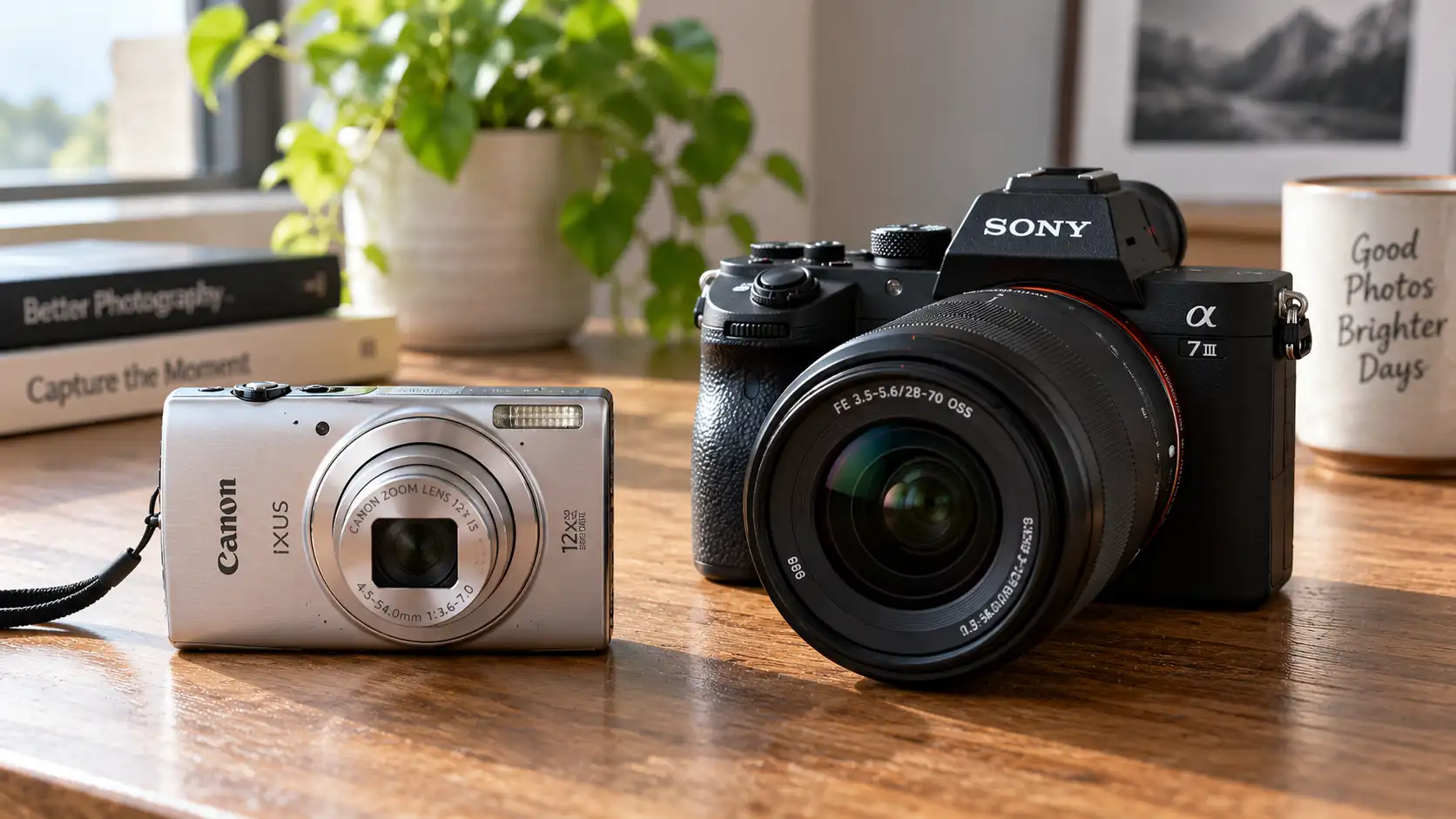
A point-and-shoot camera is a small, dedicated camera. Another name for this is a compact camera. They have a fixed lens, meaning you cannot change the lens.
Unlike phones, many compact cameras have real optical zoom. This lets you zoom in on distant subjects without losing image quality. They are great for vacations.
-
Best for: Travel, family vacations, and people who want real zoom.
-
Pros: Small, lightweight, better zoom than most phones.
-
Cons: No lens swapping, smaller sensors than professional cameras.
Best Cameras for Enthusiasts and Professionals
If you want to control your settings and get the highest image quality, you need an interchangeable lens camera. These allow you to attach different lenses for different jobs.
DSLR
The DSLR (Digital Single-Lens Reflex) is a classic camera design. It has a mirror inside. When you look through the viewfinder, you see exactly what the lens sees through real glass.
When you press the button, the mirror flips up to take the photo. DSLRs are tough, reliable, and have massive battery life. You can shoot all day on one battery.
-
Best for: Sports, wildlife, traditional photographers, and budget buyers.
-
Pros: Incredible battery life, huge lens selection, optical viewfinder.
-
Cons: Heavy, bulky, older technology.
Mirrorless
A mirrorless camera works without the internal mirror. Instead of an optical view, the viewfinder is a tiny digital screen. This lets you see exactly how dark or bright your photo will be before you take it.
Mirrorless cameras are the new industry standard. According to recent industry reports from the Camera & Imaging Products Association, mirrorless cameras now vastly outsell DSLRs globally. They offer incredible, fast autofocus that can easily track human and animal eyes.
-
Best for: Video creators, modern professionals, and serious hobbyists.
-
Pros: Lighter than DSLRs, amazing autofocus, excellent video features.
-
Cons: Shorter battery life, electronic viewfinders can lag in the dark.
Bridge
A bridge camera looks like a DSLR but works like a point-and-shoot. It has a permanent lens, but that lens has a massive zoom range.
You can shoot wide landscapes and then zoom all the way in to photograph a bird in a tree. They bridge the gap between simple compacts and complex professional gear.
-
Best for: Wildlife and travel photography on a budget.
-
Pros: Huge zoom range, comfortable grip, affordable all-in-one package.
-
Cons: Small sensor, poor low-light performance.
Specialty Cameras for Sports and Unique Angles
Sometimes you need a camera that can survive a crash, go underwater, or capture the entire world around you.
Action Camera
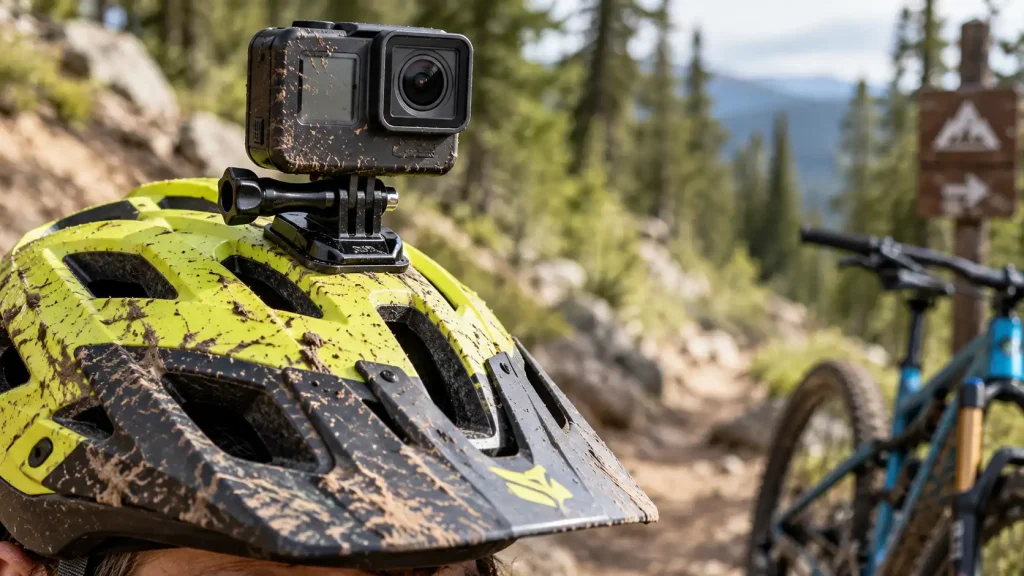
An action camera is tiny, rugged, and waterproof. You can mount it to a helmet, a bike, or a surfboard. They shoot super-wide angles to capture all the fast-paced action.
These cameras are incredibly tough. You can drop them in the mud or take them snorkeling.
-
Best for: Extreme sports, snorkeling, vlogging, and mounting to vehicles.
-
Pros: Very durable, waterproof, extremely steady video stabilization.
-
Cons: Terrible in low light, fixed wide-angle view, poor audio in wind.
360 Camera
A 360 camera has two lenses. One faces forward, and one faces backward. It records everything around you at the same time in a full sphere.
Later, you can use an app on your phone to choose which direction you want the final video to look. This means you never miss a shot.
-
Best for: Virtual reality tours, extreme sports, and creative vlogging.
-
Pros: Captures every angle, fun editing options, unique perspectives.
-
Cons: Editing takes more time, lenses scratch easily.
Analog and Film Cameras for Nostalgia
Digital is not the only way to shoot. Many people love the physical, hands-on process of real film.
Instant
An instant camera prints your photo on real paper just seconds after you take it. You press the button, the paper slides out, and the image slowly appears.
These are incredibly fun for parties and weddings. The image quality is not perfect, but the physical print is very charming.
-
Best for: Parties, gifts, scrapbooking, and casual fun.
-
Pros: Physical prints immediately, easy to use, fun vintage look.
-
Cons: Buying film is expensive, no digital copies to share online.
Film
A traditional film camera uses rolls of 35mm film. You have to load the film in the dark, shoot 24 or 36 frames, and then get it developed at a lab.
Shooting film forces you to slow down and think about your settings. It is a great way to truly learn photography basics without relying on a digital screen.
-
Best for: Art students, nostalgic shooters, and deliberate hobbyists.
-
Pros: Beautiful grain and colors, teaches patience, classic camera feel.
-
Cons: High cost for film and developing, no instant feedback.
High-End Photography Cameras
For commercial work, fashion, and extreme detail, professionals turn to larger formats.
Medium Format
A medium format camera has a massive sensor. The sensor is much larger than a full-frame DSLR or mirrorless camera.
Because the sensor is so big, it captures mind-blowing detail and colors. If you look at high-end fashion magazine covers, they were likely shot on medium format.
-
Best for: Studio portraits, fine art, and high-end commercial work.
-
Pros: Incredible image resolution, unmatched color depth.
-
Cons: Extremely expensive, heavy, slow autofocus.
Large Format
A large format camera uses giant sheets of film, usually 4×5 inches or 8×10 inches. These are the old-school cameras where the photographer puts a dark cloth over their head.
They are very slow to set up. But the image quality and depth of field are impossible to beat, even with modern digital cameras.
-
Best for: Fine art landscapes, architecture, and slow, methodical art.
-
Pros: The absolute highest image quality possible.
-
Cons: Very hard to use, bulky, very expensive per photo.
Video, Broadcast, and Production Cameras
If moving pictures are your priority, you need specialized video gear.
Cinema Camera
A cinema camera is built entirely for high-end video. They shoot massive video files with huge amounts of color data. This allows editors to perfectly color-grade movies in post-production.
They usually do not have internal batteries or screens built-in. You have to build a “rig” by attaching monitors, large batteries, and microphones.
-
Best for: Filmmakers, commercial video production, and documentaries.
-
Pros: Hollywood-level video quality, robust connection ports.
-
Cons: Too heavy for casual use, requires expensive accessories.
Webcam
A webcam is a small digital camera that plugs directly into your computer via USB. They are simple tools meant for broadcasting your face over the internet.
-
Best for: Zoom meetings, video calls, and Twitch streaming.
-
Pros: Plug-and-play simplicity, very cheap.
-
Cons: Only works when connected to a PC, limited image quality.
PTZ Camera
A PTZ camera stands for Pan, Tilt, and Zoom. These cameras are mounted on walls or ceilings. An operator controls them remotely using a joystick in another room.
-
Best for: Churches, conference rooms, live TV, and sports broadcasts.
-
Pros: Remote control, smooth robotic movements, out of the way.
-
Cons: Needs special control hardware, not for handheld photography.
Expert Tip:
Do not blow your whole budget on the camera body. The lens you use affects your photo quality much more than the camera body does. Always save at least 40% of your total budget for a high-quality lens. A cheap camera with a great lens beats a great camera with a cheap lens every time.
When to Get Professional Help or a Second Opinion
Cameras are complex, delicate machines. While you can learn to use them yourself, repairs are a different story.
-
Sensor Cleaning Risks: Dust on your sensor shows up as dark spots on your photos. Many cameras have a self-cleaning menu option. If that fails, do not wipe the sensor with a tissue. Official guides from manufacturers like Canon’s official sensor cleaning guide strongly advise getting professional help if standard air-blowers do not work. Scratching your sensor ruins the camera.
-
Lens Fungus: If you see spider-web-like lines inside your lens glass, that is fungus. It grows in humid conditions. Do not open the lens yourself. Take it to an authorized service center immediately before it spreads to your camera body.
-
Water Damage: If you drop your camera in saltwater, turn it off immediately. Remove the battery. Do not try to turn it back on. Send it to a repair center right away. Salt corrodes internal electronics very fast.
Camera Type Comparison Table
Use this quick guide to compare the most common consumer camera choices.
| Camera Type | Best For | Main Advantage | Main Disadvantage | Average Price Range |
| Smartphone | Daily life, social media | Always in your pocket | Weak digital zoom | Varies widely |
| Point-and-Shoot | Travel, casual trips | Small size with real zoom | Cannot change lenses | $200 – $800 |
| Bridge | Wildlife, sports on a budget | Huge built-in zoom range | Poor in dark rooms | $300 – $1,000 |
| DSLR | Traditional hobbyists | Amazing battery life | Heavy and bulky | $400 – $2,500 |
| Mirrorless | Modern professionals, video | Unbeatable autofocus | Batteries drain faster | $600 – $4,000+ |
Common Mistakes Camera Buyers Should Avoid
Buying gear can be confusing. Avoid these trap decisions to save money and frustration.
-
Buying for Megapixels: More megapixels do not automatically mean better photos. A 20-megapixel mirrorless camera will crush a 48-megapixel smartphone because the mirrorless sensor is physically larger. When analyzing quality, look at testing data from independent labs to see actual sensor performance.
-
Ignoring the Weight: Professional gear is heavy. If a camera is too heavy to carry comfortably, you will leave it at home. Buy a camera size that fits your actual lifestyle.
-
Forgetting About Audio: If you are buying a mirrorless or cinema camera for video, remember that internal camera microphones sound terrible. You must budget for an external microphone.
-
Buying SD Cards from Unknown Brands: Fake memory cards are common online. They will corrupt and lose your photos. Always buy name-brand memory cards (like SanDisk, Lexar, or ProGrade) from authorized camera dealers.
FAQs For Types of Cameras
Which type of camera is best for beginners?
A mirrorless camera with an APS-C size sensor is perfect for beginners. It offers great image quality, lets you change lenses, and is light enough to carry everywhere while you learn.
Is a mirrorless camera better than a DSLR?
For most modern buyers, yes. Mirrorless cameras offer much faster autofocus, better video features, and lighter bodies. DSLRs are still great, but camera companies have stopped developing new DSLR lenses.
Can I just use my smartphone camera?
Absolutely. If you only take photos for Instagram or text messages, a modern smartphone is usually enough. You only need a dedicated camera if you want optical zoom, better low-light performance, or background blur.
What is a point-and-shoot camera?
It is a simple, compact camera with a lens permanently attached to the body. You just point it at your subject and press the button. It handles all the difficult settings for you.
Do professionals still use film cameras?
Yes, but mostly for artistic purposes. Many fine art, fashion, and wedding photographers still shoot film because they love the unique colors and texture of the physical film grain.
How many megapixels do I actually need?
For sharing online or printing normal-sized photos, 12 to 16 megapixels is plenty. You only need 30 to 50 megapixels if you are cropping your images heavily or printing massive gallery wall posters.
Conclusion
Choosing between the many types of camera does not have to be stressful. Start by looking at what you want to shoot. If you want a lightweight travel buddy, a compact camera is ideal. If you want to shoot fast action sports, grab an action camera. If you want to learn serious photography and grow your skills over time, investing in a solid mirrorless system is your smartest move.
Remember, the best camera is simply the one you actually want to take with you. Focus on finding a camera that feels good in your hands and fits your budget. Pick a model today, grab an extra battery, and get out there to start shooting!

1 thought on “Types of Cameras: 15 Camera Types Explained for Beginners”