

The Panasonic LUMIX S5II is the best dynamic range camera for most serious photography needs.
Have you ever taken a photo with a bright sky and dark shadows, only to lose detail in both areas? A camera with strong dynamic range helps solve that problem. It preserves more detail in highlights and shadows, so you can recover exposure with less noise and fewer ugly artifacts. I reviewed five cameras with different goals in mind. The LUMIX S5II is the strongest serious option, while the other models suit casual users, travel, family photos, and beginner video work.
See the differences between my top picks at a glance.
Panasonic LUMIX S5II
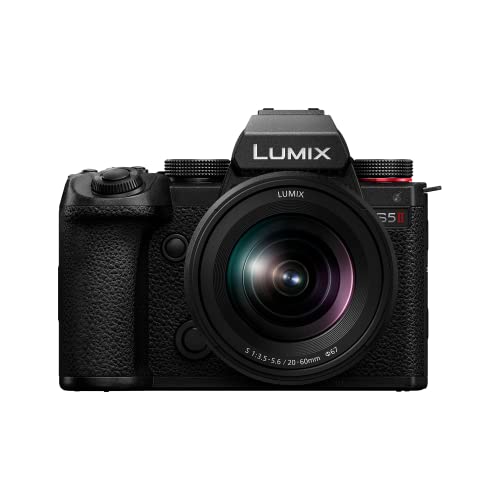
The Panasonic LUMIX S5II is the most convincing choice here for photographers who care about real image flexibility. Its 24.2MP full-frame sensor gives each pixel more room than the tiny sensors used in many low-cost digital cameras. That matters when you lift dark areas or edit a high-contrast scene. The camera also uses a phase-hybrid autofocus system, which is a major improvement for moving subjects.
I like the S5II because it works well as both a still camera and a video camera. It supports 6K video, has strong stabilization features, and offers a deep set of manual controls. The full-frame sensor should also help with low-light work when you pair it with a suitable lens. It costs more than the other cameras in this guide, but it belongs in a different class.
Pros:
- Full-frame sensor with strong exposure flexibility
- 24.2MP resolution suits prints and everyday editing
- Phase-hybrid autofocus tracks subjects better than older contrast-only systems
- 6K video gives useful cropping room
- In-body stabilization helps reduce camera shake
- Large lens ecosystem for portraits, landscapes, and events
- Good choice for photographers who want to grow their skills
Cons:
- Higher purchase cost than compact beginner cameras
- Full-frame lenses can add weight and expense
- Some advanced video and photo settings may overwhelm beginners
What Amazon Buyers Are Saying
Amazon buyers commonly praise the S5II for its autofocus, image quality, stabilization, and hybrid design. Many users like the way it handles both photography and video without feeling like a basic camera with video added as an afterthought. Buyers also often mention the comfortable grip and useful controls.
Common concerns center on menu depth, battery use during demanding video work, and the cost of building a full lens kit. Customer experiences can vary by lens and shooting style. As with any interchangeable-lens camera, the body alone does not define the final image.
My Recommendation
I recommend the LUMIX S5II for serious enthusiasts, working creators, and anyone who wants a dependable full-frame platform. It is the only camera in this group that I would confidently place in a professional-minded photography kit. Its sensor, stabilization, autofocus, and video tools make it a strong long-term buy. Overall rating: 4.7/5.
64MP Dual-Lens Camera

This 64MP dual-lens camera targets buyers who want a simple camera for photos, clips, and social posts. The listing highlights a 64MP image mode and includes a 32GB card. A dual-lens setup can make the camera more flexible for basic shooting than a fixed single-lens compact. It may appeal to teens, families, and first-time camera owners.
I would view the high megapixel number with care. Resolution alone does not prove strong dynamic range, low-light quality, or fine detail. Small camera sensors often use software sharpening and image processing to create large files. In good daylight, this model may produce pleasing images, but it should not be compared directly with the full-frame LUMIX S5II.
Pros:
- High listed resolution for daylight photos
- Dual-lens design adds shooting flexibility
- Includes a 32GB memory card
- Simple option for casual users
- Useful for basic vlogging and social media clips
- Likely easier to carry than a full-frame camera kit
Cons:
- High megapixel count does not guarantee high dynamic range
- Small-sensor performance may drop in dim light
- Less suitable for professional prints and deep editing
What Amazon Buyers Are Saying
Buyers of cameras in this class often like the simple controls, light body, included card, and accessible price. Common positive themes tend to focus on ease of use and acceptable daylight results. These features can make a basic digital camera more appealing than a phone for children or new users.
Potential complaints usually relate to image quality in low light, autofocus speed, battery life, and the difference between advertised resolution and real detail. Check current Amazon reviews for the latest owner feedback before buying. Review quality can also depend on whether the buyer expects a beginner camera or a professional photography tool.
My Recommendation
This camera is worth considering for casual daylight photos, family use, and simple video. I would not choose it as the best dynamic range camera for photography because the listed resolution says little about highlight recovery or shadow noise. Buy it for convenience, not for advanced editing. Overall rating: 3.4/5.
4K Flip-Screen Camera

This 4K digital camera focuses on convenience. Its flip screen helps users frame selfies, livestreams, and front-facing videos. The listing also highlights 24X optical zoom and Wi-Fi, which can help with travel photos and quick file sharing. These features make it more versatile than a basic point-and-shoot camera.
The optical zoom claim deserves attention because true optical zoom is more useful than digital zoom. It changes the lens view without simply enlarging pixels. Still, buyers should keep expectations realistic about sensor size and dynamic range. This is a practical compact camera for simple content, not a substitute for a modern full-frame system.
Pros:
- Flip screen supports self-recording and easy framing
- Listed 4K video adds useful detail for casual clips
- 24X optical zoom offers reach for travel subjects
- Wi-Fi can simplify transfers to compatible devices
- Compact design suits trips and daily carry
- Beginner-friendly feature set
Cons:
- Small-sensor dynamic range may be limited in hard light
- Long zoom ranges can lose brightness at the telephoto end
- Video and photo results may vary in low light
What Amazon Buyers Are Saying
Users who choose compact 4K cameras often value the flip display, zoom range, and simple setup. Many buyers want a camera that feels more dedicated than a phone but does not require interchangeable lenses. Wi-Fi is also a common reason people choose this type of model.
The most likely areas of concern include software controls, transfer setup, autofocus behavior, and performance indoors. Some buyers may expect the words “4K” and “24X” to mean professional quality. Those labels describe useful features, but they do not measure sensor range, lens sharpness, or highlight protection.
My Recommendation
I recommend this model for travel, family recording, and beginner content creators who value zoom and a flip screen. It offers more practical reach than the other low-cost options here. However, it is not my top pick for demanding RAW photography or strong exposure recovery. Overall rating: 3.6/5.
8K 88MP Dual-Lens Camera

This model aims to attract buyers with a long feature list. The product listing highlights 8K recording, 88MP photography, autofocus, Wi-Fi, a touch screen, a lens hood, two batteries, and a charging stand. That bundle may appeal to new creators who want several accessories in one package. The dual-lens design also gives it a more flexible feel than a basic fixed camera.
I would treat the 8K and 88MP labels as advertised modes rather than proof of professional image quality. A camera needs a capable sensor, lens, processor, and stable recording system to turn high numbers into clean detail. The second battery is a real practical advantage for long outings. The touch screen and lens hood may also make the camera easier to use in bright outdoor conditions.
Pros:
- Large advertised photo resolution for daylight cropping
- 8K mode offers a high-resolution recording option
- Two batteries support longer shooting sessions
- Charging stand adds convenience at home
- Touch screen is approachable for beginners
- Lens hood can help reduce stray light outdoors
- Wi-Fi supports modern sharing needs
Cons:
- High resolution does not confirm wide dynamic range
- 8K files can require more storage and computer power
- Low-light performance remains uncertain without independent testing
What Amazon Buyers Are Saying
Buyers drawn to this type of bundle often like the number of accessories included. Two batteries and a charging stand can reduce the need for extra purchases. Beginners may also enjoy the touch screen and the range of advertised recording modes.
Common caution points for high-spec budget cameras include heat, storage needs, battery runtime, menu learning, and the gap between listed resolution and actual detail. Check recent customer images and detailed reviews before placing an order. Those real examples can reveal more than a headline megapixel number.
My Recommendation
This camera makes sense for a beginner who wants a feature-rich kit for YouTube, short videos, and casual photos. I would not rank it as the best dynamic range camera for photography without verified sensor testing. Choose it for its included accessories and easy controls, not for the 88MP figure alone. Overall rating: 3.5/5.
5K 80MP Wi-Fi Camera

This 5K camera is built for buyers who want a low-cost device for photos, videos, and vlogging. The listing highlights 80MP photography, Wi-Fi, UHD recording, and autofocus. Those features create a useful starter package for social media and family content. Its appeal comes from a simple workflow and a lower entry cost than an interchangeable-lens camera.
As with the other budget models, I would not judge it by resolution alone. Dynamic range depends on the sensor and image processing, not just the size of the final file. Autofocus may help keep basic subjects sharp, but advanced tracking is not confirmed by the listing. This camera can be a reasonable first step if the buyer wants ease and low cost.
Pros:
- 5K recording option for social and personal video
- 80MP listed photo mode supports large files
- Wi-Fi makes sharing more convenient
- Autofocus helps reduce basic focusing errors
- Suitable for beginner vlogging
- Lower-cost path into dedicated-camera shooting
Cons:
- Advertised resolution does not prove true fine detail
- Dynamic range may be limited in strong contrast
- Low-light quality and autofocus tracking need realistic expectations
What Amazon Buyers Are Saying
People who buy affordable Wi-Fi cameras often appreciate simple controls, quick sharing, and the ability to record without using a phone. Beginners may also like the familiar compact shape. The 5K and 80MP labels can feel attractive to buyers who want modern headline features at a modest price.
Potential complaints may involve indoor noise, file size, battery duration, and wireless setup. A buyer who expects professional color depth may feel disappointed. I suggest checking recent review photos and confirming which memory card capacity and file formats the camera supports.
My Recommendation
I recommend this model for casual creators, students, and families who want a simple camera with Wi-Fi. It offers a useful group of features, but it is not a proven high dynamic range tool. For serious landscape, wedding, or RAW photography, spend more on a larger-sensor camera. Overall rating: 3.5/5.
How to Choose the Best Dynamic Range Camera for Photography
Choosing the best dynamic range camera for photography requires more than reading a megapixel number. Dynamic range means the amount of detail a camera can record from very dark areas to very bright areas in one frame. A camera with wide range gives you more room to edit shadows and highlights. Sensor size, RAW support, lens quality, exposure control, and image processing all affect the final result.
1. Start With Sensor Size and RAW Support
Sensor size is one of the best clues when you compare cameras. Full-frame sensors usually offer more light-gathering area than the small sensors found in inexpensive compact cameras. That can lead to cleaner shadows and better low-light results, though sensor design still matters.
RAW capture also matters for serious editing. A RAW file keeps more image data than a heavily compressed JPEG. It gives you more control over white balance, shadow recovery, and highlight adjustment. The LUMIX S5II stands out because it is designed for advanced photo control, while the budget cameras in this guide focus more on ready-to-share files.
Do not assume that 80MP or 88MP automatically means better dynamic range. Some affordable cameras create large files through software processing. A smaller, clean 24MP file from a quality sensor may contain more useful detail than a noisy high-resolution file.
2. Match the Camera to Your Light and Subject
Think about where you take photos. Landscape photographers often face bright skies and dark land. They need highlight protection and strong shadow recovery. Portrait photographers may care more about skin tones, autofocus, and lens choice. Street photographers may value fast focus, a quiet shutter, and good high-ISO quality.
If you shoot sports or children, autofocus matters as much as dynamic range. A perfectly exposed photo has little value if the subject is blurred. The S5II offers the most serious autofocus and control package in this group. The compact models may work for still subjects, but their tracking ability is less clear.
For travel, consider size, zoom, battery life, and file transfer. The 4K flip-screen camera has a useful zoom and Wi-Fi feature set. A large full-frame kit can produce better files, but it may be less convenient to carry. The best choice should fit the way you actually shoot.
3. Check the Full Cost, Controls, and Long-Term Value
Camera price is only part of the cost. An interchangeable-lens body may need a lens, spare battery, memory cards, and a bag. That higher starting cost can pay off because you can improve the system over time. You can add a brighter portrait lens or a wide lens for landscapes.
Budget cameras often include useful accessories. Two batteries, a charging stand, a memory card, or a lens hood can add real value. Still, check the quality of each feature. A long digital zoom is not equal to a long optical zoom. A high pixel count is not equal to wide dynamic range.
Finally, look at controls and support. A good camera should let you change exposure without a struggle. It should have a clear screen, sensible menus, and a battery that suits your sessions. Read recent owner reviews, study sample photos, and confirm the return policy. Those steps help you avoid buying a camera based only on bold marketing terms.
Final Verdict: Which Should You Buy?
The Panasonic LUMIX S5II is my clear choice. Its full-frame sensor, RAW workflow, stabilization, and autofocus make it the best dynamic range camera for photography in this group.
Choose a budget model for casual use, but choose the S5II for serious editing, landscapes, portraits, and hybrid work.
FAQs Of Best dynamic range camera for photography
What is dynamic range in a camera?
Dynamic range is the camera’s ability to record detail in very bright highlights and very dark shadows in the same image. Wider range gives you more editing flexibility.
Is the Panasonic LUMIX S5II good for photography?
Yes. Its full-frame sensor, RAW support, stabilization, manual controls, and hybrid autofocus make it a strong choice for serious still photography.
Does a higher megapixel count mean better dynamic range?
No. Megapixels describe image size and potential detail. Dynamic range depends more on sensor design, exposure, processing, and RAW performance.
Which camera is best for beginner photography?
The 4K flip-screen camera is a practical beginner option because it offers simple operation, a flip screen, Wi-Fi, and optical zoom. The LUMIX S5II is better for beginners who want to learn advanced photography.
Should I buy a full-frame camera for landscape photography?
A full-frame camera can offer strong low-light quality, lens choices, and editing flexibility. It costs more, but it is a good fit for photographers who often shoot high-contrast landscapes.
