4k Security Camera System: Home and business security is now a need rather than a luxury in today’s environment. With rising concerns about theft, trespassing, and property safety, more people are turning to advanced surveillance solutions for peace of mind. A 4K security camera system stands out as a revolutionary improvement in this situation.
If you’re new to security cameras, choosing the right system can feel overwhelming. Terms like resolution, field of view, night vision, storage options, and smart detection often confuse beginners. That’s why this Ultimate Beginner’s Guide to 4K Security Camera Systems is designed specifically for first-time buyers.
Whether you’re protecting your home, office, shop, or outdoor property, this guide will walk you through everything from key benefits and essential components to installation tips and buying advice. By the end of this article, you’ll have the confidence to choose a 4K security camera system that fits your needs, budget, and long-term security goals.
What is a 4K camera?
A 4K camera is a high-resolution camera that records video at a resolution of 3840 × 2160 pixels, which is four times the detail of standard Full HD (1080p) cameras. Because of this ultra-high definition, 4K cameras capture incredibly sharp images with finer details, making it easier to recognize faces, read license plates, and identify small objects even from a distance. This level of clarity is especially valuable for security, surveillance, filmmaking, and professional video recording.
????Read More????What is an 8K security camera?
One of the biggest advantages of a 4K camera is its ability to provide clear footage without heavy pixelation, even when you zoom in digitally. Unlike lower-resolution cameras, 4K footage retains sharpness, which is crucial for reviewing security incidents or monitoring large areas. This makes 4K cameras ideal for outdoor security systems, wide-angle coverage, and locations where detail accuracy matters most.
Overall, a 4K camera offers a powerful combination of clarity, reliability, and future-proof technology. As display screens and security standards continue to improve, investing in a 4K camera ensures long-term value and superior visual performance, making it an excellent choice for anyone seeking high-quality monitoring and recording solutions.
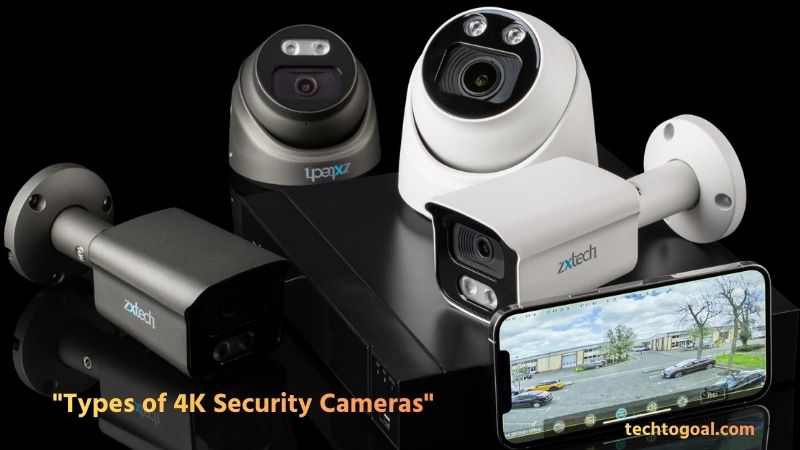
Types of 4K Security Cameras: Choosing the Right Form Factor
Not all 4K cameras look or function the same. Depending on your installation environment, whether it’s a front porch, a large backyard, or a business warehouse, you will need to choose the right “body style.” Here are the most common types:
1. 4K Indoor Security Camera
4K indoor security cameras are designed to monitor the inside of homes, offices, and shops with ultra-clear video quality. These cameras help capture fine details such as facial expressions. movements, and object interactions, making them ideal for entryways, living rooms, and workplaces. Most indoor 4K cameras feature compact designs, wide-angle lenses, motion detection, and two-way audio, allowing users to monitor indoor spaces discreetly and communicate remotely through a mobile app.
2. 4K Outdoor Security Cameras
4K outdoor security cameras are built to withstand harsh weather conditions while delivering crystal-clear surveillance footage. They usually come with weatherproof ratings like IP66 or IP67, ensuring reliable performance in rain, dust, heat, and cold. These cameras are perfect for monitoring driveways, yards, parking areas, and building exteriors, where long-range visibility and sharp image detail are essential for identifying intruders or suspicious activity.
3. 4K PTZ (Pan-Tilt-Zoom) Cameras
4K PTZ cameras offer advanced surveillance by allowing users to remotely pan, tilt, and zoom the camera view without losing image quality. With ultra-high resolution, these cameras can cover large areas while still capturing fine details during zoom-in actions. They are commonly used in large outdoor spaces, warehouses, campuses, and commercial properties where flexible viewing angles and wide coverage are required.
4. 4K Bullet Cameras
4K bullet cameras feature a long, cylindrical design and are typically mounted on walls or ceilings for focused, long-distance monitoring. Their narrow field of view and powerful lenses make them ideal for monitoring entrances, gates, and perimeter areas. Due to their visible design, 4K bullet cameras also act as a strong deterrent against potential intruders while delivering sharp, detailed footage.
5. 4K Dome Cameras
4K dome cameras are named after their dome-shaped housing and are popular for both indoor and outdoor use. Their discreet design makes it difficult to tell which direction the camera is facing, adding an extra layer of security. These cameras are often vandal-resistant and provide wide-angle coverage, making them ideal for retail stores, offices, hotels, and public spaces where aesthetics and durability matter.
6. 4K Wireless Security Cameras
4K wireless security cameras enable flexible installation and more aesthetically pleasing installations by connecting via Wi-Fi rather than conventional connected connections. Despite being wireless in connectivity, many still require a power source or rechargeable battery. These cameras are perfect for homeowners who want high-resolution security monitoring without complex wiring, and they often include cloud storage, mobile alerts, and smart home integration.
7. 4K PoE (Power over Ethernet) Cameras
4K PoE cameras use a single Ethernet cable to deliver both power and data, ensuring a stable and reliable connection. This type of camera is highly popular in professional security systems because it reduces signal interference and supports continuous high-quality recording. PoE 4K cameras are ideal for users who want consistent performance, centralized storage through NVRs, and long-term scalability.
8. 4K Fisheye (360-Degree) Cameras
4K fisheye cameras provide a full 360-degree panoramic view using a single ultra-wide lens. These cameras are excellent for monitoring large open spaces such as halls, parking areas, and warehouses without multiple camera installations. With 4K resolution, fisheye cameras maintain clarity across the entire panoramic view, reducing blind spots while simplifying system setup.
Understanding 4K Video Camera Technology
To truly appreciate a 4K system, you need to understand that it is more than just a “high resolution” label. It involves a combination of advanced hardware and sophisticated software that works together to process millions of data points every second.
????Read More????Best Alternative of 8k Security Camera System
1. 4K Resolution and Pixel Density: 4K video camera technology is built around a resolution of 3840 × 2160 pixels, which delivers four times more detail than Full HD cameras. This higher pixel density allows 4K cameras to capture sharper images, clearer edges, and finer textures, even when viewing footage on large screens or zooming in digitally. For security purposes, this means better identification of faces, license plates, and small movements that lower-resolution cameras may miss.
2. Image Sensors and Light Sensitivity: At the heart of every 4K camera is its image sensor, which plays a crucial role in determining video quality. Advanced sensors used in 4K cameras are designed to capture more light and reduce image noise, resulting in clearer footage in both bright and low-light environments. A larger or higher-quality sensor improves night performance, making 4K cameras more reliable for 24/7 surveillance.
3. Lens Quality and Field of View: 4K cameras rely on high-quality lenses to fully utilize their ultra-high resolution. A premium lens ensures sharp focus across the entire frame and minimizes distortion, especially in wide-angle or panoramic views. The field of view (FOV) determines how much area the camera can monitor, and in 4K cameras, wider coverage can still maintain clarity without sacrificing detail.
4. Video Compression Technology: Because 4K video files are much larger than HD recordings, 4K cameras use advanced compression technologies such as H.265 or H.265+. These compression formats reduce file size while maintaining video quality, allowing longer recording times and efficient storage usage. Efficient compression also helps reduce bandwidth consumption during live streaming and remote viewing.
5. Frame Rate and Video Smoothness: Frame rate refers to how many frames a camera records per second, commonly 15 fps, 25 fps, or 30 fps in 4K cameras. A higher frame rate produces smoother video, which is especially important for capturing fast-moving objects or activities. Balanced frame rates ensure smooth playback without overwhelming storage or network resources.
6. Night Vision and Low-Light Technology: 4K video camera technology includes advanced night vision features such as infrared (IR) LEDs, color night vision, and low-light sensors. These technologies allow cameras to deliver clear footage in complete darkness or dim conditions. In security applications, this ensures reliable monitoring at night when most incidents occur.
7. Smart Detection and AI Features: Modern 4K cameras often integrate AI-powered motion detection, enabling them to distinguish between people, vehicles, and animals. This smart technology reduces false alerts caused by shadows, insects, or weather changes. AI features make 4K cameras more efficient and user-friendly by providing accurate notifications and better event tracking.
8. Storage and Recording Systems: 4K cameras support multiple storage options, including local microSD cards, Network Video Recorders (NVRs), and cloud storage. Due to large file sizes, many systems offer customizable recording modes such as motion-based recording or scheduled recording. This flexibility helps users manage storage efficiently without losing important footage.
9. Connectivity and Remote Access: 4K video cameras connect through Wi-Fi, Ethernet, or PoE (Power over Ethernet) to ensure stable data transmission. Reliable connectivity allows users to access live feeds, playback recordings, and receive alerts through mobile apps or web platforms. Remote access is a key advantage, enabling real-time monitoring from anywhere in the world.
10. Integration with Security Systems: 4K camera technology is designed to integrate smoothly with modern security ecosystems, including alarms, smart home devices, and monitoring software. This integration enhances overall system performance, allowing centralized control and automation. As security needs grow, 4K cameras provide a scalable and future-ready solution.
Benefits of 4K Resolution in Cameras
Upgrading to 4K resolution isn’t just about having a “nicer” picture; it’s about the tactical advantages that 8 million pixels bring to your property’s defense. Here are the primary benefits:
- Forensic-Level Detail for Clear Identification: The most critical benefit of 4K resolution is the ability to capture fine details that lower-resolution cameras miss. With four times the pixels of 1080p, a 4K camera can clearly render facial features, unique clothing textures, and even small tattoos from a significant distance. This “forensic-grade” evidence is often the deciding factor in police investigations, allowing authorities to identify suspects with much higher certainty than grainy HD footage allows.
- Exceptional Digital Zoom Capabilities: Standard cameras quickly become pixelated and blurry the moment you try to zoom in. However, because a 4K surveillance system starts with such a dense “canvas” of pixels, you can digitally zoom deep into a recorded frame while maintaining usable clarity.
- Wider Coverage with Fewer Cameras: A single 4K camera can often do the work of two or three standard 1080p cameras. Due to its high pixel count, a 4K wide-angle lens can monitor a massive area, like a large parking lot or a sprawling backyard, without the edges of the image becoming distorted or soft. This not only reduces the “clutter” of multiple cameras on your walls but also saves you money on cabling, installation time, and storage subscriptions.
- Improved Night Vision Performance: 4K cameras are often paired with advanced sensors and enhanced night vision technologies. These improvements allow clearer footage in low-light or nighttime conditions, reducing noise and improving contrast. For security purposes, this ensures reliable monitoring around the clock when visibility is most challenging.
- More Accurate Motion Detection: Higher resolution provides more visual data for motion detection and AI analysis. This allows 4K cameras to detect movement more accurately and reduce false alerts caused by shadows, insects, or weather changes. Smarter detection leads to more reliable notifications and a better overall user experience.
- Enhanced Evidence Quality: When it comes to security investigations, video quality matters. 4K footage provides high-quality evidence that can be used for identifying suspects or reviewing incidents in detail. Clear visuals increase the credibility and usefulness of recorded footage for legal or insurance purposes.
- Better Performance on Large Screens: 4K footage looks significantly better on large displays, such as smart TVs or security monitors. Even when viewed on big screens, images remain sharp and detailed without visible pixelation. This is particularly beneficial for professional surveillance environments and multi-camera monitoring setups.
- Stronger Deterrence Against Intruders: Visible 4K cameras act as a powerful deterrent to potential intruders. The knowledge that high-resolution surveillance is in place often discourages suspicious activity before it happens. Combined with clear recording, this adds an extra layer of security and peace of mind.
- Enhanced AI Accuracy and Smart Analytics: Modern security relies heavily on AI to distinguish between humans, vehicles, and animals. 4K technology provides the AI “brain” with much more data to work with. With sharper edges and clearer shapes, the camera’s internal processor can identify a person’s movement or a car’s make and model more accurately, drastically reducing frustrating false alarms caused by wind, shadows, or small pets.
- Future-Proofing Your Security Investment: Surveillance standards are moving rapidly toward Ultra-HD. By choosing a 4K security system today, you are future-proofing your home or business. As monitor screens and smartphone displays continue to improve, your 4K footage will remain crisp and relevant for years to come.
Investing in 4K now ensures you won’t need to rip out and replace your entire system in two or three years when lower resolutions become obsolete.
Best 4K Camera for Surveillance: Top 5 Recommendation
Navigating the market for 4K surveillance can be tricky, as not all 8MP cameras deliver the same results. Based on image sensor quality, AI accuracy, and durability, here are our top 5 picks for 2026.
????Read More????Advantages of DSLR Cameras
1. Lorex 4K Spotlight Cam (Wireless Outdoor)
Overview: The Lorex 4K Spotlight Cam is a top pick for homeowners who want ultra-clear video without complicated wiring. This wireless 4K camera delivers sharp 4K video quality and wide-angle coverage, making it ideal for monitoring front yards, driveways, and backyard spaces. It has integrated LED spotlights for improved nighttime visibility and color night vision for more insightful video in low light.
Specifications:
- Video Resolution: 4K Ultra HD
- Connectivity: Wireless (Wi-Fi)
- Night Vision: Color night vision + spotlight
- Storage: Local microSD support
- Extras: Smart alerts, smart home integration
- Weatherproof: Suitable for outdoor use
Pros:
- 4K Ultra HD Detail: Delivers crisp, high-resolution footage that makes detecting faces and license plates easier than standard HD.
- Compared to basic infrared black-and-white photos, color night vision and spotlights provide more useful night film.
- Wireless Design: Easy installation with no cabling, perfect for DIY users.
- Smart Home Support: Works with Alexa and Google Assistant for voice control and automation.
Cons:
- Upfront Cost: Slightly higher price than basic cameras due to premium features.
- Wi-Fi Reliability: Performance can vary if the Wi-Fi signal is weak or congested.
- Limited Cloud Storage: Some features may require additional subscriptions.
2. Arlo Ultra 2 4K Spotlight Camera
Overview: The Arlo Ultra 2 is a premium wireless 4K security camera that blends excellent video clarity with smart home integration and flexible placement. Its HDR video provides balanced exposure across light and shadows, while integrated spotlights and color night vision ensure detailed footage day and night.
Specifications:
- Video Resolution: 4K HDR
- Field of View: Wide (~180°)
- Connectivity: Wi-Fi
- Smart Detection: Person, vehicle, package detection
- Compatibility: Alexa, Google Home, Apple HomeKit
Pros:
- HDR 4K Video: Superior dynamic range for clearer details in mixed lighting environments.
- Smart Detection: Advanced alerts for people, vehicles, and packages.
- Smart Home Integration: Works with all major systems for seamless automation.
Cons:
- Subscription Required: For cloud storage and advanced AI alerts, a paid plan is often necessary.
- Higher Price: More expensive compared to basic 4K models.
- Battery Dependency: Requires regular charging if used wirelessly in remote areas.
3. Amcrest UltraHD 4K PoE AI Outdoor Camera
Overview: The Amcrest UltraHD 4K PoE AI Camera is ideal for users who want reliable wired surveillance with AI detection. This robust outdoor bullet camera delivers true 8MP 4K video and uses AI to distinguish between human and vehicle motion, which dramatically reduces false alarms. Its solid weatherproof housing and PoE connectivity make it a durable choice for long-term outdoor monitoring.
Specifications:
- Video Resolution: 4K UltraHD (8MP)
- Connectivity: PoE (Power over Ethernet)
- AI Detection: Human & vehicle motion
- Night Vision: Color night vision up to ~49 ft
- Weatherproof: IP67 rated
Pros:
- AI Detection: Reduces unnecessary alerts by identifying people and vehicles.
- PoE Stability: Provides a reliable, high-quality video feed without Wi-Fi interference.
- Excellent Night Vision: Clear color video even in dark conditions.
- Durable Build: Strong weather resistance for outdoor reliability.
Cons:
- Wired Installation: Requires network cabling and a PoE switch, which may need professional setup.
- Higher Bandwidth Needs: 4K video demands stronger network and storage capacity.
- Limited Smart Home Features: Fewer integrations compared to some wireless models.
4. Reolink Argus PT 4K+ (Solar-Powered 4K PTZ)
Overview: The Reolink Argus PT 4K+ is a versatile 360° pan-tilt-zoom camera that combines solar power with high-resolution video, perfect for outdoor surveillance without cables. Its PT capability lets you easily adjust the viewing angle, while the included solar panel keeps it charged for continuous monitoring, ideal for gardens, driveways, or remote locations.
Specifications:
- Video Resolution: 4K Ultra HD
- PTZ: 360° horizontal pan & vertical tilt
- Power: Solar panel + rechargeable battery
- Night Vision: Color night vision
- Storage: Local microSD support
Pros:
- 360° Coverage: Complete area monitoring with pan-tilt adaptability.
- Solar Powered: Continuous operation without wired power.
- 4K Clarity: Excellent high-resolution detail day and night.
Cons:
- Solar Dependence: Charging may slow in low sunlight conditions.
- Wi-Fi Required: Needs a strong wireless network for stable live streaming.
- Limited Advanced AI: Motion detection may not be as smart as premium wired models.
5. REOLINK 4K PoE Security Camera System (8-Channel Kit)
Overview: For users looking for a complete 4K surveillance system, the REOLINK 4K PoE Security Camera System (8-Channel) offers excellent value. With multiple 4K cameras included, a built-in NVR recorder, and continuous 24/7 recording, this system is ideal for homes or small businesses that need broad coverage without missing critical detail.
Specifications:
- Video Resolution: 4K Ultra HD (8MP)
- System: 8 cameras + NVR kit
- Recording: 2TB HDD included
- Night Vision: ~100 ft range
- Connectivity: PoE wired setup
Pros:
- All-in-One System: Includes cameras, NVR, and storage for a complete setup.
- 24/7 Recording: Continuous surveillance without manual intervention.
- Stable PoE Performance: Reliable video quality and connection.
- Excellent Night Vision: Useful for large outdoor coverage zones.
Cons:
- Complex Installation: Requires PoE wiring and NVR setup.
- Space Requirements: NVR and HDD need dedicated space.
- Higher Initial Cost: More expensive upfront compared to a single camera.
Quick Tip for Choosing the Right 4K Surveillance Camera
- Best for DIY and Easy Setup: Wireless options like Lorex or Arlo Ultra 2.
- Best for Accurate Detection: Wired PoE cameras with AI like Amcrest.
- Best for Full Coverage: PTZ solar-powered cameras such as the Reolink Argus PT.
- Best for Complete System: Multi-camera PoE kits like the REOLINK 8-Channel system.
Buying guide for choosing the right 4K camera
Investing in 4K surveillance is a significant upgrade, but to get the best value for your money, you need to look beyond the resolution label. Here is a specialized guide on what to prioritize during your purchase:

????Read More????What are the types of home security systems?
Define Your Purpose and Location: Before buying a 4K camera, clearly identify where and why you need it. Indoor cameras focus on close-range monitoring, while outdoor cameras require weatherproof designs and longer viewing distances. Understanding whether you need security for a home, office, shop, or outdoor area helps you choose the right camera type and avoid paying for unnecessary features.
Choose the Right Camera Type: 4K cameras come in different forms, such as bullet, dome, PTZ, wireless, and fisheye models. Bullet cameras are ideal for long-range viewing, dome cameras offer discreet monitoring, and PTZ cameras provide wide coverage with pan-tilt-zoom control. Beginners often prefer wireless or PTZ cameras for their flexibility and ease of use.
Check Video Resolution and Frame Rate: Not all 4K cameras deliver the same performance. Look for a true 4K (3840 × 2160) resolution with a balanced frame rate, usually 25 fps or 30 fps. A higher frame rate ensures smoother video, especially for capturing fast-moving objects, while maintaining high image clarity.
Evaluate Night Vision Performance: Night vision is critical for 24/7 surveillance. Choose a 4K camera with strong infrared (IR) LEDs or color night vision capabilities. Advanced low-light sensors and spotlights can significantly improve visibility in dark environments, ensuring reliable security even at night.
Consider Field of View and Coverage: The field of view (FOV) determines how much area a camera can monitor. A wider FOV reduces blind spots and the need for multiple cameras. With 4K resolution, you can choose wider angles without losing detail, making it easier to cover large spaces effectively.
Decide Between Wired or Wireless Connectivity: Wired (PoE) 4K cameras offer stable connections and consistent video quality, making them ideal for long-term installations. Wireless cameras are easier to install and more flexible but rely heavily on Wi-Fi strength. Your choice should depend on your network setup and installation preferences.
Look for Smart Features and AI Detection: Modern 4K cameras often include smart features such as human detection, vehicle recognition, and motion alerts. These AI-powered functions reduce false alarms and provide more accurate notifications, improving the overall surveillance experience.
Storage Options and Recording Modes: 4K video files are large, so storage is an important factor. Look for cameras that support multiple storage options such as microSD cards, NVR systems, or cloud storage. Motion-based recording and efficient video compression (H.265) help save storage space while keeping important footage.
Weatherproof Rating and Build Quality: For outdoor use, always check the camera’s weatherproof rating. IP66 or IP67 ratings indicate strong protection against rain, dust, and extreme temperatures. A durable build ensures long-term performance in challenging outdoor environments.
Ease of Installation and App Support: Beginner-friendly 4K cameras should offer simple installation and intuitive mobile apps. A well-designed app allows easy access to live feeds, playback, alerts, and camera settings, making daily monitoring hassle-free.
Budget and Long-Term Value: While 4K cameras may cost more upfront, they offer better image quality and future-proof technology. Compare features against price to ensure you get the best value. Long-term financial and frustration savings can be achieved by investing in a reputable brand with excellent customer service.
The right 4K camera is the one that matches your security needs, environment, and technical comfort level. Focus on clarity, reliability, and ease of use rather than chasing unnecessary features.
FAQs
Is a 4K security camera significantly better than 1080p?
Yes, the difference is substantial. A 4K camera (8MP) captures four times the number of pixels as a 1080p (2MP) camera. This means you get much sharper images and the ability to use digital zoom to see fine details like license plates or facial features that would appear blurry on a 1080p system.
Does a 4K camera system use more internet bandwidth?
4K video files are large, so they do require more bandwidth for live streaming. However, modern systems use H.265 (HEVC) compression, which reduces the file size significantly without losing quality. If you have a stable internet connection (at least 5-10 Mbps upload speed per camera), you should be able to stream 4K smoothly.
How much storage space does a 4K camera need?
On average, a 4K camera recording 24/7 at a standard frame rate can consume between 60GB and 100GB of storage per day. To save space, it is recommended to use “Motion-Triggered Recording” or a system that supports H.265+ compression, which can cut storage needs by up to 50%.
Do I need a 4K monitor to view 4K security footage?
While you can view 4K footage on a 1080p monitor or smartphone, you won’t see the full detail until you view it on a 4K-capable display. However, the real advantage of 4K is in the recorded evidence; even on a lower-resolution screen, you can zoom in on the 4K footage to see details more clearly.
Can I use my old cables for a new 4K system?
If you are upgrading an older IP system, your existing CAT5e or CAT6 Ethernet cables will work perfectly with 4K PoE cameras. However, if you have an old analog system (BNC cables), you will need to ensure your cables and DVR are rated for “4K-over-Coax” or upgrade to Ethernet for the best results.
Is a 4K system more expensive to maintain?
The initial cost of 4K hardware and larger hard drives is higher, but the maintenance is similar to any other system. Because 4K cameras cover wider areas, you might actually save money by needing fewer cameras to monitor the same property, reducing your overall cabling and power costs.
Will 4K cameras slow down my home Wi-Fi?
If you use multiple 4K Wi-Fi cameras, they can put a strain on an older router. To avoid this, look for cameras that support Wi-Fi 6 (802.11ax) or use a PoE (wired) system, which sends data through Ethernet cables instead of clogging up your wireless network.
Conclusion
In a world where safety and vigilance matter more than ever, a 4K security camera system stands out as a smart and future-ready investment. With ultra-high resolution, improved night vision, wider coverage, and advanced detection features, 4K systems offer unmatched clarity and reliability compared to traditional HD cameras.
Whether you’re securing a home, office, or outdoor property, a 4K system helps you capture critical details such as faces and license plates with precision, giving you peace of mind and stronger evidence when it matters most.
Ultimately, a 4K security camera system is more than just a set of cameras It’s a proactive step toward smarter, sharper, and more dependable surveillance. Whether you are a beginner or upgrading an existing setup, investing in 4K technology ensures you get clear, actionable footage that enhances safety and confidence in your environment.

9 thoughts on “4k Security Camera System 2026: Ultimate Beginner’s Guide”