
A beginner camera is a simple, easy-to-use camera that helps new photographers learn core skills without confusion.
A beginner camera gives you more control than a phone while keeping the learning curve friendly. It may be a mirrorless camera, DSLR, compact camera, or even an instant model with simple controls. The right choice depends on your goals, budget, and comfort level. This guide explains what a beginner camera does, which features matter, what to avoid, and how to choose one with confidence.

Source: livesnaplove.com
What Is a Beginner Camera?
A beginner camera is designed for people who are new to photography. It offers automatic modes for easy shooting, plus manual controls that let you grow over time. You can start with simple settings and slowly learn about shutter speed, aperture, ISO, focus, and exposure.
Most beginner cameras have a larger image sensor than a typical smartphone. This can improve image quality, especially in low light. A larger sensor also creates a soft background blur, which is useful for portraits.
A beginner camera is not always the cheapest camera. It is the camera that makes learning feel clear and manageable. A costly professional camera can feel frustrating if it has too many controls and a complex menu.
Think of it like learning to drive. An automatic car helps you focus on the road first. Later, you can learn more advanced skills. A beginner camera works in much the same way.

Source: livesnaplove.com
How Does a Beginner Camera Work?
A camera collects light through its lens and records that light with a digital sensor. The sensor turns the light into an image file, such as a JPEG or RAW file.
The camera controls three main parts of exposure:
• Aperture controls how much light enters through the lens.
• Shutter speed controls how long the sensor records light.
• ISO controls how sensitive the sensor is to light.
These three settings are often called the exposure triangle. In automatic mode, the camera chooses them for you. In manual mode, you control them yourself.
A beginner camera may also include scene modes. These modes adjust the settings for common subjects, such as:
• Portraits
• Landscapes
• Sports
• Night scenes
• Close-up photos
• Food
• Children and pets
As your skills improve, you can move from automatic mode to aperture priority, shutter priority, and manual mode. This makes a beginner camera useful for more than just basic snapshots.
Source: photographylife.com
Main Types of Beginner Cameras
There is no single camera type that suits every new photographer. Each design has strengths and limits.
Beginner Mirrorless Cameras
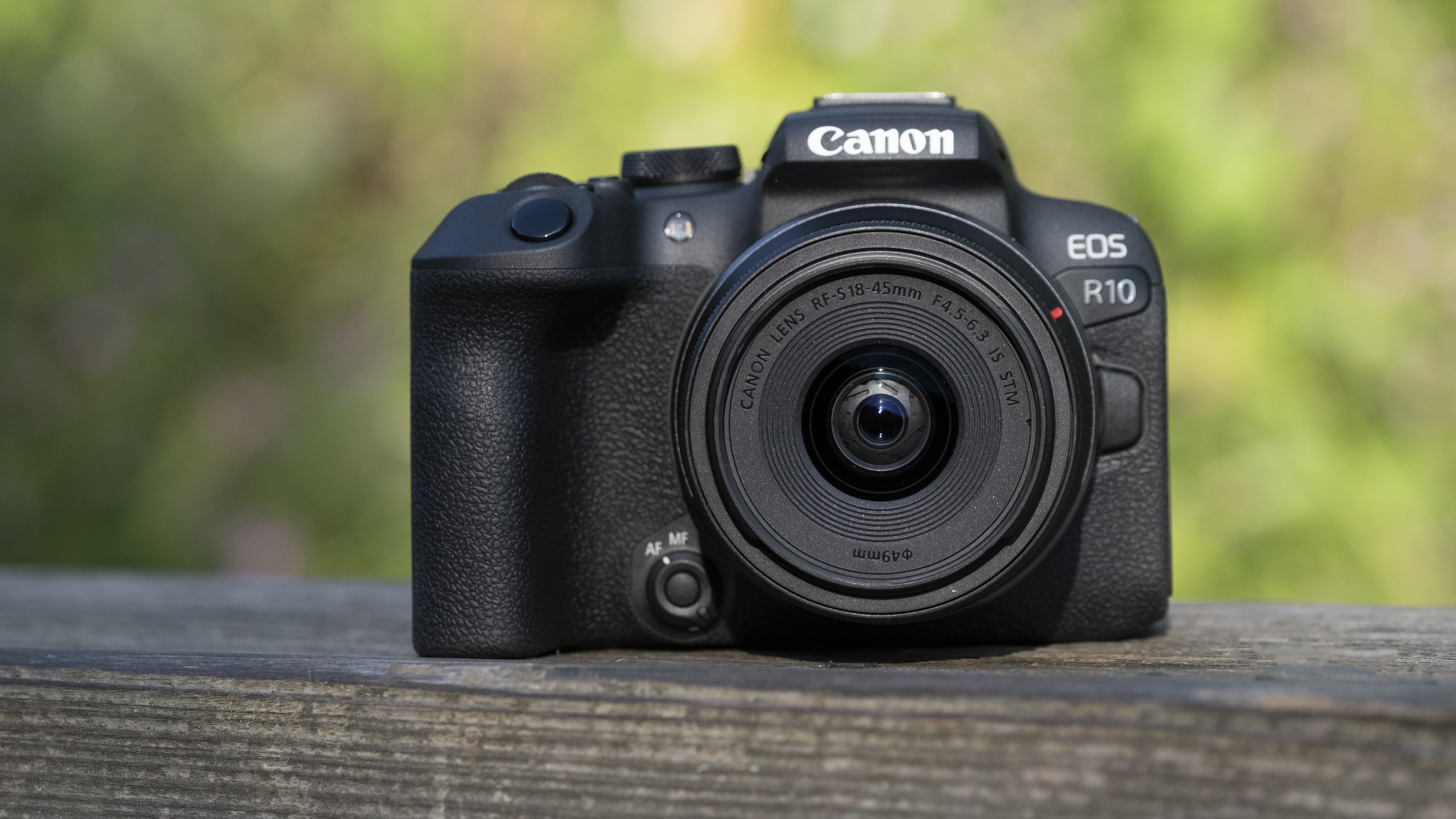
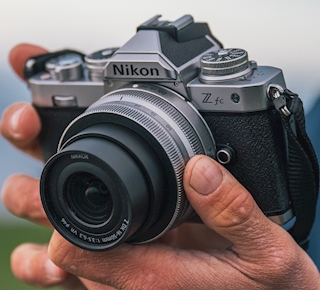
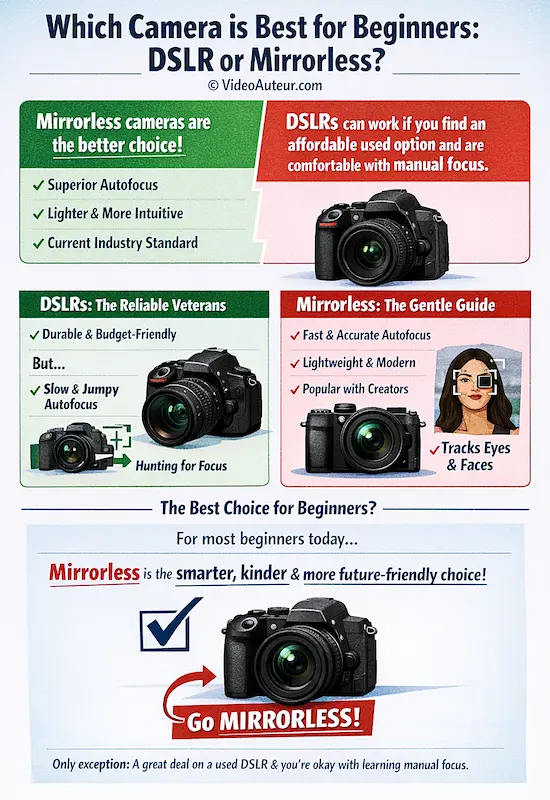
A mirrorless camera uses an electronic viewfinder or rear screen instead of a mirror system. It is often smaller and lighter than a DSLR.
Many beginner mirrorless cameras offer:
• Interchangeable lenses
• Fast autofocus
• 4K video
• Touchscreen controls
• Helpful electronic previews
The electronic viewfinder can show how brightness, color, and exposure will look before you take the photo. This is useful for learning because you can see the effect of a setting right away.
Beginner DSLR Cameras
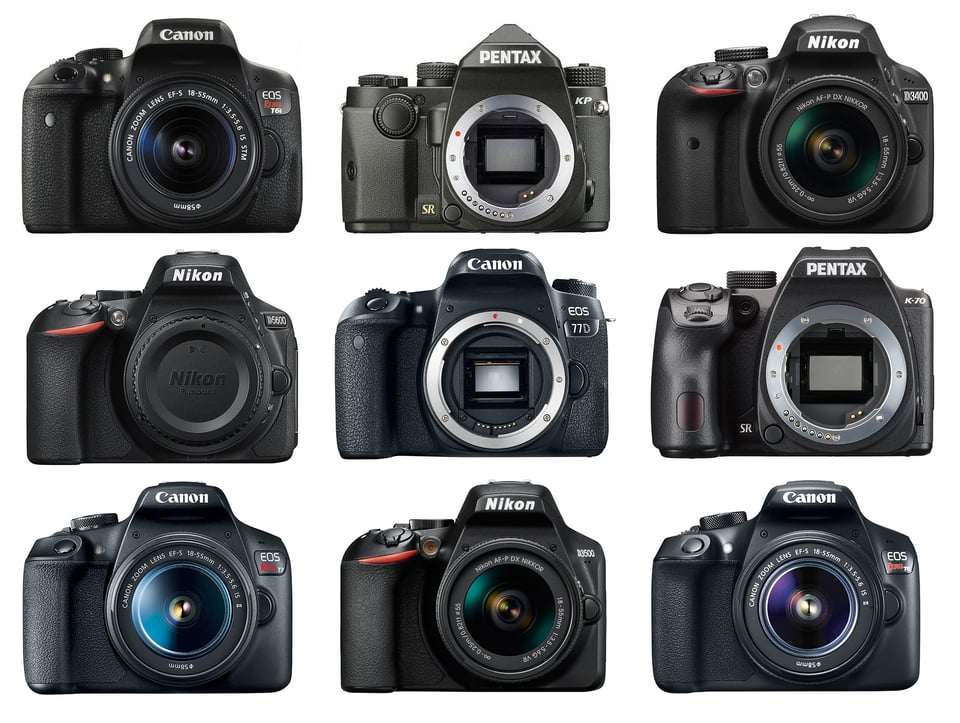
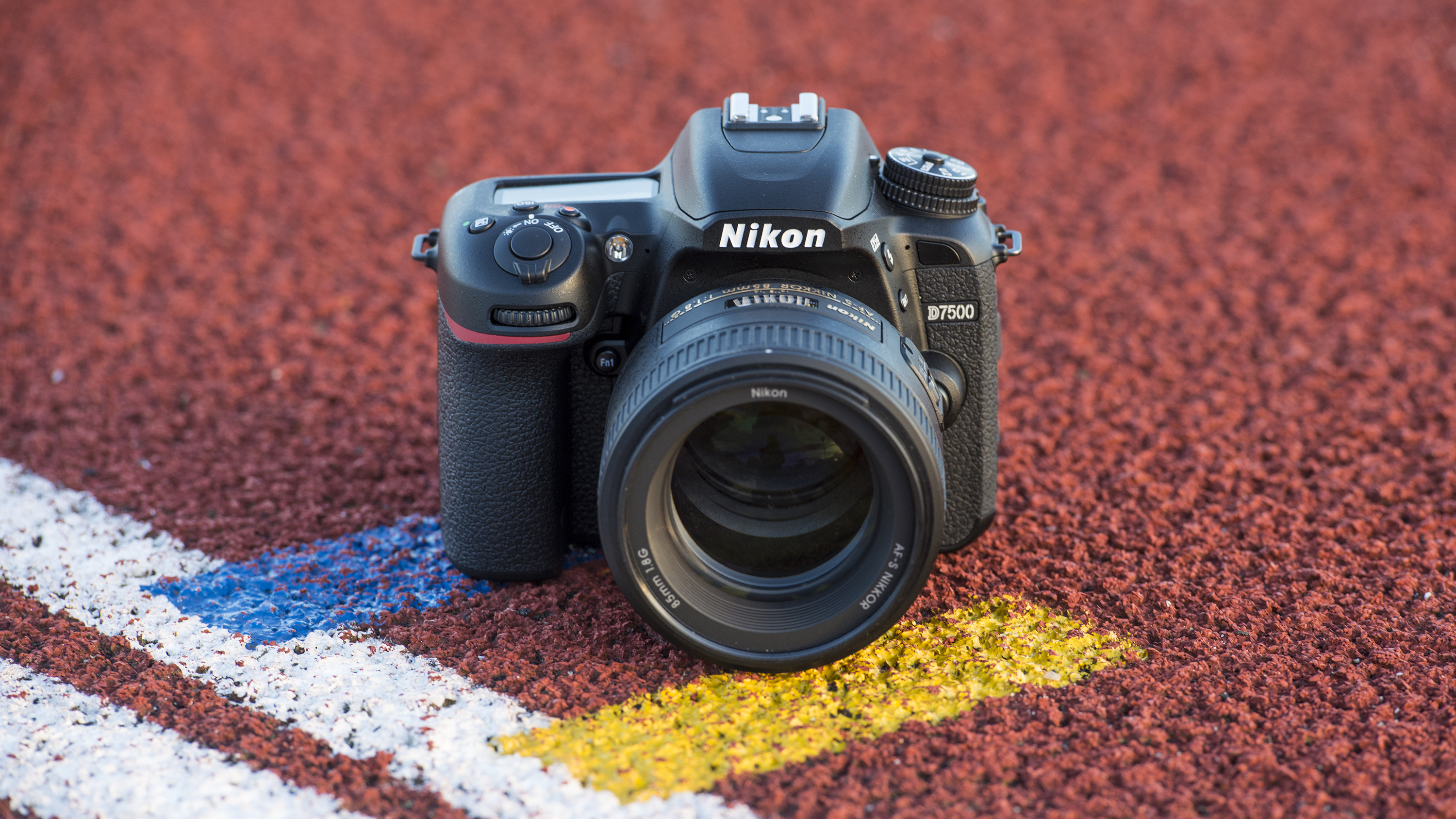
A DSLR uses a mirror and an optical viewfinder. You see the scene through the lens without an electronic display.
DSLR cameras can produce excellent photos and often have strong battery life. They also have many affordable used lenses. However, they tend to be larger and heavier than newer mirrorless models.
A beginner DSLR can still be a good choice if you prefer a traditional viewfinder or find a great deal on a used kit.
Compact Cameras
A compact camera has a built-in lens that does not come off. It is small, simple, and easy to carry.
Compact cameras can work well for travel, family photos, and daily use. Some advanced compact cameras have large sensors and bright lenses, but they may cost more than an entry-level interchangeable-lens camera.
Bridge Cameras
A bridge camera looks like a small DSLR but usually has a fixed lens with a long zoom range. It can cover wide views and distant subjects without buying extra lenses.
This design is useful for travel, wildlife parks, and outdoor events. The main limit is that the smaller sensor may not perform as well in dark scenes.
Instant Cameras
An instant camera prints photos soon after you take them. It is simple and fun for parties, trips, and creative projects.
It is less suitable if you want detailed control, high-resolution files, or advanced editing. Still, it can be a wonderful first camera for someone who values the experience of photography.
Source: techradar.com
Beginner Camera Features That Matter Most
Camera specifications can feel like a bowl of alphabet soup. You do not need to understand every number. Focus on the features that affect daily use.
Sensor Size
Sensor size has a major effect on image quality, low-light performance, and background blur.
Common sensor sizes include:
• Full frame
• APS-C
• Micro Four Thirds
• One-inch
• Small compact sensors
APS-C and Micro Four Thirds cameras are often excellent for beginners. They balance price, size, image quality, and lens choice.
A full-frame camera can produce excellent results, but it may cost more. Full-frame lenses are often larger and heavier as well.
Autofocus
Good autofocus helps you capture sharp images with less effort. Look for face detection, eye detection, and subject tracking.
Eye autofocus is helpful for portraits. Animal detection can help with pets and wildlife. Reliable autofocus also makes it easier to photograph children, sports, and moving subjects.
Lens Choice
The lens affects your photo more than many beginners expect. A camera body may be affordable, but extra lenses can cost more than the camera itself.
A starter zoom lens is often the most useful first lens. It lets you photograph wide scenes, people, food, and everyday moments without changing lenses.
A 50mm or similar prime lens can be a good second lens. It often offers a bright aperture and attractive background blur.
Image Stabilization
Image stabilization reduces blur caused by small hand movements. It is useful when shooting indoors or in low light.
Some cameras place stabilization in the body. Some lenses include it. A camera with both systems may provide even stronger support, though results vary by model.
Stabilization does not freeze a moving person. It helps with camera shake, not subject movement. You still need a fast shutter speed for sports or active children.
Battery Life
Battery life matters when traveling or spending a full day outside. Mirrorless cameras often use more power because the electronic viewfinder and screen remain active.
Buy at least one spare battery if you plan to travel. A small USB charger or power bank can also help during long trips.
Video Features
Many people use a camera for both photos and video. Look for 4K recording, a microphone port, a flip screen, and reliable autofocus if video matters to you.
Do not pay extra for advanced video features you will never use. A camera that feels simple is often better than one with impressive features that stay hidden in the menu.
Source: jessops.com
Beginner Camera vs. Smartphone Camera
Modern smartphones produce excellent photos. They are fast, convenient, and always nearby. For many people, a phone is enough for social media, family updates, and casual travel photos.
A beginner camera offers more control and flexibility. Its main advantages include:
• Better control over shutter speed, aperture, and ISO
• Interchangeable lenses on many models
• Improved background blur
• More natural results in some low-light scenes
• Better handling and physical controls
• Higher-quality files for editing and printing
A phone may use software to brighten shadows, sharpen details, and combine several exposures. This can look impressive, but it may also create an artificial result.
A camera does not automatically create better pictures. Good light, timing, composition, and practice still matter. A skilled phone photographer can make better images than a new camera owner who never learns how to use the controls.
Source: techradar.com
Benefits of Using a Beginner Camera
A beginner camera can change how you see everyday life. It encourages you to slow down and notice light, color, shape, and emotion.
Key benefits include:
• More creative control over each image
• Better learning opportunities than automatic phone photography
• Greater lens flexibility
• Stronger image quality for prints
• More control in difficult light
• Improved understanding of photography
• A clear path toward advanced camera skills
The physical controls also make learning easier. A dedicated dial can teach you more quickly than searching through a phone menu.
Many beginners enjoy the process as much as the final image. Taking a camera on a walk can turn an ordinary street into a small visual adventure.
Source: aseertime.com
Limitations of a Beginner Camera
A beginner camera is not perfect. It may require extra time, money, and care.
Common limitations include:
• Extra weight compared with a phone
• More equipment to carry
• Battery charging
• Lens and accessory costs
• A learning curve
• More complicated file management
• Dust on the sensor when changing lenses
You may also feel disappointed at first. A new camera will not fix poor light or weak composition by itself. It is a tool, not a magic wand.
I have seen new photographers spend too much time comparing camera charts and too little time taking photos. The best camera is often the one you will carry, understand, and use often.
Source: kimberlycaublephotography.com
How to Choose a Beginner Camera
Use your daily needs as the starting point. Do not begin with brand names or megapixels.
1. Decide What You Want to Photograph
Your subject affects your camera choice.
• Travel: Choose a small body and a flexible zoom lens.
• Portraits: Look for strong eye autofocus and access to bright lenses.
• Wildlife: Consider fast autofocus, a long lens, and good battery life.
• Sports: Choose fast shooting speed and reliable tracking.
• Video: Look for 4K, a flip screen, and a microphone input.
• Family photos: Prioritize ease of use and quick autofocus.
2. Set a Complete Budget
Include more than the camera body. Your full budget may also cover:
• A lens
• Memory cards
• A spare battery
• A camera bag
• A strap
• A tripod
• A basic cleaning kit
A slightly cheaper camera with a useful lens may serve you better than a costly body with no money left for accessories.
3. Hold the Camera
Visit a local camera shop if possible. Hold several models and test the buttons.
Ask yourself:
• Does the grip feel secure?
• Can you reach the main controls?
• Is the camera too heavy?
• Can you read the screen clearly?
• Does the menu make sense?
Comfort is a real feature. If a camera feels awkward, you may leave it at home.
4. Check the Lens System
Before buying, review the available lenses. Make sure the system offers the lens types you may want later.
You do not need ten lenses. One kit lens and one small prime lens can cover a wide range of photos.
5. Consider Used Equipment
A used beginner camera can offer strong value. Buy from a trusted dealer when possible, and check:
• Shutter count
• Sensor condition
• Lens scratches
• Battery health
• Port and card slot function
• Signs of water or impact damage
Avoid a bargain that has no return policy or clear condition report.
Common Beginner Camera Mistakes to Avoid
New photographers often make the same mistakes. Knowing them can save money and frustration.
Buying Based Only on Megapixels
More megapixels do not guarantee better photos. Lens quality, sensor performance, autofocus, lighting, and technique also matter.
A 24-megapixel camera is already enough for many prints and online uses.
Buying Too Much Camera
A professional model may have features you will never use. It can also be heavier, more expensive, and harder to learn.
Choose a camera that challenges you slightly, not one that overwhelms you.
Ignoring the Lens
The kit lens is useful, but it may not suit every goal. Learn what focal length and aperture mean before buying extra glass.
Using Automatic Mode Forever
Automatic mode is a fine starting point. Still, try aperture priority once you feel comfortable. It gives you control over background blur while the camera manages the rest.
Forgetting to Back Up Photos
Memory cards can fail. Back up important photos to a computer, external drive, or trusted cloud service.
Expecting Every Photo to Be Sharp
Motion blur, missed focus, and soft images are part of learning. Review your photos with care. Ask what went wrong, then try again.
A Simple Way to Learn Photography
You do not need a long course to start. Practice one skill at a time.
- Spend one week learning how to focus.
- Spend the next week testing aperture and background blur.
- Practice shutter speed with moving subjects.
- Learn how ISO affects brightness and noise.
- Take the same photo in different kinds of light.
- Review your images and note what worked.
- Repeat the process with a new subject.
Try a small project, such as photographing one object every day for 30 days. A simple project gives your practice a clear purpose.
Use the camera manual when a setting seems confusing. Manufacturer guides are often more accurate than random online tips because controls differ between camera models.
What Accessories Does a Beginner Need?
You can begin with only a camera, lens, battery, and memory card. Extra gear should solve a real problem.
Useful accessories include:
• A spare battery for long days
• A fast, reliable memory card
• A comfortable camera strap
• A small camera bag
• A lens cloth and air blower
• A tripod for night scenes or group photos
• A simple external microphone for video
Avoid buying every accessory at once. Start with the basics, then add equipment as your photography grows.
Frequently Asked Questions About What Is a Beginner Camera
Is a beginner camera worth buying?
A beginner camera is worth buying if you want more control than a phone provides. It is especially useful for learning photography, using different lenses, making prints, or shooting in challenging light.
What is the best beginner camera for a new photographer?
The best beginner camera is easy to hold, simple to control, and supported by affordable lenses. A small mirrorless camera or entry-level DSLR often works well, but your subject and budget should guide the final choice.
Can a beginner use a professional camera?
Yes, but a professional camera may have a steeper learning curve. New photographers usually learn faster with a model that offers automatic modes, clear controls, and helpful guides.
Is a mirrorless camera better than a DSLR for beginners?
Neither type is always better. Mirrorless cameras are often smaller and offer useful electronic previews, while DSLRs can provide long battery life and affordable used lenses.
Do beginner cameras take better photos than smartphones?
They can provide better control, lens flexibility, and low-light results, but they do not guarantee better photos. Composition, light, timing, and practice remain more important than the device alone.
How much should I spend on a beginner camera?
Spend enough for a comfortable body, a useful lens, and basic accessories. A complete, affordable kit is usually a better choice than spending your entire budget on the camera body.
Conclusion
A beginner camera is an approachable tool that helps you move from simple snapshots to intentional photography. It gives you more control than a phone while offering automatic modes for an easy start.
Look for a comfortable design, dependable autofocus, a suitable lens system, and features that match your interests. You do not need the newest or most expensive model. You need a camera that you will carry, use, and enjoy.
Start with one camera, one lens, and one small photo project. Practice often, learn from missed shots, and explore more photography guides as your confidence grows.

1 thought on “What Is A Beginner Camera: Simple Buying Guide”