
Understand depth of focus vs depth of field. Learn which optical concept matters most for your daily photography and lens choices.
We often hear two terms in the camera world. These terms are depth of focus vs depth of field. They sound like the exact same thing.
In reality, they mean very different things. One happens inside the camera body. The other happens out in the real world.
We will now look at a quick summary.
Depth of Focus vs Depth of Field at a Glance
Depth of focus lives inside your camera body. It is the tiny zone behind the lens glass. The camera sensor must sit exactly in this spot.
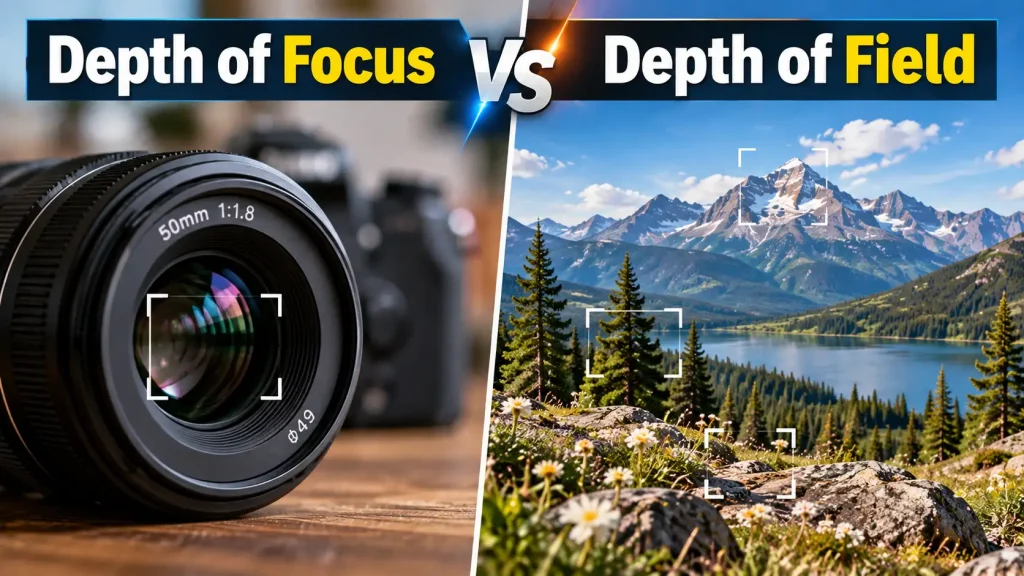
Depth of field lives outside your camera body. It is the zone of sharp focus in your actual scene. Photographers control this zone to make art.
The biggest difference is their physical location. One is about mechanical camera precision. The other is about creative visual choices.
Camera builders care most about depth of focus. Daily photographers care most about depth of field.
This brings us to our first comparison chart.
Main Concept Comparison
This table breaks down the main details. You can see how they differ quickly.
| Feature | Depth of Focus | Depth of Field |
| Location | Behind the lens | In front of the lens |
| Controller | Factory engineers | The photographer |
| Main Purpose | Sensor alignment | Creative storytelling |
This chart shows the core facts clearly. You now know the basic rules of both terms.
Let us dive into the first concept.
Depth of Focus OVERVIEW
Depth of focus is a pure technical measurement. It happens at the back camera sensor plane. The lens projects light into this tiny area.
If the sensor moves, the image gets completely blurry. The error margin is incredibly small here. This is why metal lens mounts are strong.
Camera repair experts watch this measurement closely. A dropped camera can easily ruin this alignment.
Here are the main things that alter it:
-
Lens aperture setting
-
Flange distance and mount
Now we will explore the second concept.
Depth of Field OVERVIEW
Depth of field is your main creative tool. It shows what is sharp in your photo. It stretches from the front to the back.
You use it to blur messy background trees. You also use it to keep mountain landscapes sharp. It is the heart of visual storytelling.
Every new photographer learns this basic rule first. It makes flat photos look three dimensional.
Here are the main things that alter it:
-
Lens aperture size
-
Distance to your subject
We can now look at physical design traits.
Optical Design and Build
Depth of focus relies on a strong metal mount. The camera body must remain perfectly flat. Cheap plastic mounts can bend and flex easily.
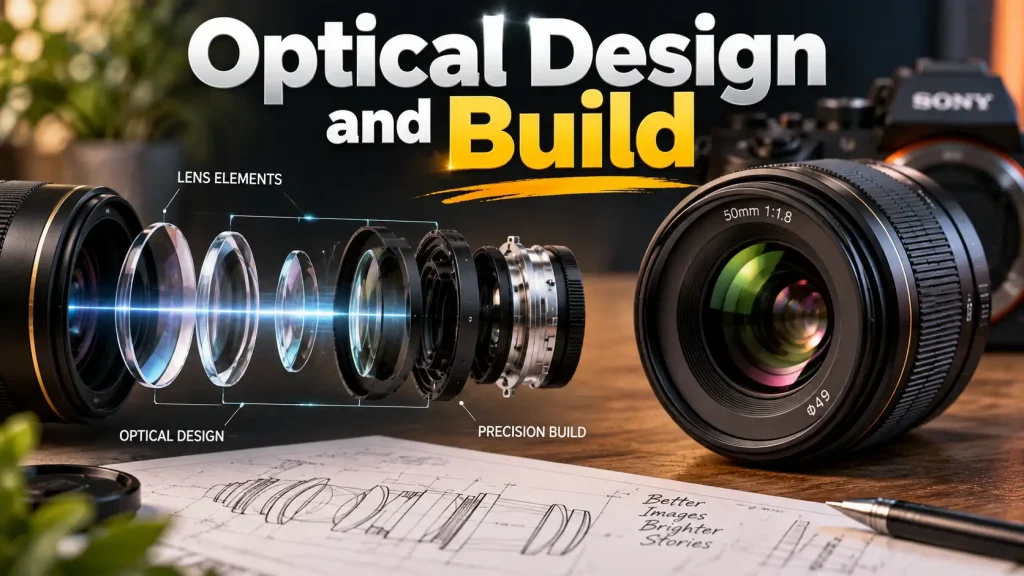
If the mount bends, you lose sharp focus. Heavy lenses pull hard on the camera mount. This is why pro cameras use magnesium bodies.
Depth of field relies on the lens iris. The aperture blades open and close tightly together. More blades make the background blur look smoother.
Both concepts demand great build quality. Good optics give you sharp images every single time.
Let us compare some core features next.
Key Features Compared
The location is the first big feature.
Sensor Plane vs Scene Plane
Depth of focus happens behind the glass. It deals with light rays hitting the sensor. The tolerance is measured in tiny fractions of millimeters.
Depth of field happens in front of you. It spans meters or even whole miles. You see it when looking through the viewfinder.
One is a tiny mechanical space. The other is a massive visual space.
The aperture plays a huge role.
Aperture Impact
Aperture changes both of these concepts deeply. A wide aperture creates a shallow depth of field. Your background becomes soft and creamy.
A wide aperture also shrinks your depth of focus. The sensor must be perfectly placed inside. There is zero room for small mechanical errors.
This table shows how aperture changes things.
| Aperture Size | Depth of Focus | Depth of Field |
| Wide (f/1.8) | Extremely small | Extremely shallow |
| Narrow (f/16) | Very large | Very deep |
This proves aperture is truly the master control. It changes both spaces at the exact same time.
Math plays a big part in optics.
The Science Behind the Blur
Physics rules how light bends through glass. We calculate depth of focus using a specific formula. It shows the precise tolerance zone for sensors.
The simple mathematical formula is $t = 2 \cdot N \cdot c$ for this measurement. Here, $N$ is the f-number. The $c$ is the circle of confusion.
This math tells engineers how to build cameras. As an AI, I see this as pure geometry. You just need to know it works.
Let us look at real shooting performance.
Performance Comparison
Depth of field performs best as a storytelling tool. You can isolate a clear face in a crowd. The viewer knows exactly where to look.
It shines in bright daylight and dark rooms. Fast lenses give you the best background blur. It brings absolute magic to plain portraits.
Depth of focus works silently in the background. It ensures your fast lens stays perfectly sharp. If it fails, your expensive lens looks very cheap.
Both must perform well for a great photo. You need sharp focus and beautiful blur together.
Now we apply this to daily shooting.
Which Matters More in Real Use?
Depth of field matters most for daily art. You change it for every single photo. It is an active, mindful choice.
Portrait shooters need a shallow depth of field. Landscape shooters need a deep depth of field. It directly shapes your personal visual style.
Depth of focus only matters when things break. You notice it when you use bad lens adapters. Poor adapters push the lens too far away.
You rarely think about depth of focus otherwise. It is an engineer’s problem, not yours.
Let us check how easy they are to use.
Setup and Ease of Use
Depth of field is very easy to use. You just turn the dial on your camera. You see the change on your screen instantly.
Beginners learn this trick in one single afternoon. It gives them instant creative power. The camera does all the hard math.
Depth of focus is impossible to set up manually. You cannot move the sensor yourself at all. You rely heavily on the factory calibration.
If it is wrong, you need a troubleshooting guide.
| Issue | Likely Cause | Solution |
| Soft corners | Bad lens adapter | Buy a better adapter |
| Focus misses | Bent camera mount | Send for repair |
Always test your gear before big shoots. A bad mount ruins a good lens.
We should consider the costs next.
Value and Cost Considerations
Getting a shallow depth of field costs money. Fast lenses with wide apertures are very expensive. Huge glass elements require big shopping budgets.
You pay extra for beautiful background blur. Many shooters think this is worth the high cost. It separates pro work from casual phone snaps.
Fixing a depth of focus issue is also costly. Sending a camera for mount repair takes weeks. You pay for extreme labor and precision.
It is always cheaper to buy good gear first. Do not buy cheap lens adapters online.
Let us summarize the best use cases.
Use Case Comparison Table
This chart shows when to think about each. It acts as a fast daily guide.
| Category | Depth of Focus | Depth of Field |
| Main strength | Keeps the camera sharp | Makes photos look beautiful |
| Main limitation | You cannot change it | Requires expensive fast lenses |
| Best suited for | Camera design | Taking actual photos |
You can see they serve completely different needs. Keep this in mind while shooting today.
We will now weigh the pros and cons.
Strengths and Weaknesses
This table compares the good and bad points. It is a simple visual overview.
| Depth of Focus | Depth of Field |
| + Ensures optical sharpness | + Creates stunning portraits |
| + Shows camera quality | + Hides ugly backgrounds |
| − Cannot be fixed at home | − Needs expensive gear |
| − Ruins photos if broken | − Takes practice to master |
Every optical concept has strict physical limits. We must learn to work with them.
Let us see who should care about this.
Who Should Focus on Each Concept
Some people must worry about the sensor.
Who Should Care About Depth of Focus?
Camera repair technicians care about this daily. They fix dropped cameras and bent lens mounts.
People who use vintage lenses care, too. They buy adapters to fit old glass on cameras. A bad adapter ruins the depth of focus.
Filmmakers using massive cinema lenses also care heavily. Heavy lenses pull hard on the camera body.
Most people care about the scene instead.
Who Should Care About Depth of Field?
Every single photographer must care about this. It is a basic rule of good photography.
Portrait shooters use it to blur ugly backgrounds. Sports shooters use it to isolate fast athletes.
Macro shooters fight it every single day. They need more depth of field for tiny bugs.
Let us highlight the core takeaways.
The Differences That Actually Matter
The biggest difference is your level of control. You control depth of field with your fingers. The factory controls depth of focus with machines.
Depth of field changes how the photo feels. It creates mood, drama, and deep visual interest. It is your main artistic voice.
Depth of focus just makes the camera work. If it is wrong, the photo is just broken. You cannot fix it in editing software.
You should only buy gear that masters both.
Here is my final advice on this.
Which Should You Prioritize?
Focus your daily time on depth of field. It makes you a much better visual artist. Master your aperture settings today.
Choose to worry about depth of focus rarely. Only think about it when buying cheap adapters. Buy strong, metal camera bodies instead.
For most photographers, depth of field is the priority. It is the tool that wins awards.
Here are some common questions answered.
Frequently Asked Questions
Let us look at portrait rules.
Which is better for portraits?
Depth of field is the true tool for portraits. A shallow depth of field blurs distracting backgrounds perfectly. Depth of focus just keeps the camera working properly.
Let us talk about landscape art.
Which is better for landscape photography?
Landscape shooters need a deep depth of field. This keeps the foreground and distant mountains very sharp. You achieve this using a small aperture setting.
Let us look at macro challenges.
Why are my macro photos always blurry?
Macro photography has extremely shallow depth of field. Getting close to a subject shrinks the sharp zone. You must use tiny apertures to fix this.
Let us address blurry gear issues.
Why does my cheap lens adapter make photos soft?
Cheap adapters completely ruin your depth of focus. They push the lens too far from the sensor. The light rays miss the tiny sharp zone completely.
Let us wrap up this comparison.
Final Verdict
Depth of field is your ultimate creative superpower. Depth of focus is a hidden mechanical camera rule. The biggest difference is that you control one while the factory controls the other.
Artists should focus strictly on depth of field. Gear builders must obsess over depth of focus. Master your aperture to take stunning, sharp photos every single day.
What is your favorite lens for creating beautiful background blur?
