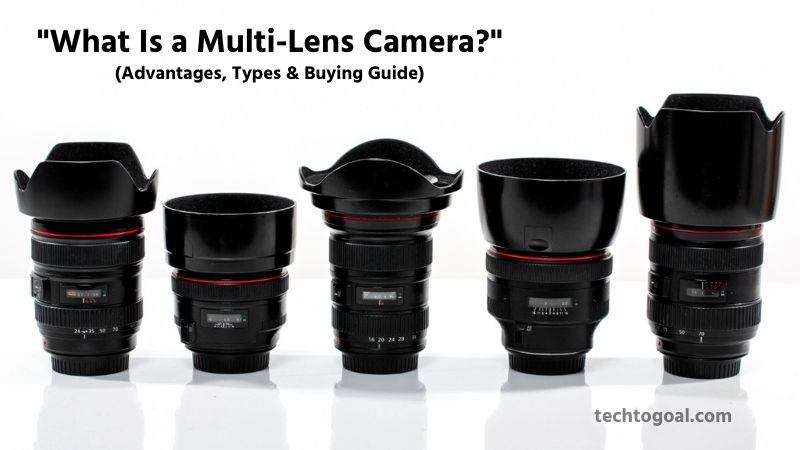

What Is a Multi-Lens Camera: In today’s fast-evolving world of imaging and surveillance technology, cameras are no longer limited to a single lens. Multi-lens cameras are quickly becoming a popular choice in smartphones, security systems, and professional photography because they deliver better coverage, enhanced image quality, and smarter performance than traditional single-lens cameras.
By using two or more lenses in one device, these cameras can capture different perspectives at the same time, offering everything from wide-angle views to detailed zoom and depth perception. Whether you’re securing a home, managing a business, or simply curious about how modern cameras work, understanding what a multi-lens camera is and how it’s used can help you make smarter buying and usage decisions.
In this article, we’ll break down what a multi-lens camera is, explore its key advantages, explain the different types available, and highlight the most common real-world uses, so you can clearly understand why this technology is shaping the future of modern camera systems.
What Is a Multi-Lens Camera
A multi-lens camera is a camera system that uses two or more lenses within a single device to capture images or video from different perspectives at the same time. Instead of relying on one fixed lens, a multi-lens setup combines lenses with different focal lengths, fields of view, or imaging functions, such as wide-angle, telephoto, macro, or depth sensors.
📌Read More👉What is a 4K camera?
This design allows the camera to collect more visual data, resulting in clearer images, better detail, and more flexible viewing options compared to traditional single-lens cameras. In practical use, each lens in a multi-lens camera serves a specific purpose. For example, one lens may capture a wide scene, while another focuses on zoomed-in details or depth information.
The camera’s internal processor then merges this data to create a single, enhanced image or video. This process improves sharpness, reduces distortion, enhances low-light performance, and enables advanced features like background blur, panoramic views, and intelligent subject tracking.
Multi-lens cameras are widely used in home security systems, smartphones, professional photography equipment, and industrial surveillance. In security cameras, multi-lens designs provide broader coverage and reduce blind spots, making them ideal for monitoring large areas such as homes, offices, parking lots, and warehouses.
Overall, a multi-lens camera offers greater versatility, smarter imaging, and improved performance, making it a powerful solution for modern visual and surveillance needs.
How Do Multi-Lens Security Cameras Work?
Multi-lens security cameras work by using two or more lenses within a single camera unit to capture video from different angles, focal lengths, or imaging modes at the same time. Each lens is designed for a specific purpose, such as wide-angle coverage, zoomed-in detail, or depth sensing, allowing the camera to monitor a larger area and capture more visual information than a traditional single-lens camera.
This multi-view approach significantly reduces blind spots and improves overall surveillance efficiency. Inside the camera, all lenses operate simultaneously and send their video feeds to an internal image processor. Advanced software and AI algorithms then analyze and combine these feeds into one seamless or intelligently segmented view.
For example, one lens may provide a panoramic overview while another focuses on tracking a moving person or vehicle. By merging multiple perspectives, the system delivers sharper images, better depth accuracy, and smoother motion tracking.
Multi-lens security cameras also enhance performance in challenging conditions such as low light, long distances, or high-traffic areas. Some lenses are optimized for night vision or infrared imaging, while others handle color or zoom functions.
The camera automatically selects or blends the best data from each lens, ensuring clearer footage and more accurate alerts. This smart coordination between hardware and software is what makes multi-lens security cameras a powerful and reliable solution for modern home and business security systems.
Common types of Multi-Lens Cameras
Any kind of video surveillance equipment with two or more separate sensors can be referred to as a multisensor camera. Owners of businesses and properties can select from a large selection of multisensor cameras to satisfy certain demands and needs.
Dual-Lens Cameras
Dual-lens cameras use two separate lenses working together to capture different visual data at the same time. Typically, one lens provides a wide-angle view while the other handles zoom, depth sensing, or detail enhancement.
This combination improves image clarity, depth perception, and low-light performance. Dual-lens cameras are widely used in home security cameras and smartphones because they offer better coverage and smarter features like background blur, person detection, and accurate motion tracking.
Triple-Lens Cameras
Triple-lens cameras feature three lenses, each with a specific role, such as wide-angle, telephoto, and ultra-wide coverage. This setup allows the camera to switch seamlessly between perspectives or blend multiple views into a single high-quality image. In security applications, triple-lens cameras are ideal for monitoring large areas, as they reduce blind spots and provide both overview and close-up details without losing image quality.
Panoramic Multi-Lens Cameras
Panoramic multi-lens cameras use two or more wide-angle lenses to create a continuous 180-degree or 360-degree field of view. The camera software stitches the images together into one smooth panoramic frame, enabling full-area monitoring with a single device. These cameras are commonly used in retail stores, offices, parking lots, and warehouses, where complete situational awareness is essential.
Quad-sensor cameras
Quad-sensor cameras use four circularly oriented camera lenses to record 360°, high-quality video of wide-ranging subjects. These multisensor cameras have the ability to create four separate camera feeds or combine them to create a panoramic image.
PTZ Multi-Lens Cameras
PTZ (Pan-Tilt-Zoom) multi-lens cameras combine fixed wide-angle lenses with a movable zoom lens. While one lens provides constant area coverage, the PTZ lens actively tracks movement by zooming in and following objects of interest. This type is especially effective for high-security environments where both real-time monitoring and detailed inspection are required.
AI-Powered Multi-Lens Cameras
AI-powered multi-lens cameras integrate artificial intelligence with multiple lenses to analyze video data in real time. Each lens may focus on different tasks such as facial recognition, vehicle detection, or motion tracking. AI algorithms process the combined data to deliver smarter alerts, reduce false alarms, and improve identification accuracy, making these cameras ideal for smart homes and commercial security systems.
Thermal and Optical Multi-Lens Cameras
Thermal and optical multi-lens cameras combine a standard visual lens with a thermal imaging lens. The optical lens captures clear daytime images, while the thermal lens detects heat signatures in complete darkness, fog, or smoke. These cameras are commonly used in industrial facilities, perimeter security, and critical infrastructure, where visibility in extreme conditions is crucial.
Fisheye Multi-Lens Cameras
Fisheye multi-lens cameras use one or more ultra-wide lenses to capture a distorted but extremely wide field of view. Advanced software then de-warps the footage into usable perspectives. These cameras are perfect for ceiling-mounted indoor surveillance, allowing one device to monitor an entire room without multiple cameras.
Advantages of using Multi-Lens Cameras
In today’s fast-paced world, capturing every detail accurately is more important than ever. Traditional single-lens cameras often struggle to provide the flexibility and precision that modern photography and security demand. This is where multi-lens cameras come into play.
📌Read More👉What is a good megapixel for a camera?
By incorporating multiple lenses in a single device, these cameras offer enhanced functionality, superior image quality, and versatile perspectives that are difficult to achieve with standard cameras. Whether for professional photography, vlogging, or advanced security systems, multi-lens cameras are rapidly becoming a preferred choice for users seeking high performance and adaptability.
- Wider Field of View and Better Coverage: Multi-lens cameras can capture footage from multiple angles at the same time, providing a significantly wider field of view compared to single-lens cameras. This expanded coverage helps reduce blind spots and allows one camera to monitor larger areas such as rooms, hallways, yards, or parking lots.
- Improved Image Quality and Detail: By combining data from multiple lenses, multi-lens cameras produce sharper images with enhanced clarity and depth. Each lens captures specific visual information, such as wide scenes or close-up details, which is then processed into a single high-quality image. T
- Reduced Blind Spots: One of the biggest advantages of multi-lens cameras is their ability to minimize or eliminate blind spots. Since different lenses cover different angles or focal lengths, areas that would normally be out of view with a single lens remain visible. This makes multi-lens cameras especially effective for security-critical locations where missing even a small detail can be risky.
- Enhanced Low-Light and Night Performance: Multi-lens cameras often include lenses optimized for low-light conditions, infrared night vision, or color night imaging. By using multiple sensors simultaneously, the camera can gather more light and visual data, resulting in brighter, clearer footage at night or in poorly lit areas. This ensures reliable monitoring around the clock.
- Smarter Motion Tracking and Detection: With multiple lenses working together, multi-lens cameras can track movement more accurately. A wide-angle lens monitors the overall scene, while another lens zooms in to follow moving objects such as people or vehicles. This improves motion detection accuracy and reduces false alerts caused by shadows, pets, or background movement.
- Better Depth Perception and Object Recognition: Multi-lens setups provide enhanced depth information, allowing cameras to better understand distances and object sizes. This improves features like person detection, vehicle recognition, and facial identification. Accurate depth perception is especially useful in smart security systems that rely on AI-based analytics.
- More Efficient Camera Setup: Because one multi-lens camera can replace several single-lens cameras, installation becomes simpler and cleaner. Fewer cameras mean less wiring, easier maintenance, and a more organized security setup. This is particularly beneficial for both residential and commercial environments.
- Advanced AI and Smart Features: Multi-lens cameras work exceptionally well with AI technology. The additional visual data from multiple lenses enables smarter analytics, such as behavior analysis, cross-camera tracking, and intelligent alerts. This leads to more reliable security monitoring and a better user experience.
- Versatility for Multiple Use Cases: Multi-lens cameras are highly versatile and suitable for various applications, including home security, business surveillance, traffic monitoring, industrial inspection, and smart cities. Their ability to adapt to different environments and requirements makes them a future-proof solution for modern camera systems.
Overall, multi-lens cameras offer superior coverage, smarter performance, and enhanced image quality compared to traditional single-lens cameras. They are an excellent choice for anyone looking to upgrade to a more advanced, reliable, and efficient surveillance or imaging solution.
Where are multi-lens cameras typically used?
Multi-lens cameras have become increasingly versatile and are used across a variety of fields due to their ability to capture high-quality images, offer multiple perspectives, and provide advanced functionality. Here are the key areas where they are commonly applied:
- Home Security Systems: Multi-lens cameras are commonly used in modern home security to monitor large areas such as living rooms, entrances, backyards, and driveways. With multiple lenses covering different angles, homeowners get better visibility with fewer cameras, reduced blind spots, and more accurate motion alerts, making them ideal for smart home security setups.
- Commercial and Office Buildings: In offices, shopping malls, and commercial buildings, multi-lens cameras help monitor wide open spaces, corridors, and entry points. Their ability to capture both wide views and close-up details improves security, supports employee safety, and helps prevent theft or unauthorized access.
- Retail Stores and Shopping Centers: Retail environments benefit greatly from multi-lens cameras because they can cover aisles, checkout areas, and entrances simultaneously. These cameras are used for theft prevention, customer behavior analysis, and staff monitoring, providing both security and valuable business insights.
- Parking Lots and Garages: Multi-lens cameras are ideal for parking lots and garages where wide coverage is essential. They can monitor multiple lanes, parking rows, and entry/exit points at the same time, making it easier to track vehicles, detect suspicious activity, and improve overall safety.
- Warehouses and Industrial Facilities: In warehouses and industrial settings, multi-lens cameras help oversee large storage areas, loading docks, and production zones. Their enhanced depth perception and wide field of view support asset protection, safety compliance, and operational monitoring.
- Smart Cities and Traffic Monitoring: Multi-lens cameras are increasingly used in smart city infrastructure for traffic control, public safety, and crowd monitoring. By capturing multiple angles at once, they help authorities analyze traffic flow, identify incidents, and improve urban safety and planning.
- Transportation Hubs: Airports, train stations, and bus terminals rely on multi-lens cameras to monitor crowds, platforms, and entry points. The ability to track movement across wide areas enhances passenger safety and improves incident response times.
- Educational Institutions: Schools, colleges, and universities use multi-lens cameras to secure campuses, classrooms, and outdoor areas. These systems help ensure student safety, monitor activities, and provide evidence when incidents occur.
- Healthcare Facilities: Hospitals and clinics use multi-lens cameras to monitor entrances, hallways, and restricted areas. They support patient safety, staff security, and compliance with safety protocols without requiring multiple single-lens cameras.
Multi-lens cameras are typically used wherever wide coverage, detailed monitoring, and intelligent tracking are required. From homes to smart cities, their flexibility and advanced capabilities make them a powerful solution for modern security and surveillance needs.
Top 3 Multi-Lens Cameras for Security
Here are the top 3 multi-lens cameras for security, ideal choices for home or business surveillance with broader coverage, multiple lenses, and advanced features:
📌Read More👉10 Best Alarm System with Camera of 2026
1. Reolink Duo 3 PoE 16MP Dual-Lens Security Camera
Overview: The Reolink Duo 3 PoE is a powerful dual-lens security camera designed to deliver ultra-wide panoramic surveillance with minimal blind spots.
It combines two high-resolution sensors and panoramic stitching to cover up to 180° in 4K UHD, making it ideal for monitoring front yards, driveways, backyards, and large outdoor spaces with a single device. Its advanced motion detection, color night vision, and AI person/vehicle detection enhance security monitoring both day and night.
Specifications:
- Resolution: 16MP Dual Lens (2×4K sensors)
- Field of View: ~180° panoramic view
- Night Vision: Color night vision + IR up to ~100 feet
- Connectivity: PoE (Power over Ethernet)
- Detection: Person, vehicle, animal motion alerts
- Recording: Supports 24/7 local recording with NVR compatibility
Pros:
- Wide-angle panoramic coverage eliminates blind spots with just one camera.
- High 4K clarity and an F1.6 aperture capture crisp detail even in low light.
- AI motion detection reliably distinguishes people, vehicles, and animals.
- PoE power and data over one cable simplifies installation in wired systems.
- Great choice for large properties and perimeter coverage without multiple cameras.
Cons:
- Requires PoE setup and wiring, which might be more complex than wireless models.
- Larger size and professional installation are often necessary for best placement.
- Higher upfront cost compared to single-lens cameras due to advanced hardware.
- Local storage typically requires an NVR (Network Video Recorder) for continuous recording.
Why I Like It: I like the Reolink Duo 3 PoE because it delivers true panoramic surveillance with outstanding clarity and intelligent detection, making it perfect for homeowners and small businesses who want thorough monitoring without installing multiple cameras.
2. Reolink Elite Floodlight WiFi Dual-Lens Security Camera
Overview: The Reolink Elite Floodlight WiFi camera blends security lighting with dual-lens panoramic video to guard large outdoor areas like driveways, backyards, and entry points.
Its dual-lens design covers a wide 180° field of view in 4K Ultra HD, and integrated floodlight illumination up to 3000 lumens both deters intruders and ensures excellent nighttime visibility. The camera’s AI performs on-device detection without cloud dependency, helping safeguard privacy and remove subscription costs.
Specifications:
- Resolution: 4K Ultra HD dual-lens panoramic video
- Field of View: ~180° panoramic coverage
- Lighting: Adaptive 3000-lumen floodlights (adjustable)
- Detection: AI person/vehicle/animal alerts
- Connectivity: Wi-Fi with robust app support
Pros:
- Bright integrated floodlights enhance night visibility and deterrence.
- Wide-angle dual lenses capture broad areas without additional cameras.
- On-device AI detection means no subscription is required for smart alerts.
- Adjustable lighting and detection zones improve customization.
Cons:
- The bulky design may not suit every outdoor mounting location.
- App setup and Wi-Fi performance can vary with network strength.
- Professional wiring is optional but can be more involved for some users.
Why I Like It: The Elite Floodlight WiFi is a smart all-in-one solution, blending powerful lighting and dual-lens coverage in a single unit that gives you excellent visibility and detection without ongoing subscription fees.
3. Wyze Duo Cam Pan Dual-Lens Security Camera
Overview: The Wyze Duo Cam Pan is a budget-friendly dual-lens security camera system that combines a pan-tilt camera with a fixed camera to offer comprehensive area monitoring in one device. The pan camera actively rotates to follow motion up to 360° horizontally and 180° vertically, while the fixed camera continuously watches a priority view. It records in 2K HD and supports local microSD storage up to 512 GB for continuous recording without subscription fees.
Specifications:
- Resolution: 2K HD per lens
- Movement: 360° pan + 180° tilt (tracked view)
- Field of View: Combined extensive coverage
- Storage: Supports local microSD storage (up to 512GB)
- Features: IP65 weather resistance, siren, spotlight, voice alerts
Pros:
- The dual-camera design eliminates blind spots and improves motion tracking.
- Pan-tilt functionality lets it follow subjects automatically.
- Local storage with up to a 512 GB microSD card, no subscription.
- A built-in siren and spotlight enhance outdoor security.
- Great value for money, with features usually found in higher-end models.
Cons:
- Slightly lower resolution than premium 4K models (2K only).
- Needs constant power due to the pan-tilt motor and features.
- Performance in heavy rain or extreme conditions may vary compared to ruggedized models.
Why I Like It: I like the Wyze Duo Cam Pan because it brings dual-lens coverage, active motion tracking, and extensive local storage into one affordable package, perfect for homeowners who want robust coverage without a high price tag or monthly fees.
How to Choose the Best Multi-Lens Security Camera?
Choosing the right multi-lens security camera comes down to understanding your needs, environment, and priorities. With multiple lenses and advanced features becoming standard, not all models are built the same, so it’s important to focus on elements that truly impact performance, coverage, and long-term satisfaction.
First, consider the coverage area you want to monitor. Multi-lens cameras vary widely in their field of view, from dual-lens panoramic systems to pan-tilt units with active tracking. If you’re securing a large outdoor space like a backyard, driveway, or parking lot, prioritize models with wider lens coverage, stitched panoramic views, or multi-directional capability. For smaller indoor areas, a compact multi-lens camera with strong motion tracking may be sufficient.
Next, look at the resolution and image quality. Higher resolution, such as 4K or 12 MP+, delivers sharper, more detailed footage that makes it easier to identify faces, license plates, or other critical details. When combined with multiple lenses, higher resolution helps ensure that both wide-angle and close-up views remain clear and useful, even in varied lighting conditions.
Night vision and low-light performance are critical factors as well. Many multi-lens cameras use infrared LEDs, adaptive lighting, or color night vision to enhance visibility in the dark. Choose a camera with robust night capabilities if you plan to monitor outdoor spaces or dimly lit areas. Some models also include integrated floodlights or smart illumination that can deter intruders and improve video clarity after sundown.
Another key consideration is storage and connectivity. Decide whether you prefer local storage (microSD cards, NVR/DVR) or optional cloud backup. Local storage helps avoid monthly subscription fees, while cloud options make remote access and historical playback easier. Also, check whether the camera uses Wi-Fi, Ethernet (PoE), or cellular connections; this affects both the reliability and speed of alerts or live views.
Smart features like AI motion detection, object recognition, and customizable alerts can improve accuracy and reduce false alarms. Multi-lens cameras with built-in AI are especially useful if you want the system to differentiate between people, vehicles, and animals, giving you more meaningful notifications.
Finally, evaluate build quality, weather resistance, and installation ease. Outdoor multi-lens cameras should be rated for rain, dust, and temperature extremes, while indoor units may prioritize compact design and aesthetic integration. Consider whether the camera is plug-and-play or requires professional setup, and check how easy it is to manage through mobile apps or software.
In summary, the best multi-lens security camera for you balances wide coverage, high image quality, strong night performance, smart detection features, and the right storage solution, all while fitting your budget and installation preferences. Understanding these core factors will help you choose a camera that protects your property effectively and confidently.
FAQs
Are multi-lens cameras better than single-lens cameras?
Yes, in many scenarios. Multi-lens cameras offer broader coverage and more detailed monitoring, especially in large areas like parking lots, offices, or outdoor spaces. However, single-lens cameras may still be suitable for small rooms or focused monitoring needs.
Are multi-lens cameras suitable for home use?
Absolutely. Multi-lens cameras are excellent for homes with large yards, driveways, or multiple entry points. They provide comprehensive coverage with fewer devices, making home security smarter and more efficient.
Do multi-lens cameras support night vision?
Most modern multi-lens cameras come with infrared night vision, low-light enhancement, or color night vision. High-end models may also include built-in floodlights to improve visibility and security after dark.
Do multi-lens cameras require a subscription?
Not always. Many multi-lens cameras support local storage via SD card, NVR, or NAS, which eliminates monthly fees. However, some brands offer optional cloud storage subscriptions for remote access and extended video history.
Conclusion
Multi-lens cameras are transforming the way we think about modern security and surveillance. By combining multiple lenses into a single device, these cameras deliver wider coverage, reduced blind spots, and more detailed visual information than traditional single-lens cameras. Whether it’s monitoring a home, office, parking area, or large commercial space, multi-lens cameras offer a smarter and more efficient security solution.
With various types available, from dual-lens and panoramic models to advanced AI-powered systems, users can easily find a camera that fits their specific needs and budget. Their advantages, including enhanced image quality, better situational awareness, and flexible installation, make them an excellent long-term investment for both residential and professional use.
When choosing the right multi-lens camera, it’s essential to consider factors such as coverage area, resolution, night vision performance, storage options, and smart features. By making an informed decision, you can enjoy reliable, future-ready security that delivers peace of mind around the clock. In short, a well-chosen multi-lens camera doesn’t just watch more, it protects smarter.