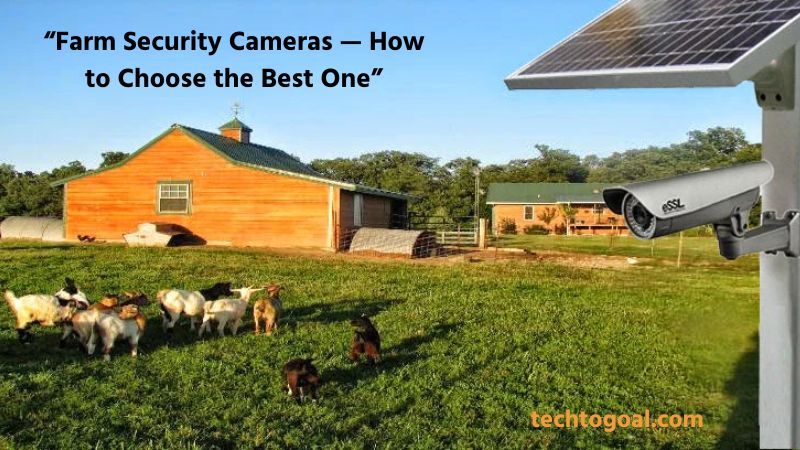

Farm Security Cameras: Farm security has become more important than ever in 2026, as modern farms face growing challenges such as theft, trespassing, livestock monitoring, and remote property management. Unlike residential properties, farms often cover large areas, remote locations, and outdoor environments, making traditional security solutions less effective. This is where farm security cameras play a crucial role, offering reliable surveillance, real-time monitoring, and peace of mind for farmers and landowners.
With advancements in camera technology, today’s farm security cameras come equipped with night vision, motion detection, solar power options, SIM card connectivity, weather-resistant designs, and smart alerts, all designed to work efficiently even in harsh outdoor and rural conditions. However, choosing the right camera can be confusing due to the wide range of options available on the market.
In this guide, we’ll explore the Top 5 Farm Security Cameras in 2026, highlighting their key features, strengths, and ideal use cases. We’ll also explain how to choose the best farm security camera based on factors like coverage area, connectivity, power source, and durability—helping you protect your farm, equipment, and livestock with confidence.
What Is a Farm Security Camera?
A farm security camera is a specialized surveillance system designed to monitor and protect large outdoor agricultural properties, including farmland, barns, livestock areas, equipment sheds, and entry points. Unlike standard home security cameras, farm security cameras are built to perform reliably in remote locations, harsh weather conditions, and low-light environments, ensuring continuous protection day and night.
📌Read More👉What Is Night Vision Security Camera
These cameras often feature weather-resistant housing, night vision, motion detection, wide-angle coverage, and long-range connectivity options such as SIM card (4G/5G), Wi-Fi, or solar power. By providing real-time monitoring, instant alerts, and recorded footage, farm security cameras help farmers deter theft, track animal movement, and manage their property efficiently, offering both security and peace of mind in modern farming operations.
Key Features of Best Farm Security Cameras
Farm security cameras are designed to protect large rural properties, crops, livestock, and expensive equipment where traditional security systems often fail. To ensure reliable performance in remote and outdoor environments, the best farm security cameras include the following essential features.
1 Long-Range Surveillance Monitoring
Long-range surveillance monitoring is one of the most important features of a farm security camera because farms usually cover wide, open areas. High-quality farm cameras offer wide-angle lenses, high-resolution video, and powerful zoom capabilities, allowing users to monitor long distances such as fields, driveways, barns, and fence lines. This ensures that suspicious activity can be detected early, even from far-away locations, helping farmers maintain full visibility across their property.
2 Remote Locations Without Wi-Fi
Many farms are located in remote areas where Wi-Fi access is unavailable or unreliable. The best farm security cameras are equipped with SIM card (4G/5G LTE) connectivity, allowing them to transmit footage and alerts using mobile networks instead of Wi-Fi. This feature ensures continuous monitoring and real-time access to camera feeds from anywhere, making it ideal for rural environments where traditional internet connections are not practical.
3 Solar-Powered Supply
A solar-powered supply is a critical feature for farm security cameras operating in locations without stable electricity. Solar cameras use high-efficiency solar panels combined with rechargeable batteries to deliver uninterrupted surveillance throughout the day and night. This not only reduces installation complexity but also lowers ongoing energy costs, making solar-powered farm security cameras a cost-effective and eco-friendly solution for long-term rural monitoring.
4 Alerts and Notifications
Instant alerts and notifications help farmers respond quickly to potential threats. Modern farm security cameras feature motion detection, AI-based human or animal recognition, and customizable alert settings that send real-time notifications to smartphones or email. This allows farm owners to take immediate action when unusual movement is detected, whether it’s intruders, wildlife, or unexpected activity around livestock or equipment areas.
5 Outdoor Use for Rural Areas
Farm security cameras must be built for harsh outdoor conditions commonly found in rural areas. The best models feature weatherproof and dustproof designs (IP65 or higher), enabling them to withstand rain, heat, cold, wind, and dirt. Durable construction ensures reliable performance year-round, making these cameras suitable for open fields, barns, stables, and remote farm entrances.
The best farm security cameras combine long-range monitoring, mobile connectivity, solar power, smart alerts, and rugged outdoor durability to meet the unique challenges of rural environments. By focusing on these key features, farmers can choose a security solution that delivers reliable protection, real-time monitoring, and peace of mind no matter how remote their property may be.
Top 5 Best Farm Security Cameras
In 2026, farm security has moved beyond simple monitoring. With vast areas to cover and often a lack of Wi-Fi or electricity, the best cameras now leverage 5G/4G LTE connectivity, AI-driven livestock tracking, and long-range Wi-Fi HaLow technology.
📌Read More👉The Best Low-Light Cameras in 2026
Here are the top 5 farm security camera recommendations for 2026, complete with in-depth details.
1. Reolink Go PT Ultra (Best Overall for Large Farms)
The Reolink Go PT Ultra is a powerhouse for remote locations. It combines 4K clarity with a pan-tilt design that allows farmers to scan large pastures or barn interiors directly from their smartphones using a 4G/5G SIM card.
Detailed Specifications
- Resolution: 4K 8MP Ultra HD.
- Connectivity: 4G LTE / 5G Mobile Network.
- Movement: 355° Pan & 140° Tilt.
- Night Vision: 30 ft Color Night Vision with Spotlights.
- Power: 6000 mAh Battery + 6W Solar Panel Support.
- AI Features: Person, Vehicle, and Animal Detection.
Pros:
- 360° Coverage: Eliminates blind spots by allowing you to rotate the camera remotely.
- Animal Detection AI: Specifically tuned to distinguish livestock from intruders, reducing false alerts.
- Weatherproof (IP65): Built to withstand dust in dry fields and heavy rain during storms.
- No Wi-Fi Needed: Works anywhere there is a cellular signal.
- Local Storage: Supports up to 128GB MicroSD, avoiding monthly cloud fees.
Cons:
- Data Consumption: 4K streaming can quickly drain a limited SIM data plan.
- Battery in Winter: Solar charging is less efficient in snowy or heavily overcast regions.
- No Optical Zoom: While it has digital zoom, it loses some clarity when zooming in on distant animals.
2. Reolink TrackMix LTE (Best for Perimeter Security)
The TrackMix LTE is a dual-lens camera that “tracks” movement. If a vehicle enters your farm gate, one lens stays wide while the other zooms in and follows the car.
Detailed Specifications
- Lenses: Dual-Lens (Wide-Angle & Telephoto).
- Resolution: 2K 4MP.
- Tracking: Auto-Zoom and Auto-Tracking.
- Connectivity: 4G LTE SIM Card.
- Night Vision: Color and IR options.
Pros:
- Automatic Tracking: Physically follows a person or animal across the yard without you doing anything.
- Dual-View: You see both the “big picture” and the “close-up” on one screen.
- Two-Way Talk: The loudspeaker allows you to shout at intruders or direct workers from the app.
- Time-Lapse Feature: Great for monitoring crop growth or construction projects on the farm.
- Sturdy Build: Specifically designed for industrial and agricultural use.
Cons:
- Bulky Design: Larger and heavier than standard cameras; requires a very solid mount.
- Complex Settings: Tracking sensitivity needs fine-tuning to avoid following every bird that flies by.
- 2K Limitation: While the zoom is great, the base resolution is 2K, which isn’t quite as sharp as the PT Ultra.
3. Reolink Argus 2 (Wireless Outdoor Security Camera)
The Reolink Argus 2 is a cost-effective option for farm owners who want wireless outdoor surveillance with 1080p video, night vision, and battery or solar panel support. It has a wide 130° field of view, motion alerts, and a weatherproof design.
Pros:
- Easy installation: Wireless setup with optional solar panel makes it simple for farm use.
- Long battery life: Lasts weeks on a full charge in typical usage.
- Clear night vision: Useful in vast rural spaces where lighting is minimal.
- No monthly fee: Local storage and app alerts reduce ongoing costs.
Cons:
- Lower resolution: 1080p is limited compared to 4K alternatives.
- Limited remote coverage: Without 4G, it depends on Wi-Fi or local network range.
- Basic features: Fewer advanced detection features than premium models.
4. Virtavo Mount Glenn (Best Long-Range Wi-Fi Halo)
A newcomer in 2026, the Mount Glenn system uses Wi-Fi HaLow (802.11ah) technology. This allows the camera to transmit video over a distance of one mile, making it perfect for massive ranches where cellular signal is weak.
Detailed Specifications
- Range: Up to 1 mile (1.6 km) from the base station.
- Resolution: 2K QHD.
- Technology: Wi-Fi HaLow (Sub-1GHz band).
- Power: Solar Powered with high-capacity lithium cells.
Pros:
- Incredible Range: Breaks the 300 ft. Wi-Fi barrier, covering an entire square mile of land.
- Obstacle Penetration: Sub-1GHz signals pass through trees, metal barns, and hills better than standard Wi-Fi.
- No SIM Card Required: Saves you from paying monthly cellular data bills.
- Low Power Use: HaLow tech is designed for extreme battery efficiency.
- Easy DIY Setup: Connects directly to your home internet via the long-range base station.
Cons:
- Latency: There is a slight delay (2–3 seconds) in the live feed due to the long-distance transmission.
- Lower Resolution: 2K resolution is good, but not as sharp as the 4K models from Sony or Eufy.
- Proprietary System: You must use their specific base station; it won’t connect to standard routers.
5. Arlo Pro 5S Spotlight (Best Smart Integration)
For the “Smart Farm,” the Arlo Pro 5S offers the best software experience. It integrates perfectly with Alexa, Google Home, and professional monitoring services.
Detailed Specifications
- Resolution: 2K HDR.
- Connectivity: Dual-Band Wi-Fi (2.4 GHz & 5 GHz).
- Night Vision: High-powered integrated spotlight.
- Field of View: 160° wide-angle lens.
Pros:
- Superior HDR: Handles harsh shadows and bright sunlight (common in open fields) perfectly.
- Fast Response: Wakes up and records instantly when motion is detected.
- App Ecosystem: One of the most polished and user-friendly apps on the market.
- Professional Monitoring: Can be linked to a security center that calls the police for you.
- Magnetic Mounting: Extremely easy to take down for a quick recharge or repositioning.
Cons:
- Subscription Heavy: Most AI features and cloud storage require a monthly Arlo Secure plan.
- Short Battery Life: Without a solar panel, it needs charging every 2–4 months in high-traffic areas.
- Signal Range: Standard Wi-Fi range is limited; requires range extenders for large farm use.
When choosing a farm security camera in 2026, prioritize connectivity (4G/solar), weather resistance, night vision quality, and coverage area. Off-grid 4G solar models offer maximum flexibility for remote fields, while pan/tilt systems give broader monitoring coverage. Budget or simpler solar cameras are ideal if you want low-maintenance and cost-effective monitoring without sacrificing essential surveillance performance.
Which Farm Security Cameras Are Suitable: Wired or Wireless?
Choosing between wired and wireless farm security cameras depends largely on your farm’s location, size, power availability, and monitoring needs. Both options have their strengths, but one is usually more practical for rural and agricultural environments.
📌Read More👉The 10 Best Security Cameras With Night Vision in 2026
1. Wired Farm Security Cameras – Best for Fixed Locations
Wired security cameras are ideal for farms that have stable electricity and structured buildings such as barns, warehouses, or farmhouses. These cameras are directly connected to power and often to a DVR/NVR system, which ensures continuous 24/7 recording without battery concerns. Because they rely on physical cables, wired cameras offer consistent video quality, strong signal stability, and minimal interference, making them suitable for monitoring critical areas like storage sheds, livestock barns, or machinery zones. However, installation can be more complex and less flexible, especially for large or spread-out farms.
2. Wireless Farm Security Cameras—Best for Remote & Large Farms
Wireless security cameras are the most popular choice for modern farms and rural areas, especially where power lines or Wi-Fi are unavailable. These cameras typically run on rechargeable batteries or solar panels and use Wi-Fi or 4G/LTE SIM connectivity, making them perfect for remote fields, crop areas, gates, and perimeter zones. Wireless farm cameras are easy to install, highly flexible, and can be relocated as farm needs change. With features like motion alerts, mobile app access, night vision, and weatherproof design, they provide reliable off-grid surveillance with minimal maintenance.
3. Wired vs. Wireless: Which Is Better for Farms?
For most farms, wireless security cameras are more suitable due to their flexibility, solar-powered options, and ability to work without Wi-Fi. Wired cameras are best only when the farm has existing infrastructure and needs constant high-resolution recording in fixed locations. In contrast, wireless cameras offer cost-effective installation, scalability, and remote access, which are essential for protecting large agricultural lands and isolated areas.
4. Best Recommendations for Farm Security
If your farm is remote, large, or off-grid, a wireless solar-powered 4G farm security camera is the best solution in 2026. If your farm has reliable power and permanent buildings, a wired camera system can complement your setup for indoor or high-priority zones. Many farm owners now use a hybrid approach, combining wired cameras near buildings and wireless cameras for open fields and perimeters.
For most agricultural environments, wireless farm security cameras are the smarter and more practical choice, while wired cameras remain useful for fixed, power-supported areas. Selecting the right type ensures better coverage, lower maintenance, and stronger protection for your farm assets.
How to Install and Set Up Farm Cameras
Installing farm security cameras properly is essential for maximum coverage, reliable performance, and long-term protection. Because farms often have large areas, outdoor exposure, and limited connectivity, following the right setup process ensures effective surveillance and fewer technical issues.
- 1. Identify Key Areas to Monitor: Before installation, carefully identify the most critical areas of your farm that need surveillance. These usually include entry gates, barns, livestock areas, equipment storage, fuel tanks, and perimeter fences. Planning camera placement in advance helps avoid blind spots and ensures that high-risk zones are always visible, improving overall farm security.
- 2. Choose the Right Camera Type: Select a camera that matches your farm’s environment and power availability. Wireless solar-powered cameras with SIM card (4G/LTE) support are ideal for remote locations, while wired cameras work best in areas with stable electricity. Choosing the correct camera type ensures consistent performance and reduces installation complications later.
- 3. Mount the Cameras Securely: Install the cameras at a height of 8–12 feet to prevent tampering while maintaining a clear field of view. Use weather-resistant mounting brackets and secure the camera firmly to walls, poles, or posts. Proper mounting ensures stable footage and protects the camera from wind, animals, and accidental damage.
- 4. Connect Power or Solar Panel: For wired cameras, connect the device to a reliable power source. For solar-powered farm cameras, install the solar panel in direct sunlight and attach it securely to ensure continuous charging. Proper power setup is crucial for uninterrupted monitoring, especially in remote or off-grid areas.
- 5. Insert SIM Card or Connect to Networkz: If your farm camera uses SIM card connectivity, insert a compatible 4G/LTE data SIM into the camera. For Wi-Fi models, connect the camera to a stable wireless network. This step allows the camera to transmit live footage, send alerts, and enable remote access through a mobile app.
- 6. Set Up the Camera Using the Mobile App: Download the manufacturer’s mobile app and follow the on-screen instructions to pair the camera with your smartphone. Configure essential settings such as video resolution, motion sensitivity, alert preferences, and recording schedules. App-based setup makes it easy to manage multiple cameras from one place.
- 7. Test Camera Angle and Video Quality: Once installed, test the camera’s viewing angle, zoom, night vision, and motion detection. Walk through monitored areas to confirm that alerts are triggered correctly. Fine-tuning these settings ensures accurate detection and reduces false alarms caused by animals or weather movement.
- 8. Enable Alerts and Cloud or Local Storage: Activate real-time alerts and notifications so you are instantly informed of any unusual activity. Choose between cloud storage or local SD card recording, depending on your security needs and budget. Reliable storage ensures important footage is always available when needed.
- 9. Perform Regular Maintenance Checks: Regularly inspect your farm cameras to ensure they remain clean, securely mounted, and fully powered. For solar cameras, keep the solar panel free from dust and debris. Routine maintenance extends the camera’s lifespan and guarantees long-term reliability.
Proper installation and setup of farm security cameras ensure strong coverage, real-time monitoring, and peace of mind. By following these steps, you can create a reliable surveillance system that protects your farm, livestock, and equipment—no matter how remote the location.
Benefits of Using Farm Security Cameras
Farm security cameras play a vital role in protecting agricultural property, livestock, crops, and equipment, especially in remote and rural areas. Below are the key benefits that make farm security cameras an essential investment for modern farms.
1. 24/7 Remote Livestock Monitoring
One of the greatest benefits is the ability to monitor livestock health and behavior without physically being in the barn or pasture. In 2026, cameras equipped with AI behavior analysis can alert you to signs of “calving” or “foaling,” as well as distress, lameness, or predator attacks. This allows for proactive intervention, drastically reducing livestock mortality rates and saving hours of manual labor spent on routine “checks.”
2. Prevent Theft and Trespassing
One of the biggest benefits of using farm security cameras is their ability to deter theft and unauthorized access. Visible cameras discourage intruders from targeting valuable farm assets such as machinery, fuel, livestock, and crops. If suspicious activity does occur, recorded footage provides clear evidence that can be used for identification and legal purposes.
3 Remote Monitoring from Anywhere
Modern farm security cameras enable remote access through mobile apps, allowing farmers to monitor their property from anywhere in the world. Whether you’re at home, in town, or traveling, real-time video feeds and alerts provide peace of mind and ensure you stay connected to your farm at all times.
4. Improve Farm Management Efficiency
Security cameras do more than protect—they also help improve daily farm operations. By monitoring work zones, storage areas, and livestock pens, farmers can identify workflow issues, track deliveries, and ensure tasks are completed properly. This leads to better decision-making and more efficient farm management.
5. Operate Effectively in Remote Areas
Many farm security cameras are designed for off-grid and remote locations, featuring solar power and SIM card connectivity. These cameras work without Wi-Fi or traditional electricity, making them ideal for rural farms where infrastructure is limited. This ensures reliable surveillance regardless of location.
6. Receive Instant Alerts and Notifications
With motion detection and smart alerts, farm security cameras instantly notify farmers of unusual activity. Whether it’s an intruder, wildlife, or unexpected movement near equipment, real-time alerts allow for quick response and damage prevention, reducing potential losses.
7. Provide Evidence for Insurance and Disputes
Recorded footage from farm security cameras can serve as valuable evidence for insurance claims, property disputes, or livestock incidents. Clear video records help support claims, resolve conflicts, and protect farmers from false accusations.
8. Enhance Overall Farm Safety
Farm security cameras contribute to a safer working environment by monitoring hazardous areas and equipment usage. They help identify unsafe practices and prevent accidents, protecting both workers and animals while improving overall farm safety standards.
Using farm security cameras offers comprehensive protection, improved efficiency, and peace of mind. From deterring crime to managing livestock and ensuring safety, these systems are a smart and reliable solution for modern farming needs.
How to Choose the Best Farm Security Camera
Choosing the best farm security camera involves more than just picking the most expensive model it requires evaluating features that directly impact performance in rural and outdoor environments. The right camera enhances surveillance, peace of mind, and overall farm protection, so it’s important to consider specific factors that make a camera reliable and effective for agricultural use.
📌Read More👉How to Choose an Indoor Security Camera
1. Evaluate the Coverage Area
When selecting a farm security camera, start by assessing the size and layout of your farm. Large farms require cameras with long-range viewing, wide field of view, and pan-tilt-zoom (PTZ) capabilities to cover vast areas efficiently. For small zones like barns or entryways, a standard fixed camera may suffice. Understanding your coverage needs helps you pick cameras with the right lens angle, optical zoom, and positioning for maximum visibility.
2. Connectivity Options (Wi-Fi vs 4G/SIM)
Connectivity is crucial for rural farms, as Wi-Fi may be weak or unavailable in certain areas. Cameras with 4G/LTE SIM card support provide independent mobile network connectivity, ensuring you receive live feeds and alerts without Wi-Fi. If your farm does have strong internet coverage, Wi-Fi cameras are cost-effective and easy to install. Choosing the right connectivity type ensures your camera stays online and accessible at all times.
3. Power Source and Reliability
Farm cameras need consistent power to work effectively. Consider cameras that support solar power and rechargeable batteries for off-grid locations where electricity isn’t reliable. Solar-powered models with high-efficiency panels and large batteries provide continuous operation without frequent maintenance. Wired power remains suitable for cameras near buildings with stable electricity. Assessing your power options helps maintain uninterrupted security coverage.
4. Weatherproof and Rugged Design
Farm environments are exposed to dust, rain, heat, cold, and wind, so durability is key when choosing a security camera. Look for cameras with high weatherproof ratings (IP65 or above) and rugged housing designed for outdoor use. Weatherproof models resist moisture and debris, ensuring long-term durability and minimal damage from harsh conditions common in agricultural settings.
5. Night Vision and Low-Light Performance
Since many security issues occur at night, a good farm camera must have strong night vision and low-light performance. Infrared (IR) night vision or full-color LED night mode helps capture clear images even in darkness. Cameras with extended night range and automatic lighting adjustments allow you to monitor fields, livestock, and entry points effectively after sunset.
6. Motion Detection and Smart Alerts
Smart motion detection technology reduces unnecessary alerts and focuses on meaningful movement, such as humans or vehicles. Many farm security cameras offer customizable detection zones, AI-based alerts, and instant mobile notifications, so you’re informed immediately when suspicious activity occurs. Intelligent alerts help save data and battery by avoiding false triggers from animals or moving trees.
7. Storage Options (Local & Cloud)
Decide whether you want local storage (microSD), cloud storage, or a hybrid setup. Local storage is cost-effective and reduces data usage, while cloud storage keeps footage accessible from anywhere and safeguards videos in case the camera is damaged or stolen. Some cameras offer both options, giving you flexibility and redundancy.
8. Two-Way Audio and Additional Features
Additional features like two-way audio allow remote communication through the camera — useful for deterring intruders or communicating with workers. Other features such as siren alarms, built-in floodlights, and remote control via mobile apps enhance overall security. Choosing cameras with smart features tailored to farm needs increases effectiveness and usability.
The best farm security camera is one that meets your coverage needs, environmental conditions, connectivity requirements, and budget. By considering factors such as coverage range, power source, connectivity, night vision, motion alerts, storage options, and rugged design, you can select a camera that provides continuous, reliable protection for your farmland, livestock, and valuable equipment — no matter where your property is located.
Bonus: Farm Security Tips
You may take many precautions to keep your cattle and property safe. Here are several workable and efficient strategies.
- Construct Solid Fences: Constructing solid fences around your property is one of the simplest methods. If at all feasible, raise them. Barbed wire or electrified fencing can provide additional security.
- Lock Your Assets: Always remember to take out the keys and put them in a secure location when you leave your tractor trailer or other vehicles on the farm. Another option is to store the cars in a garage that can be locked.
- Employ Motion-Activated Devices: Place motion-activated lighting or alarm systems in close proximity to your critical equipment. These alarm gadgets have the immediate ability to discourage criminals who try to relocate the equipment by sneaking in.
- Set up security systems: To keep an eye on everything in the fields, install a CCTV security camera system. You’ll always be able to monitor your property thanks to the camera’s photos and recordings.
FAQs
What are farm security cameras and why are they important?
Farm security cameras are surveillance systems designed to monitor large, open rural areas such as farms, barns, crop fields, and livestock zones. They are important because farms are often located in remote areas, making them vulnerable to theft, trespassing, and wildlife damage. Cameras help farmers protect assets, animals, and equipment 24/7.
Are security cameras suitable for large farm areas?
Yes, modern farm security cameras are specifically built for wide coverage. Many models offer wide-angle lenses, long-range motion detection, and PTZ (Pan-Tilt-Zoom) features, allowing effective monitoring of large fields, entry gates, and barns.
Do farm security cameras need Wi-Fi or internet?
Not always. While some cameras use Wi-Fi, many farm security cameras work with SIM cards (4G/5G LTE) or are fully wireless, making them ideal for farms where traditional internet is unavailable or unstable.
Can farm security cameras work without electricity?
Yes, many farm security cameras are solar-powered or battery-operated. These cameras are perfect for remote farm locations where access to electricity is limited, ensuring continuous surveillance with minimal maintenance.
Are farm security cameras weatherproof?
Most farm security cameras are built with rugged, weatherproof designs and high IP ratings (such as IP65 or IP67). They can withstand rain, dust, heat, cold, and harsh outdoor conditions common in farming environments.
Can farm cameras detect animals and wildlife?
Yes, advanced farm cameras use AI motion detection to differentiate between humans, animals, and vehicles. This helps farmers monitor livestock movement and receive alerts for wild animals entering the farm area.
Is night vision important for farm security cameras?
Absolutely. Farms often face security threats at night. Cameras with infrared night vision or color night vision ensure clear footage in low-light or complete darkness, helping identify intruders or predators.
Can I monitor my farm security cameras remotely?
Yes, most modern farm security cameras allow remote monitoring via mobile apps. Farmers can view live footage, receive motion alerts, and access recordings from anywhere using a smartphone or computer.
How long do farm security cameras store footage?
Storage depends on the camera type. Some cameras use SD cards, while others offer cloud storage subscriptions. Storage duration can range from a few days to several months, depending on video quality and storage capacity.
What should I consider before buying a farm security camera?
Before purchasing, consider factors like coverage area, power source (solar or battery), connectivity (Wi-Fi or SIM), weather resistance, night vision quality, motion detection accuracy, and storage options to ensure the camera fits your farm’s specific security needs.
Conclusion
Investing in a farm security camera is no longer a luxury—it’s a necessity for modern farming in 2026. Farms face unique challenges such as remote locations, large coverage areas, livestock protection, and equipment security, which require cameras that are reliable, durable, and versatile. The best farm security cameras combine features like long-range monitoring, 4G/SIM connectivity, solar power, night vision, motion alerts, and weatherproof design, ensuring continuous surveillance even in harsh conditions.
When choosing the right camera, consider factors such as coverage area, connectivity options, power source, storage solutions, and additional smart features to ensure your farm is protected efficiently and effectively. Whether you opt for wired cameras for fixed locations or wireless solar-powered cameras for remote fields, the key is selecting a system that fits your farm’s specific needs.
Ultimately, a well-planned farm security camera setup provides peace of mind, prevents theft, protects livestock, and enhances operational efficiency. By investing in the right cameras and maintaining them properly, farmers can safeguard their property and enjoy year-round security across every corner of their farm.