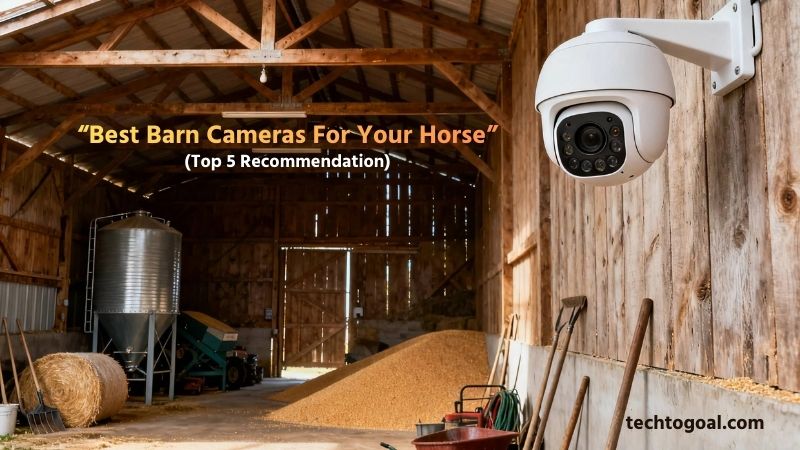

Best Barn Cameras: Keeping your horse safe and healthy is a top priority for every owner, and modern barn cameras have become an essential tool for round-the-clock monitoring. Whether you want to check on your horse’s behavior, monitor feeding times, prevent theft, or keep an eye on foaling, the right barn camera can give you peace of mind even when you’re not physically present.
With advances in wireless technology, night vision, and smart alerts, today’s barn cameras are more powerful, affordable, and easier to install than ever before. However, not all security cameras are suitable for barn environments. Dust, moisture, temperature changes, low lighting, and long distances can affect camera performance.
That’s why choosing a camera specifically designed or well-suited for horse barns is crucial. In this guide, we’ll explore the best barn cameras for your horse, highlight the key features to look for, and help you choose a reliable monitoring solution that ensures your horse’s safety, comfort, and well-being at all times.
What Are Barn Cameras and How Do They Work?
Barn cameras are specially designed monitoring or security cameras used to observe horses, livestock, and barn areas both indoors and outdoors. Unlike standard home cameras, barn cameras are built to handle challenging environments such as dust, moisture, insects, low lighting, and temperature fluctuations commonly found in stables and barns.
They help horse owners monitor daily activities like feeding, resting, training, and health behavior, as well as provide added security against theft or unwanted intrusions. Many barn cameras also play a crucial role during foaling season, allowing owners to watch mares closely without disturbing them.
Barn cameras work by capturing live video footage through a high-resolution lens and transmitting it to a connected device such as a smartphone, tablet, or computer. Depending on the model, they connect via Wi-Fi, Ethernet cable, or cellular (SIM card) networks, making them suitable for both remote and off-grid barns.
Features like infrared night vision enable clear monitoring in complete darkness, while motion detection sends instant alerts when movement is detected. Some advanced barn cameras include two-way audio, allowing owners to hear sounds in the barn or even talk through the camera.
By combining durable hardware with smart software, barn cameras provide reliable, real-time monitoring that helps ensure the safety, comfort, and well-being of your horse around the clock.
Long-Range Wireless Barn Cameras: Best 5 Recommendation
When dealing with expansive farms and remote barns, standard Wi-Fi cameras often fail due to signal distance. Long-range wireless cameras use either high-frequency radio bridges, 4G LTE cellular data, or long-range Wi-Fi (HaLow) to bridge the gap.
📌Read More👉10 Best Alarm System with Camera of 2026
Here are the top 5 long-range wireless barn cameras for 2026, detailed with specifications and deep pros and cons:
1. Swann MaxRanger4K™ (Best for Long-Distance Wi-Fi)
The MaxRanger4K is a pioneer in “HaLow” Wi-Fi technology, which uses lower frequency signals to travel through walls and over long distances that standard Wi-Fi cannot reach.
- Overview: It provides a dedicated hub that acts as a long-range base station, allowing cameras to be placed up to 2,000 feet away in open air.
- Specifications: 4K Ultra HD resolution, 2,000 ft (600 m) range, solar-powered with built-in battery, IP66 weatherproof, heat/motion sensing.
Pros:
- Incredible Range: Offers the longest Wi-Fi range of any consumer-grade camera without needing expensive mesh systems.
- No Monthly Fees: Records directly to a local SD card or the hub, so there are no mandatory subscriptions.
- Superior Penetration: The HaLow signal passes through metal barn walls much better than standard 2.4 GHz Wi-Fi.
Cons:
- Higher Initial Cost: The starter kit with the hub is more expensive than standalone cameras.
- Fixed View: It is usually a bullet-style camera, meaning you cannot remotely pan or tilt it.
- Hub Dependency: If the central hub loses power or connection, all cameras go offline.
2. Reolink Go PT Ultra (Best 4G LTE/Cellular Option)
For barns located in “dead zones” where there is no Wi-Fi at all, the Reolink Go PT Ultra uses cellular networks to transmit video directly to your phone.
- Overview: This is a 100% wire-free camera that works on 4G LTE. It features a pan-tilt motor, giving you a 360-degree view of your barn or pasture.
- Specifications: 4K 8MP Resolution, 355° Pan & 140° Tilt, 4G LTE Connectivity, 6000mAh Battery + Solar Panel Support, Color Night Vision.
Pros:
- Zero Infrastructure Needed: No Wi-Fi or electricity required; just a SIM card and sunlight.
- Full Coverage: The Pan-Tilt feature allows you to look around the entire barn with one camera.
- Smart Detection: Specifically identifies humans and vehicles, reducing false alarms from barn cats or birds.
Cons:
- Ongoing Data Cost: Requires a monthly cellular data plan (SIM card), which adds to the long-term cost.
- Signal Dependent: If your barn is in a valley with poor cell reception, the camera will struggle to stream.
- Battery Strain: Excessive use of the pan-tilt motor or live streaming can drain the battery faster than the solar panel can charge it.
3. Barn Owl RangeCam Live (Best for Professional Off-Grid Use)
Barn Owl is a specialist brand focused specifically on agricultural needs. The RangeCam Live is built for the rugged reality of farm life.
- Overview: A heavy-duty cellular camera designed to withstand extreme temperatures and provide reliable “on-demand” photos and video.
- Specifications: 1080p HD Video/4K Photo, GPS tracking built-in, 4G LTE (Verizon/AT&T), Rugged IP67 housing, Solar-integrated.
Pros:
- Rugged Reliability: Built specifically for farmers, it handles dust, manure fumes, and extreme cold better than “smart home” brands.
- GPS Theft Protection: If someone steals the camera, the built-in GPS helps you track its location.
- Dual-Network Support: Can often be configured to switch between the strongest available cellular carriers.
Cons:
- Lower Video Res: While it takes 4K photos, the live stream is usually 1080p to save data.
- Industrial Interface: The app and web interface are functional but less “polished” than Arlo or Reolink.
- Expensive Hardware: You pay a premium for the rugged build quality and specialized support.
4. Arlo Go 2 (Best for Portability & Features)
The Arlo Go 2 is a versatile camera that can switch between Wi-Fi (when close to the house) and 4G LTE (when moved to a distant barn).
- Overview: A compact, high-performance camera that is easy to move from the calving pen to the front gate as your needs change throughout the season.
- Specifications: 1080p Resolution, Wi-Fi + 4G LTE, Integrated Spotlight, 130° Field of View, 2-Way Audio.
Pros:
- Hybrid Connectivity: Swaps between Wi-Fi and cellular automatically to save on data costs.
- Built-in Siren & Light: Excellent for scaring away predators (coyotes/foxes) remotely.
- Excellent App Experience: The Arlo app is widely considered the most user-friendly on the market.
Cons:
- Subscription Heavy: Most advanced features (like 30-day cloud storage and animal detection) require an “Arlo Secure” monthly plan.
- Proprietary Charging: Uses a special magnetic charging cable, which can be annoying if you lose it in a barn.
- Battery Life: Without a solar panel, the battery life is relatively short compared to larger industrial units.
5. FarmCam Mobility 4G
Specifically engineered for the agricultural sector, this camera is a favorite for foaling and calving in extreme climates.
- Overview: A robust cellular camera that focuses on “lag-free” streaming, allowing farmers to watch laboring animals in real-time without buffering.
- Specifications: 3MP Video Quality, 4G LTE, IP65 Weatherproof, Motion Detection, Built-in Microphone.
Pros:
- Lag-Free Monitoring: Optimized for livestock monitoring where seeing the “exact” moment of birth is critical.
- Extreme Temperature Rating: Better performance in sub-zero temperatures where other lithium batteries might fail.
- Easy Setup: Comes pre-configured for farm use, making it truly “plug-and-play.”
Cons:
- Limited Smart Integration: Does not play well with Google Home or Alexa compared to other brands.
- Lower Resolution: 3MP is sufficient for watching a cow but not ideal for reading license plates at a distance.
- Availability: Can be harder to find in some regions compared to mainstream brands like Arlo.
Barn Camera Without Wi-Fi: Best 5 Recommendation
In many rural areas, the biggest challenge is the lack of Wi-Fi signals in remote barns. Non-Wi-Fi barn cameras (primarily using 4G LTE cellular technology) solve this by using the same data networks as your smartphone, allowing you to monitor your farm from anywhere in the world.
📌Read More👉The Best Low-Light Cameras in 2026
Here are the top 5 barn cameras that function perfectly without Wi-Fi:
1. Reolink Go PT Ultra
The Reolink Go PT Ultra is a powerhouse for remote monitoring. It combines 4G LTE connectivity with a pan-tilt motor, giving you a complete view of your barn without needing a single wire or internet router.
Specifications: 4K 8MP Ultra HD resolution, 355° Pan & 140° Tilt, 4G LTE Cellular connection, 6000mAh Rechargeable battery (solar-compatible), smart person/vehicle/animal detection.
Pros:
- 360° Coverage: You can remotely rotate the camera via your phone to check different stalls or corners.
- Stunning Clarity: 4K resolution allows you to zoom in on ear tags or medical signs with high detail.
- True Independence: Works anywhere there is a cell signal, making it perfect for temporary summer pastures.
- Smart AI Filters: Greatly reduces “false alarms” from insects or dust, only alerting you when it sees an animal or human.
Cons:
- Data Usage: Streaming in 4K consumes a lot of cellular data; you’ll need a robust data plan.
- Signal Dependency: In extremely remote “valleys” with no cell service, this camera cannot transmit video.
- Battery Management: Frequent rotating and zooming can drain the battery faster on cloudy days.
2. eufy 4G LTE Cam S330
Eufy has designed the S330 to be a “forever power” solution. It features a high-capacity battery and a highly efficient solar panel, ensuring your barn stays monitored even during long stretches of cloudy weather.
Specifications: 4K Color resolution, dual connectivity (switches between 4G and Wi-Fi), 9,400 mAh battery, Built-in 2.4W solar panel, 100-lumen spotlight.
Pros:
- Massive Battery: The 9,400 mAh battery is nearly double the size of many competitors, providing excellent backup.
- Integrated Spotlight: The built-in light helps you see in full color at night and can scare off predators.
- No Hidden Fees: Unlike other brands, eufy focuses on local storage, so you don’t have to pay for cloud storage.
- Easy Setup: The all-in-one design (solar panel attached) makes it very simple to mount on a barn post.
Cons:
- Fixed View: Unlike the Reolink, this model does not rotate; you have a fixed 135° field of view.
- Weight: Because of the large battery and built-in panel, it is heavier and requires a sturdy mounting surface.
- App Connectivity: Sometimes takes a few extra seconds to “wake up” the live stream over cellular networks.
3. Barn Owl RangeCam Live
Barn Owl is a brand built specifically for farmers and ranchers. The RangeCam Live is designed for the dirt, heat, and extreme conditions of agricultural life.
Specifications: 1080p HD Video/4K Photos, Built-in GPS, Works on Verizon/AT&T/T-Mobile, IP67 Waterproof Rating, Rugged Camouflage or White Housing.
Pros:
- Agricultural Grade: Designed to resist the corrosive fumes (like ammonia) often found inside livestock barns.
- Anti-Theft GPS: If a thief takes the camera, the internal GPS allows you to track its exact location.
- Reliable Triggers: Uses a high-grade PIR sensor that is much more accurate at long distances than standard home cameras.
- Specialist Support: Their customer service understands farming needs, not just “tech” problems.
Cons:
- Higher Price: The hardware cost is significantly higher than consumer-grade cameras.
- Limited Video: While it takes great photos, live video streaming is often capped to save data.
- Subscription Required: You must use the Barn Owl data plans, which can be more expensive than a DIY SIM card.
4. Vosker V300
The Vosker V300 is an “on-demand” cellular camera that excels in security. It is widely used for monitoring expensive farm equipment and remote barn entrances.
Specifications: 1080p HD, LTE connectivity, SENSE-A.I. Image Recognition, built-in solar panel, local backup on SD card.
Pros:
- Fastest Alerts: Known for delivering motion notifications to your phone faster than almost any other cellular camera.
- Advanced AI: Can specifically recognize “human” vs “vehicle,” making it an elite security tool for your driveway or fuel tank area.
- Compact Design: Very small and discreet, making it easy to hide from potential intruders.
- Hybrid Storage: Records locally to an SD card even if the cellular signal is momentarily lost.
Cons:
- Low Resolution: Compared to the 4K Reolink or Eufy, 1080p can feel a bit blurry when zooming in.
- Costly Plans: Their monthly “Elite” plans for frequent photo/video updates can add up over a year.
- No PTZ: You cannot move the lens remotely; it only sees what it is pointed at.
5. Tactacam Defend
Originally known for hunting cameras, the Tactacam Defend is a simplified, budget-friendly way to get cellular monitoring in your barn without a massive investment.
Specifications: 1080p Video, 4G LTE, Quick-Start App, Integrated Solar/Battery, Rugged Weatherproof Build.
Pros:
- Affordability: One of the most budget-friendly ways to get a reliable cellular camera on your farm.
- Simple Interface: The app is extremely basic and easy to use for people who aren’t “tech-savvy.”
- Multi-Carrier: Often comes with a pre-installed SIM that searches for the best signal across multiple providers.
- Durability: Very “drop-proof” and built to handle the bumps of farm life.
Cons:
- Basic Features: Lacks advanced features like 2-way audio or pan-tilt movement.
- Slower Loading: The live stream can be laggy compared to the high-end Eufy or Reolink models.
- Night Vision Range: The infrared LEDs have a shorter range, so it’s better for small stalls than large, open fields.
How Do Barn Cameras Protect Your Farm/Barn Property?
A barn camera is no longer just a luxury for watching animals; it has become an essential layer of defense for the entire farmstead. Beyond equine monitoring, these high-tech systems act as a 24/7 digital sentry, protecting your equipment, hay storage, and property boundaries from both internal and external threats.
- 1. Deter Theft and Trespassing: Barn cameras act as a strong visual deterrent against theft and unauthorized access. When potential intruders see cameras installed around your farm or barn, they are far less likely to attempt stealing livestock, feed, tools, or equipment. This proactive layer of security helps reduce crime before it even happens.
- 2. Provide 24/7 Surveillance: With round-the-clock monitoring, barn cameras keep your property under constant watch, day and night. Advanced features like infrared night vision and low-light recording ensure clear visibility even in complete darkness, helping you stay protected after hours.
- 3. Send Instant Motion Alerts: Modern barn cameras are equipped with motion detection technology that sends real-time alerts to your smartphone or email. This allows you to respond quickly to suspicious activity, whether it’s an intruder, a loose animal, or unexpected movement near storage areas.
- 4. Protect Valuable Livestock: Livestock, especially horses, represents a significant investment. Barn cameras help monitor animal behavior, prevent theft, and detect unusual activity that could signal stress, injury, or illness. This added visibility improves animal safety and well-being.
- 5. Monitor Equipment and Feed Storage: Farms often store expensive machinery, tack, and feed in barns. Cameras help protect these assets by keeping storage areas under constant surveillance, reducing the risk of theft, tampering, or damage.
- 6. Improve Remote Farm Management: Barn cameras allow you to monitor your property remotely from anywhere using a smartphone, tablet, or computer. This is especially useful for large farms or owners who cannot be on-site at all times, offering peace of mind and better control.
- 7. Record Evidence for Incidents: In case of theft, vandalism, or disputes, recorded footage provides valuable evidence. High-quality video recordings can assist law enforcement, support insurance claims, and help resolve conflicts quickly and fairly.
- 8. Enhance Night-Time Security: Farms and barns are often most vulnerable at night. With night vision, motion-activated lights, and smart alerts, barn cameras ensure your property remains protected even when visibility is low.
- 9. Reduce Operational Risks: By monitoring daily activity, barn cameras help identify safety hazards such as open gates, broken fences, or malfunctioning equipment. Early detection reduces risks and prevents costly damages.
- 10. Increase Overall Peace of Mind: Ultimately, barn cameras give farm and barn owners confidence knowing their property, animals, and investments are always being watched. This peace of mind allows you to focus on farm operations without constant worry about security.
Benefits of Barn Cameras
Barn cameras have revolutionized livestock management, offering farmers and ranchers a high-tech set of eyes that never sleeps. Whether you are managing a small hobby farm or a large-scale commercial operation, these devices provide security, efficiency, and peace of mind.
Here are the key benefits of installing barn cameras:
- 24/7 Livestock Monitoring: The primary advantage of a barn camera is the ability to check on your animals at any time without physically being there. This is especially helpful during harsh weather or late at night. You can monitor animal behavior, ensure they are eating properly, and detect early signs of illness or injury, allowing for immediate intervention.
- Stress-Free Birthing and Foaling: During the birthing season, timing is everything. Barn cameras allow you to keep a close watch on pregnant cows, sheep, or horses from the comfort of your home. This prevents the “observer effect,” where a human’s physical presence might stress the animal and stall labor. You can wait until the exact moment assistance is needed before heading to the barn.
- Enhanced Farm Security: Farms are often located in isolated areas, making them targets for theft or vandalism. High-definition cameras act as a powerful deterrent against intruders and predators. If a crime does occur, the recorded footage provides essential evidence for law enforcement and insurance claims, protecting your valuable equipment and livestock.
- Early Disease Detection: Subtle changes in an animal’s movement or social interaction are often the first signs of disease. By observing your herd through a camera, you can spot an animal that is lethargic or isolated from the group. Early isolation and treatment can prevent a single sick animal from spreading a virus to the entire flock.
- Protection Against Predators: Wild animals like coyotes, foxes, or stray dogs can cause devastating losses overnight. Barn cameras equipped with motion sensors and night vision can alert you to the presence of predators in real time. Many modern systems even allow you to trigger an alarm or speak through a two-way audio system to scare the predators away.
- Improved Labor Efficiency: Managing a farm requires a lot of “windshield time,” or walking back and forth between buildings. With a camera system integrated into your smartphone, you can oversee multiple pens or stalls simultaneously. This streamlines your daily routine, allowing you to prioritize tasks and spend your time where it is truly needed.
- Remote Management for Busy Owners: For “part-time” farmers or those who have off-farm jobs, barn cameras are a game-changer. You can check in on your livestock from your office or while traveling. This connectivity ensures that you are never out of the loop regarding the safety and well-being of your animals, regardless of your physical location.
- Evidence for Veterinary Consultations: Sometimes it is difficult to describe an animal’s symptoms to a vet after the behavior has stopped. Having recorded footage allows you to show your veterinarian exactly what happened, whether it was a seizure, a specific limp, or unusual coughing. This visual data leads to faster and more accurate diagnoses.
How to Choose the Best Barn Cameras
Selecting the right barn camera system is a long-term investment in your farm’s productivity and security. Since barns are harsh environments with dust, moisture, and limited internet, you need a system that is more robust than a standard home security camera.
Here is a comprehensive guide on how to choose the best barn camera:
1. Camera Resolution and Image Quality
High resolution is essential for clear and detailed footage. Choose barn cameras with at least 1080p (Full HD) or higher resolution so you can clearly identify animals, people, and activity in different lighting conditions. Better image quality also improves the effectiveness of zooming and reviewing recorded footage.
2. Night Vision Capability
Since barns often have low light or darkness at night, choose cameras with reliable night vision. Infrared (IR) LEDs or thermal imaging help capture clear video in complete darkness, ensuring 24/7 monitoring without blind spots.
3. Weather and Environment Durability
Select barn cameras with rugged, weatherproof housing (typically rated IP65 or higher) to withstand dust, rain, humidity, and temperature changes. Durable designs ensure long-term performance even in outdoor or harsh barn conditions.
4. Motion Detection and Alerts
Smart motion detection allows your camera to distinguish movement and send instant alerts to your device. This feature helps you stay informed about unusual activity, like a loose horse or an intruder, without constantly watching the live feed.
5. Remote Viewing and Connectivity
Choose cameras that offer easy remote access through a mobile app or web interface. Wi-Fi, Ethernet, or cellular connectivity options let you view live or recorded video from anywhere, giving you complete control over your barn monitoring.
6. Pan, Tilt, and Zoom (PTZ) Functions
PTZ cameras offer flexible control over viewing angles. With the ability to pan (move left/right), tilt (move up/down), and zoom in, PTZ cameras cover larger barn areas with fewer devices, making them ideal for big barns or open spaces.
7. Storage Options (Cloud or Local)
Consider how your barn camera stores footage. Cloud storage provides secure access from anywhere and protects against data loss, while local storage (SD card or NVR) gives you immediate control of video files without subscription fees. Choose based on your monitoring needs and budget.
8. Two-Way Audio Features
Cameras with built-in microphones and speakers allow two-way communication useful for calming animals, communicating with barn staff, or listening to sounds in the barn. This added feature enhances monitoring beyond visuals alone.
9. Power Source and Installation Ease
Decide between wired and wireless cameras based on your barn setup. PoE (Power over Ethernet) cameras simplify installation with a single cable for power and data, while wireless cameras provide more flexibility. Choose models that match your barn’s layout and power availability.
10. Budget and Warranty Coverage
Finally, balance your features with your budget. Higher-end cameras offer advanced functions, but many affordable options still provide strong performance. Also, check for good warranty coverage and reliable customer support to protect your investment.
FAQs
What features should the best barn camera have?
The best barn camera should include night vision, a weatherproof design, motion detection, a wide-angle view, and remote access via a mobile app. For rural barns, features like solar power and SIM card support are also very useful.
Are wireless barn cameras reliable in rural areas?
Yes, wireless barn cameras can be reliable, especially SIM card or cellular models that do not depend on Wi-Fi. These cameras work well in remote barns where internet connections are weak or unavailable.
Do barn cameras work at night?
Most modern barn cameras come with infrared or color night vision, allowing clear monitoring even in complete darkness. This is essential for protecting livestock and detecting predators or intruders at night.
Is a solar-powered camera good for a barn?
Solar-powered cameras are an excellent choice for barns because they reduce wiring needs and work well in off-grid locations. As long as the camera receives enough sunlight, it can run continuously with minimal maintenance.
Can barn cameras monitor livestock activity?
Yes, barn cameras are commonly used to monitor livestock behavior, feeding patterns, and health. Farmers can check animals remotely, reducing the need for frequent physical inspections.
How weatherproof should a barn camera be?
A barn camera should have at least an IP65 or IP66 weatherproof rating to withstand rain, dust, heat, and cold. This ensures long-term performance in harsh farm environments.
Where should you place a barn camera for best coverage?
Barn cameras should be placed at entry points, feeding areas, livestock stalls, and equipment storage zones. Mounting the camera high and angled properly helps capture a wider and clearer view.
Do barn cameras require monthly fees?
Some barn cameras require monthly subscription fees for cloud storage or advanced features, while others offer free local storage via SD card. Cellular barn cameras may also need a SIM data plan.
What is the best type of camera for large barns?
For large barns, PTZ (Pan-Tilt-Zoom) cameras or wide-angle cameras are ideal. These cameras cover larger areas and allow users to zoom in on specific zones for better monitoring.
Conclusion
In conclusion, investing in the best barn camera for your horse is not just about security; it’s about providing the highest level of care and gaining ultimate peace of mind. Whether you are monitoring a high-risk pregnancy, a horse recovering from injury, or simply ensuring your stable is safe from intruders, a reliable camera system acts as your 24/7 eyes and ears.
By choosing a system with features like high-definition resolution, advanced night vision, and rugged weatherproofing, you ensure that the harsh barn environment never interferes with your view.
From the versatility of 4G LTE cameras for remote pastures to the expansive views of PTZ models, the right technology allows you to intervene quickly during emergencies like colic or foaling complications. Ultimately, a well-placed barn camera strengthens the bond between you and your horse, ensuring their safety and well-being even when you are miles away.