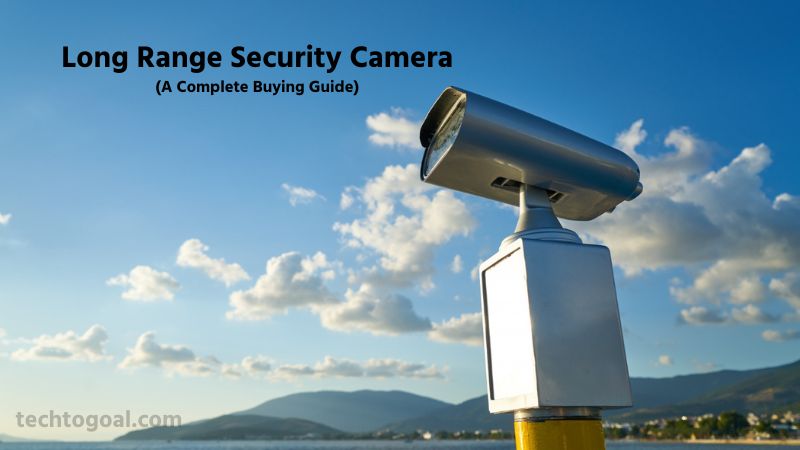

Long Range Security Camera: Long-range security cameras have become essential for homeowners, businesses, and property managers who need to monitor large outdoor areas with clarity and precision. Whether you want to secure a big backyard, a farm, a parking lot, or commercial premises, a standard camera often falls short especially when it comes to identifying people, vehicles, or activity from far distances.
This is where long-range security cameras stand out, offering superior zoom capabilities, high-resolution imaging, and advanced night vision that allow you to capture clear footage even hundreds of feet away. In today’s world, security threats are becoming more sophisticated, and investing in the right surveillance technology is no longer optional it’s a necessity.
This complete buying guide will walk you through everything you need to know, from essential features and types of long-range cameras to key factors that ensure reliable, accurate, and high-quality monitoring. By the end, you’ll be confident in selecting the perfect long-range security camera to protect your property with maximum effectiveness.
What Is a Long-Range Security Camera?
A long-range security camera is a specialized surveillance camera designed to capture clear video from much farther distances than standard cameras. While a regular security camera typically records within a 10–30 meter range, a long-range camera can monitor areas stretching from 100 meters to over 1 kilometer, depending on the lens type, sensor size, and zoom capability.
📌Read More👉How to Install Wireless Security Cameras
These cameras provide high-quality imaging even when subjects are far away, making them ideal for large properties, open fields, parking lots, construction sites, warehouses, farms, and perimeters.
What makes a long-range security camera truly effective is its combination of powerful optical zoom lenses, high-resolution sensors, and advanced night vision technologies like infrared (IR) LEDs, laser illumination, or starlight sensors. Unlike digital zoom which reduces clarity optical zoom maintains crisp details while zooming in, allowing you to identify faces, license plates, animals, or objects from significant distances.
Long-range cameras are also built to perform well in harsh outdoor environments, offering strong weather resistance and stable performance in low light, foggy conditions, or extreme temperatures. This makes them reliable for 24/7 surveillance in both residential and commercial settings.
In simple terms, a long-range security camera is the perfect solution when you need distance coverage, high-level detail, and reliable monitoring over large areas—something standard cameras simply cannot achieve.
How Long-Range Security Cameras Work
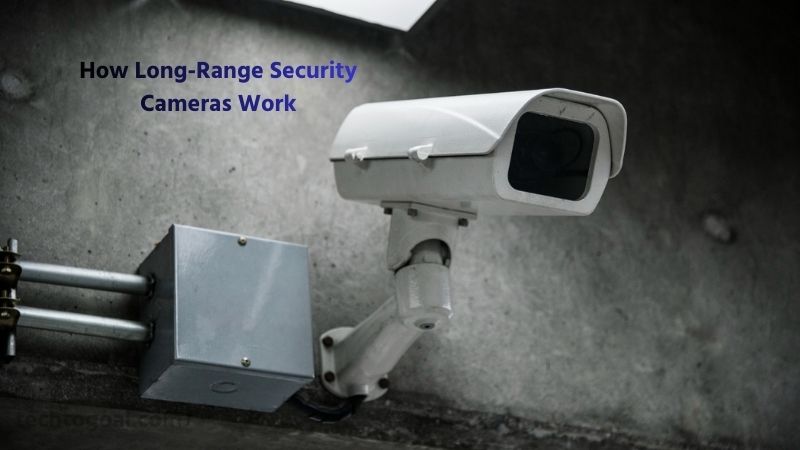
Long-range security cameras use a combination of advanced optics, image sensors, and transmission technologies to capture clear footage from far distances. Unlike regular cameras that only monitor nearby areas, long-range cameras are engineered to zoom in, enhance detail, and maintain clarity even when the subject is hundreds of meters away. Here’s a breakdown of how they work:
1. Optical Zoom Lenses for Distance Clarity
The core of any long-range camera is its powerful optical zoom lens. Optical zoom uses physical lens movement to magnify distant objects without losing image quality.
A 20x, 30x, or even 40x optical zoom lens can clearly identify people, animals, or vehicles far away. This is what allows the camera to maintain true detail over long viewing distances.
2. High-Resolution Image Sensors
- Long-range cameras are equipped with large, high-quality image sensors such as 4MP, 4K, or even higher.
- These sensors capture more light and detail, which is crucial when zooming in on distant objects.
- Bigger sensors = better clarity, color accuracy, and low-light performance.
3. Advanced Infrared (IR) and Night Vision Technology
Since many long-distance monitoring needs happen at night, long-range cameras rely on powerful night vision features:
- Long-range IR LEDs for visibility up to 300–500 meters
- Laser IR illumination for precision long-distance night coverage
- Starlight or low-light sensors for bright images even in near darkness
- Together, these tools allow the camera to deliver clear footage 24/7.
4. Intelligent Image Processing
Modern long-range cameras use AI-powered technologies to enhance clarity and identify objects:
- Noise reduction removes grainy image artifacts
- WDR (Wide Dynamic Range) improves visibility in bright and dark areas
- AI detection recognizes vehicles, humans, or movement patterns
- This ensures sharp, usable footage regardless of lighting conditions or movement.
5. Long-Distance Video Transmission
Long-range cameras often use specialized transmission methods to send video to recorders or apps:
- PoE (Power over Ethernet) for stable, long-distance wired connections
- WiFi or long-range wireless radio for remote areas
- 4G/5G cellular connectivity for off-grid monitoring
- These systems allow the camera to remain accessible from anywhere.
6. Weatherproof and Rugged Design
Because long-range cameras are typically used outdoors, they are built with:
- IP66/IP67 weatherproofing
- Lightning and surge protection
- Metal housings to withstand harsh environments
This durability ensures the camera performs reliably in rain, dust, wind, snow, and extreme temperatures.
In short: Long-range security cameras work by combining optical zoom, powerful sensor technology, advanced night vision, and intelligent processing to deliver clear, high-quality footage from far distances. They are designed for users who need maximum visibility, coverage, and performance across wide outdoor areas.
Types of Long-Range Security Cameras
Long-range security cameras come in several different types, each designed for specific environments, monitoring needs, and coverage distances. Whether you’re watching over a large property, a construction site, or wide farmland, understanding these camera types will help you choose the best option. Here are the most common and effective types:
📌Read More👉Why You Need a Home Security System In 2026
Long-Range Bullet Cameras: Long-range bullet cameras are known for their straightforward design, powerful lenses, and extended infrared (IR) capabilities.
They are ideal for fixed monitoring of long distances, such as driveways, building entrances, open fields, and perimeters.
Key Features:
- Long-range IR night vision (up to 300–500 meters)
- Weatherproof metal housing
- Fixed direction monitoring for consistent surveillance
- High clarity thanks to large lenses and high-resolution sensors
These cameras are best when you need constant focus on one direction or area.
Long-Range PTZ (Pan-Tilt-Zoom) Cameras: PTZ cameras offer the most flexibility because they can pan, tilt, and zoom to cover massive areas. With optical zoom lenses ranging from 20x to 40x, PTZ cameras can track moving objects both near and far.
Key Features:
- Remote control of movement (pan/tilt)
- Powerful zoom for long-distance identification
- Auto-tracking and AI motion detection
- Full 360° coverage
This type is perfect for monitoring large spaces like parking lots, farms, industrial yards, or commercial properties.
Long-Range Infrared (IR) Cameras: These cameras specialize in nighttime surveillance using enhanced infrared technology. They are built to capture clear visuals even in complete darkness with IR ranges extending hundreds of meters.
Key Features:
- Superior night vision performance
- IR LEDs or laser IR for long-distance illumination
- Clear images in zero-light environments
They are ideal for perimeter security, wildlife monitoring, and large rural properties.
Thermal Long-Range Cameras: Thermal cameras use heat signatures instead of visible light, allowing them to detect humans, vehicles, or animals from very far distances even through fog, rain, or total darkness.
Key Features:
- Works in all weather and lighting conditions
- Excellent detection of movement at long distances
- No need for IR light or visible illumination
These are commonly used in military zones, critical infrastructure, border security, and large estates.
Long-Range Wireless Cameras: Long-range wireless cameras are designed for areas where running cables is difficult. They use Wi-Fi, point-to-point wireless bridges, or cellular networks (4G/5G) to transmit video.
Key Features:
- No complex wiring required
- Ideal for remote locations like barns or outdoor fields
- Flexible placement options
They work well in farms, campgrounds, construction sites, or rural homes.
Solar-Powered Long-Range Security Cameras: These cameras run on solar energy and often support cellular or long-range Wi-Fi connectivity. They are perfect for off-grid locations where electricity isn’t available.
Key Features:
- Self-powered with solar panels
- Great for remote areas
- Low maintenance and eco-friendly
Used widely for wildlife monitoring, farm security, and temporary installations.
License Plate Recognition (LPR) Long-Range Cameras: LPR cameras are built to read license plates clearly from far distances, even at high speeds.
Key Features:
- Specialized sensors for plate capture
- Strong zoom and shutter controls
- Works in low light and with fast-moving vehicles
Ideal for gates, parking lots, highways, and access control systems.
Long-range security cameras come in various forms, from fixed bullet cameras to smart PTZ units, thermal cameras, and solar-powered systems. Each type offers unique strengths, and choosing the right one depends on the environment, power source, nighttime needs, and distance coverage.
Benefits of Using Long-Range Cameras
Wide-Area Coverage: Long-range security cameras are designed to monitor large spaces from a single vantage point. Their powerful lenses and extended detection range allow them to oversee fields, parking lots, farms, warehouses, or long driveways without needing multiple cameras. This not only simplifies installation but also reduces overall security costs. With one high-quality long-range camera, you can cover the same area that would normally require several standard cameras.
📌Read More👉Benefits of Installing a Home Security System
High-Detail Video from Long Distances: One of the biggest advantages is the ability to capture clear, detailed footage even from hundreds of meters away. Thanks to features like high-resolution sensors and optical zoom, these cameras can identify faces, vehicle plates, and objects from afar. This makes them extremely useful for security investigations, evidence collection, and real-time decision-making.
Enhanced Night Vision and Low-Light Performance: Long-range security cameras often come equipped with long-distance infrared (IR) LEDs, laser IR, or advanced low-light technologies such as starlight sensors. These features allow the camera to deliver bright and sharp footage during nighttime or in poorly lit environments. Even in total darkness, long-range models can detect movement, identify objects, and maintain clarity, providing round-the-clock protection.
Improved Perimeter Security: For properties with long boundaries such as farms, industrial areas, estates, and construction zones long-range cameras provide reliable perimeter monitoring. Their extended visibility ensures early detection of trespassers, wildlife, or suspicious activity before it reaches closer to the property. This helps prevent theft, vandalism, and unauthorized access.
Cost-Effective Monitoring for Large Areas: Instead of installing multiple regular cameras, one long-range unit can cover a vast distance. This greatly reduces expenses related to mounting, wiring, power supply, and maintenance. Businesses and homeowners save on both installation and operational costs while still getting superior surveillance coverage.
Ideal for Remote and Outdoor Locations: Long-range cameras are built to withstand harsh weather conditions. With features like waterproof housings, temperature resistance, and durable casings, they work reliably in rain, snow, heat, or dust. They are especially beneficial for remote locations such as farms, wildlife areas, ranches, and off-grid sites where consistent monitoring is needed.
Advanced Features and Smart Technology: Many long-range cameras come with advanced features like AI motion detection, auto-tracking, human/vehicle recognition, and smart alerts. These intelligent tools make monitoring more accurate and efficient by reducing false alarms and focusing on real threats. Some models can even follow moving targets automatically, ensuring complete coverage.
Better Evidence for Security Incidents: When something happens like a break-in, theft, or suspicious movement having long-range footage provides strong visual evidence. Clear recordings from far distances help authorities identify suspects, track vehicles, and understand the timeline of events accurately. This significantly improves investigation outcomes and enhances security confidence.
Works Seamlessly with Modern Monitoring Systems: Long-range cameras integrate easily with DVRs, NVRs, cloud storage, and mobile apps. Users can view live footage, zoom in, review videos, or receive instant alerts directly on their smartphone or computer. This ensures convenient, real-time monitoring regardless of where you are.
Increased Peace of Mind: Ultimately, using long-range security cameras gives property owners greater peace of mind. Whether you’re protecting a business, home, farm, or remote supply area, the ability to see farther, detect earlier, and monitor more efficiently offers a level of security that standard cameras simply cannot match.
Best Long-Range Security Camera Recommendations
Here are several top recommended long-range security cameras with a short paragraph for each that tend to deliver reliable performance, clarity, and long-distance coverage. I picked models that balance zoom capability, resolution, weatherproofing, and practicality depending on what you need (home, business, large property, or perimeter security).
Reolink Argus 4 Pro
The Argus 4 Pro is a must-have if you’re searching for the finest long-range WiFi camera. This camera is a recent addition to Reolink’s premier Argus line. It has a 180° field of vision and 4K UHD.
The Argus 4 Pro is unique in some way. In addition to allowing you to watch from every angle, this long-range wireless camera’s dual-lens design makes it possible for the camera to automatically track moving people or vehicles, giving intruders nowhere to hide.
Additionally, Argus 4 Pro does not require visible lighting to provide full color night vision. Additionally, it supports 2.4GHz and 5GHz (5.8GHz) Wi-FI 6 frequencies to guarantee improved networking performance for the camera.
The Reolink Argus 4 Pro is a great option for customers that want full-color night vision without apparent lighting. As an alternative, anyone looking for an affordable, high-performing solution could think about using the regular Argus 4 version.
Argus 3 Ultra
The Argus 3 Ultra may be your best option if you’re searching for a high-resolution, long-range wifi camera for outdoor use. The 2.4GHz and 5GHz bands are used by this 4K wireless security camera. For more coverage and a longer range, you may go for 2.4GHz. This solar WiFi camera’s range is increased with the Reolink Solar Panel 2, which makes it less reliant on batteries.
For nighttime monitoring, this long-range wireless camera has infrared night vision capabilities up to 10 meters (33 feet). When necessary, it also provides the ability to transition to color night vision. It provides outstanding clarity with its 4K resolution, enabling you to concentrate on important details even from a distance.
RLC-823A 16X
All the necessary components of a high-quality long-range security camera are present in the Reolink RLC-823A 16X. Its 16X optical zoom allows it to magnify distant objects without sacrificing image quality, and its 4K 8MP extremely high resolution allows it to catch everything clearly.
With its 360° pan and 90° tilt capabilities, this long-range camera provides seamless security for your property. Additionally, it contains seven infrared LEDs to provide excellent night vision. At night, you can see objects up to 260 feet (80 meters) away.
The RLC-823A 16X is a smart security camera with several features, including two-way audio, real-time notifications to your mobile device, and precise person/vehicle identification. This PTZ long-distance security camera might be a fantastic option for folks to monitor their huge properties because of its strong features and reasonable cost.
iV‑Pro iV-PTZMLZ-40X-iP4
If you need serious long-distance surveillance (for instance large properties, farms, or wide open areas), the iV-PTZMLZ-40X-iP4 stands out. It offers 4 MP (1580p) resolution, a powerful 40× optical zoom, and a night-vision capability that extends up to 1.5 km.
With its rugged, weather-resistant design and high-precision pan/tilt/zoom controls, this camera is built for continuous outdoor use under varying conditions. It’s especially useful if you want to monitor distant locations such as long driveways, farm perimeters, or remote land.
Vivotek SD9364-EHL
For a balance of performance, versatility, and cost, Vivotek SD9364-EHL is a standout. It offers 30× optical zoom, 360° pan/tilt coverage, and night-vision up to ~150 meters sufficient for most residential or business properties where long-range clarity is needed but ultra-distance isn’t essential.
This camera is ideal for parking lots, building perimeters, warehouses, or even large homes. Its flexibility makes it useful if you want a camera that can scan wide areas and zoom in for detail when needed.
Dahua SD1A203T-GN
If your budget is limited but you still want a reliable long-range surveillance solution, Dahua SD1A203T-GN is a dependable choice. Though less powerful than high-end models, it offers solid outdoor surveillance with pan/tilt controls and zoom capabilities suitable for moderate-range coverage.
It works well for homes, small businesses, or shops where you need outdoor monitoring without a big investment. It’s especially practical if you want good coverage of doors, balconies, small yards, or driveways without overspending.
FansuTi Q8-1
For those who like a simple, affordable, and feature-rich option, FansuTi Q8-1 provides up to 3 MP resolution, full-color night vision, and dual-light LED with IR + white LEDs — ensuring visibility even in low-light conditions.
This model is suitable if you want a straightforward long-range camera for home or small business without needing highly advanced PTZ capabilities. It offers a decent balance between cost and long-distance vision for regular outdoor monitoring tasks.
How to Choose the Best Long-Range Camera
Selecting the right long-range security camera requires understanding the features that truly impact performance especially when monitoring large areas. Below are the most important factors to consider, explained point-by-point with detailed insights.
1. Determine Your Required Range:
Before shopping, identify exactly how far your camera needs to see 300 ft, 800 ft, or over 1 mile. A clear understanding of distance helps you choose the right lens size, zoom capability, and sensor type.
For example, farms and warehouses may need ultra-long-range PTZ cameras, while residential users usually need 200–500 ft coverage. Matching the camera with your actual distance requirement ensures accurate identification rather than just wide coverage.
2. Choose the Right Lens Type (Fixed vs. Varifocal vs. PTZ)
- The lens type plays a major role in long-distance performance.
- Fixed lenses provide a pre-set field of view—best for stationary monitoring.
- Varifocal lenses allow manual adjustment for precise zoom and framing.
PTZ (pan-tilt-zoom) cameras offer dynamic long-range surveillance with powerful optical zoom.
For long-range monitoring (over 300–500 ft), varifocal or PTZ cameras are usually the superior choice, as they allow you to zoom in without pixel loss.
3. Prioritize optical zoom over digital zoom.
Optical zoom physically adjusts the lens to magnify distant objects without losing image clarity, making it essential for long-range security. Digital zoom, on the other hand, enlarges pixels and reduces quality.
A good long-range camera should have at least 4x–20x optical zoom, while high-end models may offer 25x, 30x, or even 40x. This ensures that people, vehicles, and license plates remain identifiable from a distance.
4. Look for High Resolution (4K Preferred)
Choosing a 4MP (2K), 5MP, or 8MP (4K) camera gives you sharper zoomed images and clearer evidence. Higher resolution also helps maintain clarity when using optical zoom. For large areas like farms or parking lots, 4K resolution significantly enhances long-range performance.
5. Check Night Vision Performance
Long-range monitoring is pointless without strong night vision.
- Choose a camera that offers:
- Infrared (IR) LEDs with 200–1000 ft range
- Advanced night vision technologies like Smart IR
- Color night vision if ambient light is available
A camera with powerful IR LEDs or laser illumination ensures clear visibility even in complete darkness, making it essential for nighttime security.
6. Evaluate Weatherproof and Durability Ratings
If the camera will be installed outdoors, it must withstand difficult weather.
Look for:
- IP66 or IP67 weatherproof rating for rain, dust, and harsh climates
- IK10 vandal resistance if placed in accessible areas
- Wide temperature operating range
This ensures long-term durability and stable performance, especially in extreme hot or cold environments.
7. Check Motion Detection and Smart Features
Long-range cameras with smart analytics provide more accurate security monitoring. Features to look for include:
- Human and vehicle detection
- Motion zones
- Intrusion alerts
- Auto-tracking (common in PTZ cameras)
These intelligence features reduce false alarms and enhance real-time security response.
8. Consider Power Options (PoE, Battery, or Solar)
- Different installations require different power solutions.
- PoE (Power over Ethernet) is reliable for long-distance and professional setups.
- Battery-powered long-range cameras are rare but useful for remote outdoor areas.
- Solar-powered systems are excellent for rural or off-grid locations.
Choose the power option based on your installation location and wiring feasibility.
9. Ensure Strong Wireless/Network Connectivity
For long-range IP cameras, network reliability affects video clarity and stability.
Choose a camera that supports:
- Dual-band WiFi (2.4GHz + 5GHz) if wireless
- PoE for wired stability
- Long-range point-to-point wireless bridge (for farms or remote installations)
Stable network performance ensures smooth streaming and accurate real-time monitoring.
10. Check Storage Options (NVR, Cloud, SD Card)
Storage capacity determines how long you can keep footage.
Long-range cameras often capture more detail, so you need flexible storage such as
- NVR systems with 1TB–8TB capacity
- Cloud storage for off-site backup
- Local SD card support (64GB–256GB)
Choosing the right storage solution helps preserve evidence and ensures accessibility when needed.
11. Set a Budget Based on Needed Features
Long-range cameras vary greatly in price.
- Entry-level: $80–$150
- Mid-range: $200–$350
- Professional PTZ long-range: $500–$1500+
Select a model that balances performance and budget. Often, spending slightly more delivers significantly better zoom and night vision.
FAQs
How far can a long-range camera see?
The viewing distance varies by model. Some long-range cameras see 300–800 feet, while advanced PTZ or laser IR cameras can monitor 1–2 miles or more. The effective range depends on the lens, zoom, sensor size, and infrared illumination.
What is the difference between optical zoom and digital zoom?
Optical zoom adjusts the physical lens to bring distant objects closer without losing quality, making it ideal for long-range monitoring. Digital zoom, on the other hand, enlarges pixels, which can reduce clarity. For long distances, optical zoom is essential.
Do long-range security cameras work at night?
Yes. Most long-range cameras come with infrared night vision or laser IR technology that enables them to see in complete darkness. Models with long-range IR (300 ft–1,000+ ft) are best for nighttime surveillance.
Can I use a long-range camera for license plate recognition?
Yes, but only if the camera has the correct zoom lens, resolution, and shutter speed. Many long-range cameras are built for LPR (License Plate Recognition), allowing clear capture of fast-moving vehicles from a distance.
Are long-range cameras weatherproof?
Most outdoor long-range cameras are weatherproof and rated IP66 or IP67, making them resistant to rain, dust, and harsh temperatures. Always check the weather rating before installation.
What type of lens is best for long-distance video?
A varifocal lens with powerful optical zoom such as 5x, 10x, 25x, or higher is ideal. PTZ cameras often include high optical zoom for targeting specific long-distance areas.
Can long-range cameras detect motion accurately?
Yes. Modern long-range cameras include AI features like human detection, vehicle detection, and auto-tracking. These help reduce false alerts and improve accuracy even at far distances.
Conclusion
Long-range security cameras are an essential investment for anyone who needs reliable surveillance over large outdoor areas. With their powerful optical zoom, high-resolution sensors, advanced night vision, and weatherproof designs, these cameras provide clear and actionable footage from distances that standard cameras simply cannot reach.
Whether you’re monitoring a farm, parking lot, industrial property, or residential estate, choosing the right long-range camera ensures that you can detect, identify, and respond to security threats effectively.
When selecting a camera, it’s crucial to consider factors such as optical zoom, night vision range, lens type, durability, connectivity, and smart features like motion detection or auto-tracking. Proper installation, placement, and maintenance will further maximize performance and longevity.
By understanding your specific surveillance needs and investing in a high-quality long-range camera, you gain not only superior security but also peace of mind, knowing your property is being monitored with precision and reliability 24/7.