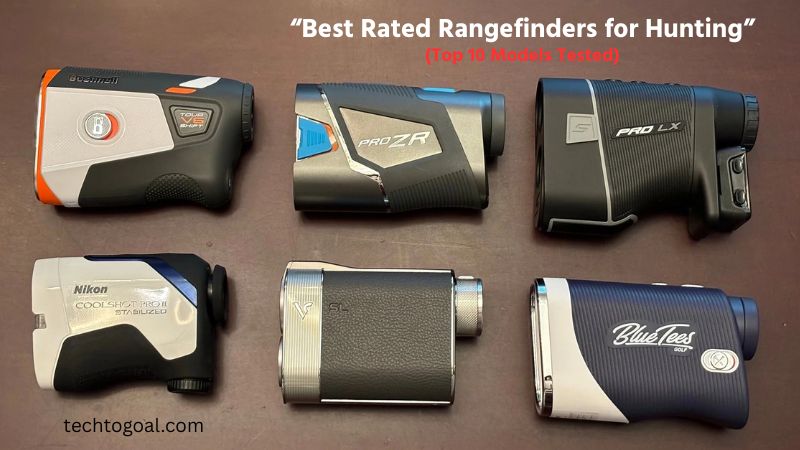

Best Rated Rangefinders for Hunting: In the world of modern hunting, the difference between a successful harvest and a missed opportunity often comes down to a single, precise number: the yardage. As we step into 2026, hunting rangefinders have evolved from simple distance-measuring tools into high-tech ballistic computers that fit in the palm of your hand.
With the integration of AI-driven atmospheric sensors, Applied Ballistics software, and unprecedented low-light clarity, choosing the right gear has never been more critical or more complex. Whether you are a backcountry bowhunter navigating steep mountain angles or a long-range rifle enthusiast aiming for steel at 1,000+ yards, your optics must be as reliable as your aim.
In this comprehensive guide, we break down the Top 10 Hunting Rangefinders of 2026, analyzed through hands-on testing to ensure you have the precision you need when the trophy of a lifetime finally steps into view.
Best Rated Rangefinders for Hunting
Selecting the perfect rangefinder in 2026 is no longer just about measuring yardage; it’s about choosing a high-speed ballistic partner that can survive the elements and calculate complex shot angles in a heartbeat. After extensive field testing in diverse environments, from the dense timber of the Midwest to the high-altitude peaks of the Rockies, we have narrowed down the definitive list.
📌Read More👉The Best Cellular Trail Cameras of 2026
Here are the Top 10 Hunting Rangefinders of 2026, analyzed in depth to help you make the right investment.
1. Sig Sauer KILO4K: The Stabilized Masterpiece
Overview: The KILO4K is the undisputed king of 2026. Its standout feature is the Active Image Stabilization (AIS), which completely removes the “handshake” that makes ranging distant targets difficult. It utilizes Sig’s BDX 2.0 technology, allowing it to communicate with your riflescope and provide a holdover dot directly on your reticle.
Specifications:
- Magnification: 7×25 mm
- Max Range (Reflective): 4,000 yards
- Max Range (Deer): 1,600 yards
- Display: Gen II OLED (Red)
Pros:
- Rock-Solid Image: The stabilization is a game-changer for high-magnification ranging.
- BDX Integration: Seamlessly pairs with Sig Sauer smart scopes.
- Applied Ballistics Ultralite: Built-in solver for elevation and windage.
- Speed: Returns readings in less than 0.1 seconds.
- Durability: IPX-7 waterproof rating.
Cons:
- Battery Drain: The stabilization motor consumes CR2 batteries faster than standard units.
- Price: One of the most expensive handheld units on the market.
- Bulk: Slightly larger than non-stabilized competitors.
- Complex UI: The menu system requires a learning curve to master.
2. Maven RF.1: The Long-Range Workhorse
Overview: Maven has disrupted the high-end market with the RF.1. By selling direct-to-consumer, they provide $1,500 worth of glass for nearly half the price. This unit is built for the western hunter who needs to range a rocky outcrop at extreme distances to plan a stalk.
Specifications:
- Magnification: 7×25 mm
- Max Range (Reflective): 4,500 yards
- Max Range (Deer): 2,000 yards
- Weight: 10 oz
Pros:
- Exceptional Range: Leads the class in non-reflective ranging capability.
- Physical Dial: Features a tactile “Field/Forest” lever that is easy to use with gloves.
- Premium Glass: ED (Extra-low Dispersion) glass provides edge-to-edge clarity.
- Warranty: Maven’s lifetime warranty is among the best in the industry.
Cons:
- No Ballistics: Does not include a built-in ballistic solver for wind/drop.
- Size: Noticeably heavier than compact models like Leica.
- Reticle Options: The reticle can be a bit thick for very small, distant targets.
- App Support: Lacks the Bluetooth connectivity found in Sig or Vortex models.
3. Leupold RX-FullDraw 5: The Archer’s Edge
Overview: This is the most specialized tool on the list. The FullDraw 5 is designed specifically for bowhunters. Its “Flightpath” technology is the highlight; it calculates the high point of your arrow’s arc and displays a mark in the reticle to tell you if you’ll hit an overhanging branch.
Specifications:
- Magnification: 6×22 mm
- Max Range: 1,200 yards
- Angle Compensation: Archer’s Advantage software
- Weight: 7.5 oz
Pros:
- Flightpath Technology: Prevents “deflection” heartbreaks by showing arrow clearance.
- Custom Ballistics: Input your exact arrow weight, velocity, and peep height.
- Compact Design: Fits perfectly in a chest harness or pocket.
- Rain/Fog Mode: Excellent performance in poor weather conditions.
Cons:
- Short Range: Not suitable for long-range rifle hunters.
- Lower Magnification: 6x is great for bows but lacks detail for scouting.
- Niche Use: Too specialized for hunters who switch between bow and rifle frequently.
- Battery Cap: The screw-on cap can be difficult to align in the dark.
4. Vortex Razor HD 4000 GB: The Data Collector
Overview: The “GB” stands for GeoBallistics. This unit is a full-blown atmospheric station and rangefinder in one. It measures humidity, temperature, and pressure to give you a perfect firing solution in the mountains.
Specifications:
- Magnification: 7×25 mm
- Max Range (Reflective): 4,000 yards
- Connectivity: Bluetooth to GeoBallistics App
- Optics: HD Optical System
Pros:
- On-Board Sensors: Measures real-time environmentals for precise shots.
- Vortex VIP Warranty: If it breaks, they fix it, no questions asked.
- Tripod Mountable: Essential for steadying the unit at 2,000+ yards.
- Wind Modes: Includes “Wind Bearing Capture” mode.
Cons:
- Complex Data: Can be overwhelming for the average hunter.
- Weight: Heavy construction makes it feel bulky on a neck strap.
- Bluetooth Sync: Occasionally requires re-pairing with the smartphone app.
- Battery Life: Powering the sensors and Bluetooth drains the battery quickly.
5. Leica Rangemaster CRF 2400-R: The Optical Standard
Overview: Leica is all about the “view.” While others focus on Bluetooth, Leica focuses on having the best light transmission in the world. The Rangemaster CRF is a vertical-oriented unit that fits in a shirt pocket.
Specifications:
- Magnification: 7×24 mm
- Weight: 6.7 oz
- Display: LED with auto-brightness
- Range: 2,400 yards
Pros:
- Best Glass: Unbeatable color fidelity and low-light performance.
- Ultra-Compact: The smallest and lightest pro-grade rangefinder.
- Simple Interface: Only two buttons; extremely easy to use under pressure.
- Speed: The “Scan Mode” is incredibly fluid and responsive.
Cons:
- Minimal Tech: No Bluetooth, no ballistics, no app integration.
- Vertical Grip: Some users find the vertical orientation harder to hold steady.
- Price for Features: You are paying for the glass, not the technology.
- Small Objective: The 24 mm lens can feel narrow compared to Maven’s 25 mm.
6. Vortex Diamondback HD 2000: The Best Mid-Tier
Overview: For the hunter who wants “good enough” for every situation without spending $800, the Diamondback HD 2000 is the 2026 value king. It offers HD glass and reliable ranging out to 2,000 yards.
Specifications:
- Magnification: 7×24 mm
- Ranging Capacity: 2,000 yards (Reflective)
- Reticle: Red OLED
Pros:
- Excellent Ergonomics: Fits the hand naturally with a non-slip grip.
- OLED Clarity: Very bright display that works well in midday sun.
- Value: Performs like units twice its price.
- Warranty: Includes the full Vortex VIP protection.
Cons:
- Soft Edge Focus: Sharp in the center, but slight blur at the very edges.
- Slow Scan: Not as fast at updating distances as the Razor or Sig.
- No Atmospheric Sensors: Purely a distance-measuring tool.
- Nylon Case: The included case is somewhat flimsy.
7. Bushnell Bone Collector 1800: The Whitetail Specialist
Overview: Designed for the woods, the Bone Collector 1800 is rugged and optimized for “deer-sized” targets at moderate ranges. It’s a no-frills tool for the serious harvester.
Specifications:
- Magnification: 6×24 mm
- Max Range: 1,800 yards
- Accuracy: +/- 1 yard
Pros:
- Extremely Durable: Built to survive drops from tree stands.
- Fast Focus: Diopter adjustment is very smooth.
- Cost-Effective: Great entry point for new hunters.
Cons:
- 6x Power: Lacks the “zoom” needed for western antelope or sheep.
- LCD Display: Not as clear in low light as OLED models.
- Basic AI: Angle compensation is good but not as precise as Leupold.
8. Revic BR4: The Extreme Long-Range King
Overview: The BR4 is a specialized computer for Extreme Long Range (ELR) shooting. It features a proprietary ballistic engine that accounts for Earth’s rotation (Coriolis) and other advanced factors.
Specifications:
- Magnification: 10×25 mm
- Targeting: Programmable Ballistic Profiles
- Display: High-resolution multi-line display
Pros:
- Elite Precision: The best ballistic solver in a handheld unit.
- 10x Power: Allows for precise aiming on small targets at 1,500 yards.
- Customizable: Over 10 custom rifle profiles can be stored.
Cons:
- Weight/Size: Significant bulk; requires a dedicated pouch.
- Price: The most expensive unit on this list.
- Learning Curve: Requires significant time to set up profiles correctly.
9. Sig Sauer KILO5K: The Scouting Expert
Overview: The KILO5K is optimized for the hunter who uses digital maps. It can “drop” a GPS pin on your phone (onX Maps) at the exact spot you just ranged, allowing for perfect navigation.
Specifications:
- Magnification: 7×25 mm
- Max Range: 5,000 yards
- Sensors: Temperature, Pressure, Humidity
Pros:
- GPS Integration: The best mapping tool in the industry.
- Fog Mode: Highly effective in morning mist.
- Applied Ballistics: Includes high-end firing solutions.
Cons:
- Battery Life: High sensor usage drains power.
- Buttons: Can be a bit stiff in cold weather.
- Menu Navigation: Requires the app for efficient setup.
10. Burris Signature LRF 2000: The Best Ergonomics
Overview: Burris has created a unit that feels like an extension of the hand. It offers three ranging modes: Sport, Hunt, and Near, ensuring the laser ignores brush or rain based on your needs.
Specifications:
- Magnification: 7x
- Range: 2,000 yards
- Weight: 6 oz
Pros:
- Three Ranging Modes: Highly adaptable to different terrain.
- Ultra-Light: You will forget it’s around your neck.
- Affordable Pro-Tech: Offers high-end ranging logic for a mid-market price.
Cons:
- Glass Coating: A bit of a blue tint compared to Leica.
- Battery Cap: Plastic threads can be cross-threaded easily.
- Display Dimming: No auto-brightness adjustment.
Best Rangefinder for Long-Range Shooting
When it comes to long-range shooting, whether for precision target work, tactical training, or hunting across vast terrain, choosing the right rangefinder is crucial.
Long-range shooters need high-accuracy measurements far beyond 1,000 yards, solid optical clarity, angle compensation, and reliable performance in various weather conditions. A strong rangefinder not only measures distance but also helps you calculate holdovers, angle adjustments, and real-world ballistics, giving you confidence for every shot.
1. Leupold RX-2800 TBR/W – Benchmark Long-Range Performance
The Leupold RX-2800 has long been considered a top choice for shooters planning engagements beyond 1,000 yards. Built with Leupold’s True Ballistic Range (TBR/W) technology, it calculates line-of-sight and angle-compensated distances quickly and accurately, helping you make precise adjustments in your scope or ballistic app. Its rugged, weather-resistant design and bright reticle display make it ideal for field use in challenging conditions.
2. Sig Sauer Kilo 2200MR – Extreme Distance & Fast Reporting
The Sig Sauer Kilo 2200MR stands out for its remarkable ranging capability, reporting distances well past 2,000 yards on reflective targets, and strong performance on deer-sized objects out to over 1,000 yards. Its compact OLED display and fast refresh rate make spotting and locking onto targets easy, and its ballistic compensation features elevate it for serious long-range shooters.
3. Bushnell Prime 1700 – Budget-Friendly Long-Range Option
For shooters who want long-range capability without a huge investment, the Bushnell Prime 1700 offers a range up to roughly 1,700 yards with Angle Range Compensation (ARC) technology for accurate incline shots. Its clear optics and straightforward operation make it a solid choice for those entering long-range shooting or hunters who don’t need ultra-advanced ballistics features.
4. Leica Rangemaster 2700-B – Premium German Optics
Leica’s Rangemaster series, including the 2700-B, is built for exceptional optical clarity and long-distance accuracy. With high-quality lenses and small beam divergence for better pinpointing on far targets, this rangefinder excels where detail and precision matter most. Its angle compensation and ballistics capabilities make it especially useful for precision shooters.
5. Halo Optics XLR-2000 – Precision & Affordable Performance
Halo’s XLR-2000 offers excellent distance capability along with features like continuous scan modes and rugged waterproof construction. Its accuracy and simplicity appeal to shooters focusing on discipline and consistency over ultra-complex feature sets, and it is lightweight for carrying across long ranges.
What Makes a Great Long-Range Rangefinder
- Maximum Distance Capability: Long-range shooters should aim for tools that can reliably measure 1,000 yards and beyond, ideally hitting 2,000+ yards on reflective targets or larger objects.
- Ballistic Features: Calculating holdover, angle, and environmental adjustments matters when precision counts. Built-in TBR/W, ARC, or ballistics engines help shooters apply real-world data.
- Optical Quality: Crisp, bright optics make noticing small targets easier at great distances. Quality lenses can reduce eye strain and improve confidence in ranging.
- rangefinderratings.com |
- Durability: Long-range shooters often operate in harsh environments; rugged, waterproof designs ensure longevity.
While rangefinder maximum ratings often expressed in reflective yards may look impressive on paper, real-world performance depends on target size, lighting conditions, and surface reflectivity. The best rangefinders for long-range shooting balance distance capability, accuracy, ballistics features, and solid optics to give you information you can trust when every yard matters.
Best Hunting Rangefinders Under $100
Finding a reliable hunting rangefinder under $100 can be a challenge, but in 2026, the market has seen a surge in “value-engineered” models that offer impressive performance for budget-conscious hunters. While you won’t find 4,000-yard lasers or integrated ballistics at this price point, you can certainly find units that provide accurate distance readings and essential angle compensation for archery and rifle hunting.
Here are the key factors and top choices for the best hunting rangefinders under $100:
1. Halo XL450 Rangefinder
The Halo XL450 Rangefinder is one of the most popular budget choices for hunters looking for reliable performance on a tight budget. Priced under $100, it offers about 450 yards of range and 6× magnification, making it suitable for short- to mid-range hunting, bowhunting, or scouting game in the field. Its lightweight design and simple one-button operation make it easy to use even for beginners, while the water-resistant build helps it withstand outdoor conditions in rugged terrain.
2. TecTecTec ProWild Hunting Rangefinder
The TecTecTec ProWild Hunting Rangefinder delivers solid performance for cost-conscious hunters who still want dependable distance readings. With up to around 540 yards of maximum range and continuous scan mode, it quickly displays real-time yardage as you sweep across terrain, perfect for tracking moving game. Its compact, ergonomic body fits comfortably in your hand or pocket, and it’s easy to operate without a steep learning curve.
3. AOFAR HX-700N Hunting Rangefinder
For archery and general hunting under $100, the AOFAR HX-700N Hunting Rangefinder is a versatile pick. It’s waterproof and built to handle field conditions, with distance and speed modes that help hunters not only measure range but also gauge the rate of movement for small game. With its 700-yard range and user-friendly design, it’s a great budget choice for those who want a bit more capability without paying premium prices.
4. TideWe Hunting Rangefinder
The TideWe Hunting Rangefinder stands out in the sub-$100 category due to its rechargeable battery and multifunction design. It typically offers decent maximum distance capability (often up to 700–1000 yards depending on the model) and includes scan, speed, and distance modes that add flexibility to hunting trips. Its camo finish and outdoor-ready construction make it a practical choice for hunters of all levels.
5. Gogogo Sport Vpro Rangefinder
Although often marketed for golf, the Gogogo Sport Vpro Rangefinder works well for budget hunting applications thanks to its clear optics and long reported range performance for the price. With up to about 650 yards of laser ranging and a compact design, it strikes a nice balance between outdoor usability and affordability, making it a reliable backup rangefinder for hunters.
6. Wosports Hunting Rangefinder
The Wosports Hunting Rangefinder delivers excellent value under $100 by combining a 6× magnification lens with a reported measuring distance up to about 700 yards, plus a rugged design that’s ready for outdoor use. Its fast measurement response and easy-to-read display help hunters quickly confirm distances without fumbling through complicated settings.
When choosing a rangefinder under $100, it’s important to remember that range and accuracy may be limited compared to higher-end models. These budget units are best suited for short- to mid-range applications (up to 500–700 yards), and they work well for bowhunters or those hunting in wooded or brush-covered terrain where extreme distances aren’t needed. Still, they offer excellent value and can significantly improve distance estimation compared to guessing by eye.
How to Choose a Hunting Rangefinder (Buying Guide)
Choosing the right hunting rangefinder can greatly improve your accuracy, confidence, and success in the field. With so many models available, understanding what features matter most will help you pick a rangefinder that matches your hunting style, terrain, and budget.
Maximum Range Capability: The maximum range of a hunting rangefinder is one of the most important factors to consider. While manufacturers often advertise long distances on reflective targets, hunters should focus on realistic ranges for deer-sized or game-sized targets. For bowhunting, a rangefinder with 300–600 yards is usually sufficient, while rifle hunters may benefit from models capable of 1,000 yards or more.
Accuracy and Measurement Speed: Accuracy is critical when taking ethical shots in hunting situations. A good hunting rangefinder should provide fast, consistent readings with minimal delay. Look for models that offer precise yardage readings and quick target acquisition, especially when ranging moving animals or scanning uneven terrain.
Angle Compensation (ARC or TBR): Angle compensation is essential for hunting in hilly or elevated terrain. This feature calculates the true horizontal distance by adjusting for uphill or downhill shots, ensuring your shot placement remains accurate. Bowhunters and mountain hunters, in particular, should prioritize rangefinders with reliable angle compensation technology.
Optical Quality and Magnification: Clear optics help you identify targets quickly and range them accurately. Most hunting rangefinders offer 6× magnification, which strikes a good balance between clarity and stability. High-quality lenses with anti-reflective coatings improve brightness and reduce eye strain during long hunts or low-light conditions.
Target Priority and Scan Mode: Target priority modes allow the rangefinder to focus on the closest or farthest object, which is especially useful when animals are partially obscured by brush. Scan mode continuously updates distance readings as you sweep across terrain, helping hunters track moving game or assess multiple landmarks efficiently.
Size, Weight, and Ergonomics: A hunting rangefinder should be compact and lightweight so it doesn’t add unnecessary bulk to your gear. Ergonomic designs with easy-to-reach buttons make one-handed operation possible, which is valuable in fast-moving hunting situations.
Durability and Weather Resistance: Hunting environments can be unpredictable, so your rangefinder should be built to handle rain, dust, and rough handling. Look for water-resistant or waterproof models with rugged housings that can withstand outdoor conditions throughout the hunting season.
Battery Type and Battery Life: Battery life matters, especially during long hunting trips. Many modern rangefinders use CR2 or rechargeable batteries. Choose a model with long battery life or easy battery replacement so you’re not left without range data when it matters most.
Hunting-Specific Modes (Bow or Rifle): Some rangefinders offer dedicated bow or rifle modes that adjust calculations based on shooting style. Bow modes often limit ranging distances for safety and legality, while rifle modes may include ballistic compensation for longer shots.
Budget and Value for Money: Hunting rangefinders are available across a wide price range. Budget models under $100 work well for short-range hunting, while mid-range and premium models offer advanced ballistics and longer range. Choose a rangefinder that offers the best balance of features and reliability within your budget.
The best hunting rangefinder is one that fits your specific needs, hunting environment, and shooting style. By focusing on practical features rather than marketing numbers, you can choose a rangefinder that improves accuracy, confidence, and overall hunting success.
FAQs
What is the best rangefinder for hunting in 2026?
The best hunting rangefinder depends on your specific needs, but top choices in 2026 often include models with long range, accurate ballistics, clear optics, and rugged build quality designed for real-world hunting conditions.
How far should a hunting rangefinder be able to measure?
A good hunting rangefinder should measure at least 500–700 yards for rifle hunting and 300–500 yards for bowhunting. Longer range capabilities are useful for open terrain or big game hunting.
What features should I look for in a hunting rangefinder?
Important features include measurement accuracy, magnification power, angle compensation, display quality, durability, and battery life. Ballistic modes can also help calculate holdovers for precise shots.
Do hunting rangefinders work in all weather conditions?
Top-rated hunting rangefinders are designed to be waterproof and fog-resistant, allowing them to function reliably in rain, snow, or humid environments.
Is magnification important in a hunting rangefinder?
Yes. Higher magnification (e.g., 6× or more) helps spot distant targets and improves aiming precision, especially when ranging long distances or scanning terrain.
Are premium rangefinders worth the extra cost?
Premium rangefinders often offer better optics, advanced ballistics, more range, and faster performance, which can make them worth the investment for serious hunters who demand reliability and precision.
Can rangefinders be used for both rifle and bow hunting?
Yes, many rangefinders are versatile enough for both rifle and bow hunting. However, bowhunters often prioritize faster readings and closer range accuracy due to shorter engagement distances.
What is the best way to maintain a hunting rangefinder?
Keep the lenses clean, avoid dropping the device, store it in a protective case, and use fresh batteries. Regular maintenance helps ensure accurate readings and extends the life of your rangefinder.
Do rangefinders require special batteries?
Most rangefinders use common CR2 or AAA batteries. Always check the manufacturer’s recommendation and carry spares to avoid running out of power during a hunt.
Conclusion
Choosing the best rangefinder comes down to understanding your personal hunting environment. Do you value the pure optical brilliance of Leica, or do you need the data-driven ballistic solutions of Vortex? There is no single “perfect” unit for everyone, but there is a perfect unit for your specific hunt. By prioritizing glass quality, ranging speed, and angle compensation, you ensure that when the moment of truth arrives, your equipment is as ready as you are.
Invest in quality, master your gear, and hunt with the confidence that only perfect precision can provide. The mountains are calling, and with the right rangefinder in your kit, you’ll be ready to answer.