

What is a PoE camera – In today’s fast-growing world of smart security solutions, PoE cameras have become one of the most popular choices for both homeowners and businesses.
But what exactly is a PoE camera, and why is it gaining so much attention? PoE, or Power over Ethernet, is a technology that allows a single network cable to deliver both power and data to your camera, making installation simpler, cleaner, and more efficient.
Whether you’re planning to upgrade your existing security system or setting up surveillance for the first time, understanding how PoE cameras work can help you choose a reliable, future-proof option. In this article, we’ll explore what PoE cameras are, how they function, and the key advantages that make them stand out in modern security setups.
What is a PoE camera?
A PoE camera, short for Power over Ethernet camera, is a type of IP (Internet Protocol) security camera that uses a single Ethernet cable to receive both power and data.
Unlike traditional CCTV systems that require separate cables for electricity and video transmission, PoE technology simplifies the installation process by combining everything into one line. This makes PoE cameras more efficient, flexible, and easier to set up, especially for homes, offices, and large commercial spaces.
PoE cameras connect directly to a PoE switch, PoE injector, or NVR with built-in PoE ports, allowing them to transmit high-quality video footage while receiving stable power at the same time.
Because they rely on a wired network connection, PoE cameras often provide more reliable performance, faster data transfer, and stronger security than Wi-Fi cameras. Their ability to support long cable runs also makes them ideal for outdoor surveillance, large buildings, and professional security systems.
In short, a PoE camera is a smarter, cleaner, and more reliable solution for modern video surveillance, offering high-definition video, easy installation, and seamless scalability for any security setup.
How Does a PoE Camera Work?
A PoE camera works by using a single Ethernet cable to deliver both electrical power and network connectivity, making the entire surveillance setup simpler and more efficient. This is possible through Power over Ethernet (PoE) technology, which allows power and data to travel together through standard network cables such as Cat5e, Cat6, or Cat7.
The process starts when the camera is connected to a PoE switch, PoE injector, or PoE-enabled NVR. These devices send electrical power through the Ethernet cable while simultaneously transmitting video data from the camera back to the network. Because everything runs through one cable, you don’t need an additional power outlet near the camera, giving you more flexibility in choosing installation locations.
Inside the PoE camera, built-in circuits separate the incoming power from the data. The power section keeps the camera running, while the data portion allows the camera to send high-quality video streams to your recorder or monitoring software. This seamless combination ensures a stable connection, reduces cable clutter, and provides more reliable performance compared to Wi-Fi cameras.
In simple terms, a PoE camera works by merging power and data into one clean connection, delivering a secure, stable, and professional-grade surveillance solution for homes, businesses, and large-scale security systems.
PoE Camera vs. WiFi Camera
WiFi cameras function wirelessly, sending video over a secure WiFi connection, in contrast to PoE cameras. WiFi cameras can have security flaws and signal interference, although they are helpful in places where wiring is not feasible. WiFi models need a separate power source, in contrast to PoE cameras.
Analog vs. PoE Cameras
PoE models and analog cameras are very different. For data transmission, they rely on separate power supplies and coaxial connections. Digital video recorders (DVRs) are required since analog cameras do not have built-in video processing. PoE cameras are therefore a more contemporary and effective option.
Types of PoE Cameras
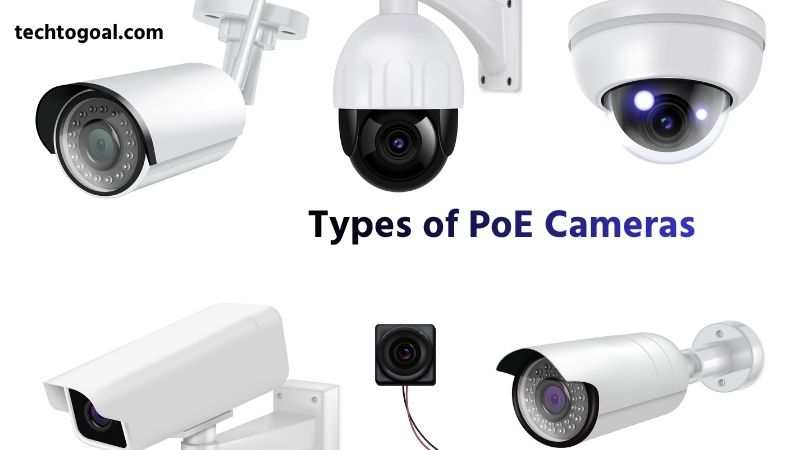
When choosing a PoE camera for your security system, it’s important to understand the different types available. Each type is designed for specific environments and surveillance needs. Below are the most common and widely used types of PoE cameras:
1. Bullet PoE Cameras
Bullet PoE cameras are long, cylindrical cameras designed for focused monitoring. They are easy to install and aim, making them ideal for covering entrances, driveways, and outdoor perimeters.
Their shape allows more room for infrared LEDs, giving them excellent night vision capabilities. Because of their visible design, bullet cameras also act as a strong visual deterrent to intruders.
2. Dome PoE Cameras
Dome PoE cameras come in a compact, dome-shaped housing that blends seamlessly with both indoor and outdoor environments.
They are harder to tamper with, thanks to their vandal-resistant design, and their wide-angle view makes them perfect for hallways, retail stores, offices, and hotel lobbies. The discreet appearance of dome cameras provides clean, unobtrusive surveillance.
3. Turret PoE Cameras
Turret PoE cameras, sometimes referred to as “eyeball cameras,” combine the advantages of dome and bullet cameras. They feature a ball-and-socket design that allows easy adjustments without the glare issues sometimes seen in dome lenses.
Known for their strong night vision and flexible installation, turret cameras are a popular choice for homeowners and business owners who want clear, reliable footage in any lighting condition.
4. PTZ PoE Cameras (Pan-Tilt-Zoom)
PTZ PoE cameras are advanced surveillance devices capable of panning, tilting, and zooming remotely. With powerful optical zoom and automated patrol features, PTZ cameras are perfect for monitoring large areas like parking lots, warehouses, campuses, and city streets. They allow security teams to track suspicious activity in real time, making them a professional-grade option for dynamic surveillance.
5. 4K and AI-Powered PoE Cameras
4K and AI-powered PoE cameras represent the next generation of smart surveillance. These cameras capture ultra-high-definition video with incredible clarity, making it easy to identify faces, license plates, and small details.
Built-in AI features such as person detection, vehicle detection, motion alerts, and smart analytics help reduce false alarms and enhance overall security automation. They are ideal for users who want top-tier performance and intelligent monitoring.
Benefits of PoE Cameras
PoE cameras have become one of the most preferred options for modern security systems due to their convenience, reliability, and advanced performance. Below are some of the key benefits that make PoE technology an excellent choice for homes, offices, and large commercial environments.

Flexible Placement: One of the biggest advantages of PoE cameras is their flexible installation. Since they receive both power and data through a single Ethernet cable, you don’t need electrical outlets near the mounting location.
This allows you to place cameras in hard-to-reach areas, outdoor locations, ceilings, or anywhere that offers the best viewing angle without worrying about power restrictions.
Simplified Maintenance: PoE cameras are easier to maintain because all power and network connections run through a centralized switch or NVR. If a camera needs troubleshooting, you can manage it directly from the network without checking separate power sources.
This centralized management reduces downtime, streamlines updates, and ensures your system stays functional with minimal effort.
Cost-Effective Installation: With PoE technology, you only need one cable per camera, which significantly reduces wiring costs and installation time. There’s no need for professional electrical work or separate power adapters, making PoE systems more budget-friendly than traditional CCTV setups. Whether for small homes or large businesses, the simplified wiring leads to lower overall installation costs.
Scalable Systems: PoE systems are highly scalable, allowing you to add more cameras whenever your security needs grow. Simply connect new cameras to a PoE switch or PoE-enabled NVR, and they integrate seamlessly with the existing network.
This makes PoE ideal for expanding businesses, multi-building facilities, or homeowners who plan to upgrade their security over time.
Reliable Power and Network: PoE cameras provide stable power and consistent network performance, reducing issues like Wi-Fi interference or power fluctuations.
The wired connection ensures smoother video transmission, higher bandwidth, and more reliable 24/7 security monitoring. Even during high network load, PoE cameras maintain strong and uninterrupted performance.
Enhanced Safety: PoE systems enhance safety by centralizing power in one secure location. This allows you to use backup power solutions like UPS (Uninterruptible Power Supply), ensuring your cameras continue working during power outages. With PoE safety standards also preventing overload and short circuits, your security system remains protected and dependable.
How to Set Up a PoE Camera System
- A PoE camera system is easy to set up. What you’ll need is as follows:
- PoE cameras: cameras that rely on Ethernet cables for power and data.
- Network Video Recorder (NVR): A device for managing and storing video.
- Ethernet cables (CAT5e or CAT6): These are used to link cameras to network devices and NVRs.
- Optional PoE Switch: When the NVR lacks sufficient PoE ports, this switch can be used to add more cameras.
- TV or monitor: Use remote viewing capabilities via computer or phone to watch live footage.
The installation process is as follows:
1. Plan Your Camera Locations: Begin by identifying the areas you want to monitor, such as entrances, driveways, hallways, or high-traffic zones. Good planning ensures proper coverage, reduces blind spots, and makes your system more effective. Since PoE cameras don’t require nearby power outlets, you can place them in locations that offer the best viewing angles.
2. Choose the Right Equipment: To build a functional PoE camera system, you’ll need a few key components:
- PoE cameras
- PoE switch or PoE-enabled NVR
- Ethernet cables (Cat5e, Cat6, or higher)
- Router or local network
If you want recording and remote access, a PoE NVR is the most convenient choice since it powers the cameras and stores footage in one place.
3. Connect Cameras to the PoE Switch or NVR: Next, run Ethernet cables from each camera to the PoE switch or PoE NVR. The single cable will deliver both power and data, eliminating the need for separate wires. Once connected, your system will automatically detect the cameras, making setup incredibly straightforward.
4. Connect the PoE Switch or NVR to Your Router: To access your cameras remotely or manage them through an app or software, connect your PoE switch or NVR to the router. This links your entire surveillance system to the network and enables live viewing, playback, and alerts from anywhere.
5. Configure the Camera Settings: After the hardware is connected, open the camera or NVR’s interface using a computer or mobile app. From here, you can:
- Adjust video resolution
- Set motion detection zones
- Enable night vision settings
- Create user accounts
- Configure storage options
- Optimizing these settings helps ensure crystal-clear footage and efficient recording.
6. Test Your System: Before finalizing the installation, test each camera to make sure the angles, focus, and lighting conditions are correct. Check day and night performance and adjust the positioning if necessary. A quick test can prevent future blind spots and guarantee maximum security coverage.
7. Mount and Secure the Cameras: Once everything is working properly, mount the cameras using the appropriate brackets and hardware. For outdoor installations, ensure the cameras are weather-sealed and protected from direct exposure to rain or harsh sunlight.
Setting up a PoE camera system is a smooth, efficient process that delivers professional-grade security with minimal complexity. With the right planning and equipment, you can build a reliable surveillance system that offers long-term protection and peace of mind.
Troubleshooting
Check the following if a camera isn’t showing footage:
- Make sure the Ethernet cable is firmly attached.
- Make sure that the NVR or PoE switch is turned on and operational.
- Make sure every camera has a distinct IP address if you’re utilizing a local network.
- Make sure the cameras are set up correctly for your system.
Are PoE Cameras Right for You?
PoE cameras have become one of the most trusted solutions in modern security, but they may not be the perfect choice for everyone. Understanding whether PoE technology aligns with your specific needs, budget, and installation environment can help you make an informed decision. Here’s what to consider before choosing a PoE camera system.

1. You Want a Reliable and Stable Security System: If you need a surveillance solution that offers consistent performance without Wi-Fi interruptions, PoE cameras are an excellent fit. Their wired connection ensures smooth video streaming, fast data transfer, and minimal signal loss, making them ideal for homes, offices, and commercial spaces.
2. You Prefer Clean and Efficient Installation: PoE cameras are perfect for users who want a tidy setup with minimal cabling. With just one Ethernet cable supplying both power and data, installation becomes straightforward. This makes them great for new buildings, renovations, or situations where you want to avoid excessive wiring or electrical work.
3. You Need Professional-Grade Video Quality: If high-resolution video is important to you, especially for identifying faces, license plates, or fine details, PoE cameras are often the best option. Many models offer 4K Ultra HD, wide dynamic range (WDR), and AI-enhanced features, making them ideal for security-conscious users.
4. You Plan to Expand Your System Over Time: PoE systems are highly scalable. If you expect your security needs to grow, such as monitoring multiple buildings, adding new zones, or upgrading hardware, PoE makes expansion easy. Simply add more cameras to your PoE switch or NVR when needed.
5. You Want a Long-Term Security Investment: PoE cameras tend to last longer and offer more stable performance compared to wireless alternatives. Their durability, weather-resistant designs, and reliable wiring make them a strong long-term investment for both indoor and outdoor surveillance.
6. You Have Access to Basic Networking Setup: To get the most out of PoE cameras, you should be comfortable with simple network connections or have access to a technician. While installation is easy, beginners may still need help configuring NVR settings, IP addresses, or remote viewing.
PoE cameras are an excellent choice if you want high-quality, stable, and scalable security with clean installation. They work especially well for homes, businesses, warehouses, and outdoor environments that require dependable 24/7 monitoring. However, if you prefer a quick plug-and-play solution without cabling, Wi-Fi cameras might be a better fit.
FAQs
Do PoE cameras need a separate power source?
No. PoE cameras do not require a separate electrical outlet. One Ethernet cable powers the camera and provides network connectivity.
What equipment do I need for a PoE camera system?
You’ll need PoE cameras, a PoE switch or PoE-enabled NVR, Ethernet cables (Cat5e or Cat6), and a router.
How far can I run Ethernet cables for PoE cameras?
Standard PoE supports up to 100 meters (328 feet) per cable run. With PoE extenders, you can extend the distance even further.
Are PoE cameras better than Wi-Fi cameras?
Yes, in most cases. PoE cameras offer more stable connections, higher video quality, and no wireless interference. However, Wi-Fi cameras are easier to install in small spaces.
Can I use PoE cameras outdoors?
Absolutely. Many PoE cameras are weatherproof (IP66/IP67) and designed for outdoor use, featuring night vision and durable housings.
Are PoE cameras difficult to install?
No. PoE cameras are relatively simple to set up because they only need one cable per camera. Most systems are plug-and-play with automatic detection.
Do PoE cameras support 4K and AI features?
Yes. Many modern PoE cameras offer 4K Ultra HD, AI detection, vehicle/human recognition, and advanced smart analytics for improved security.
Conclusion
PoE cameras have quickly become one of the most reliable and efficient solutions for modern security systems. Their ability to deliver both power and data through a single Ethernet cable makes installation simple, clean, and cost-effective while still offering professional-grade performance.
Whether you’re protecting a home, office, warehouse, or outdoor environment, PoE technology provides the stability, scalability, and high-quality video you need for long-term security.
From powerful 4K resolution and AI features to flexible placement and dependable wired connectivity, PoE cameras stand out as a smart investment for anyone who values reliability and advanced monitoring capabilities. If you want a security system that grows with your needs and offers consistent performance day and night, PoE cameras are an excellent choice.